


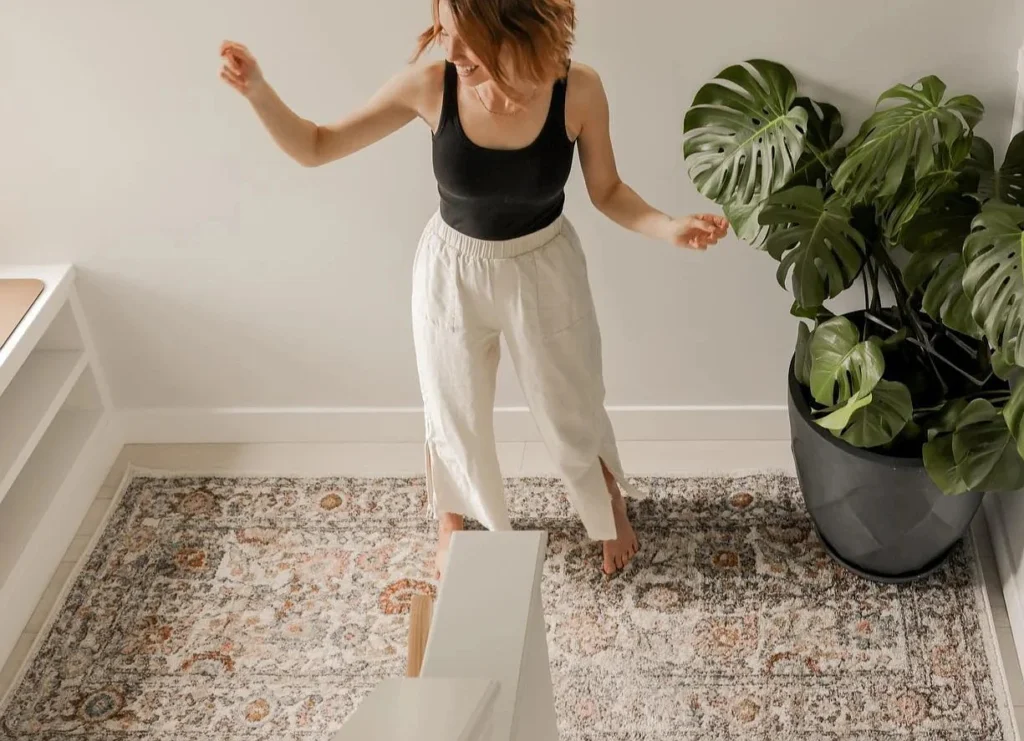
The lounge is the room where rug mistakes show up worst. It’s where you sit every evening, where guests judge your taste within ten seconds of walking in, and where the wrong rug can make a £2,000 sofa look cheap. Yet most people pick a rug the way they pick a phone case — quickly, online, based on a thumbnail.
Here’s how to actually do it properly. Five practical methods, all aimed at the lounge or drawing room specifically. No filler, no hallway tangents.
1. Measure the Sofa First, Not the Floor
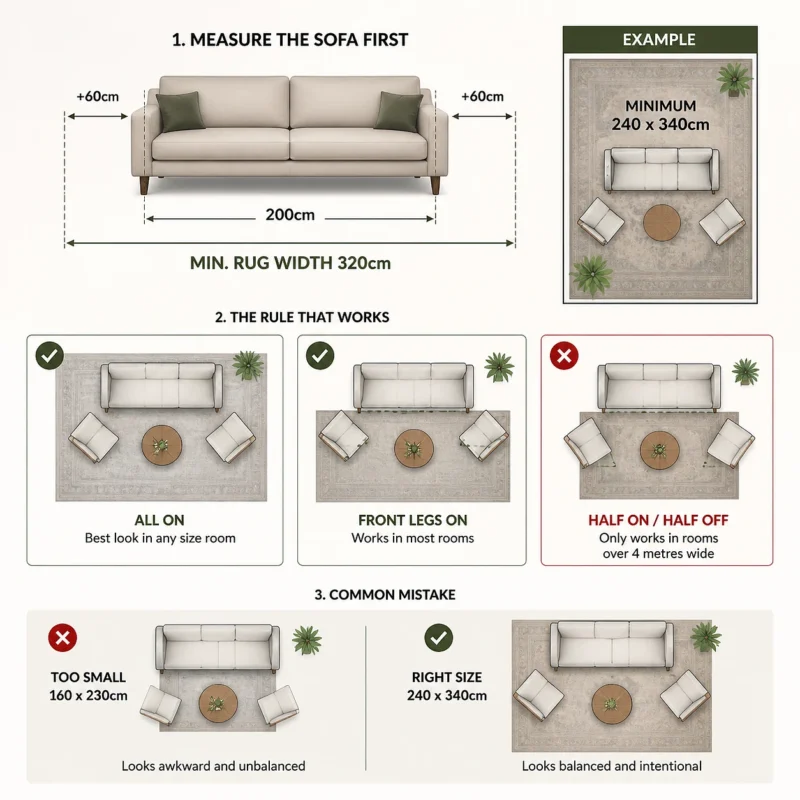
Most rug-buying advice tells you to measure the room. That’s backwards. Measure your sofa, then add at least 60cm to each side. The rug needs to extend beyond the sofa, not match its width — anything narrower makes the sofa look like it’s parked on a postage stamp.
The rule that actually works in British lounges: either all furniture sits fully on the rug, or only the front legs of the sofa and armchairs sit on it. The half-on-half-off look only works in rooms over 4 metres wide. Anything smaller and it just looks like the rug shrank in the wash.
For a standard 3-seater sofa (around 200cm), you want a minimum 240x340cm rug. Most people buy a 160x230cm because it’s cheaper, then wonder why their lounge looks awkward. The cheaper rug is the more expensive mistake.

2. Pick the Pattern Based on the Sofa’s Loudness
If your sofa is patterned, your rug should be plain or near-plain. If your sofa is plain, the rug can carry the pattern. Both patterned together turns the lounge into a charity shop window.
A grey or navy sofa — which most British lounges have — gives you the most freedom. You can go bold with a Persian-style design, geometric, or a deep textured shag. A cream or beige sofa needs the rug to do the work, otherwise the room reads as a hotel lobby.

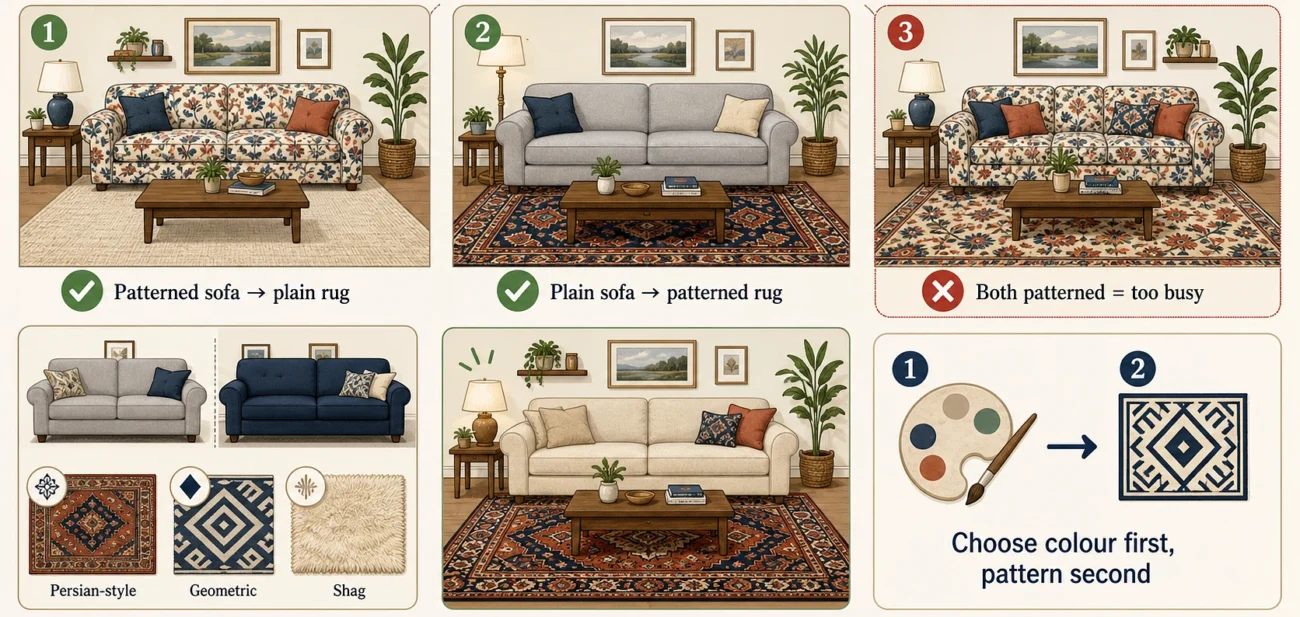
When browsing for rugs, filter by colour first, pattern second. The colour either works with your existing room or it doesn’t — no amount of “it’ll grow on me” thinking changes that.
3. Test the Texture Before You Commit
Plush and shag rugs photograph beautifully and live miserably. They trap dust, flatten under furniture legs within months, and make hoovering a weekly fight. They look incredible in show homes because show homes don’t have actual humans in them.
For a working lounge — one with kids, dogs, snacks, the occasional spilt wine — flat-weave or low-pile is what survives. Wool is the gold standard because it springs back from compression and resists stains naturally. Synthetic options have improved massively in the last few years, too, particularly the machine-washable ones, which solve the wine-stain problem entirely.

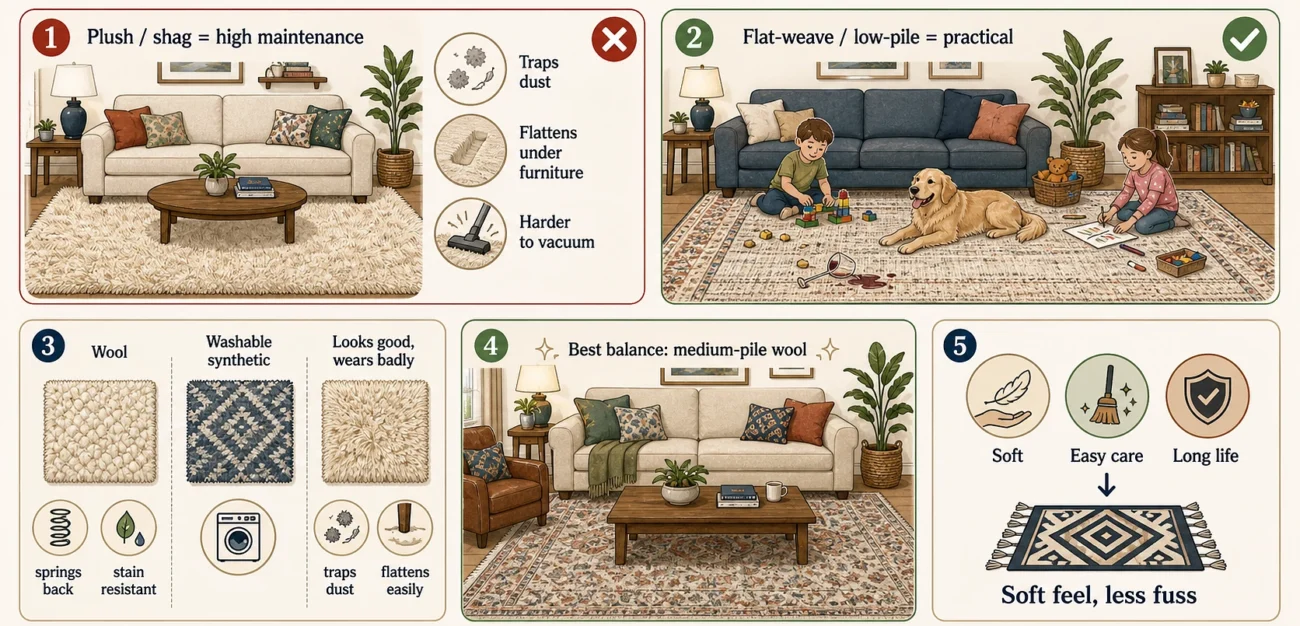
If you want luxury underfoot without the maintenance nightmare, look for medium-pile wool rugs. They give you the softness without the dust trap. They cost more upfront. They last decades.
4. Layer if the Room Feels Flat
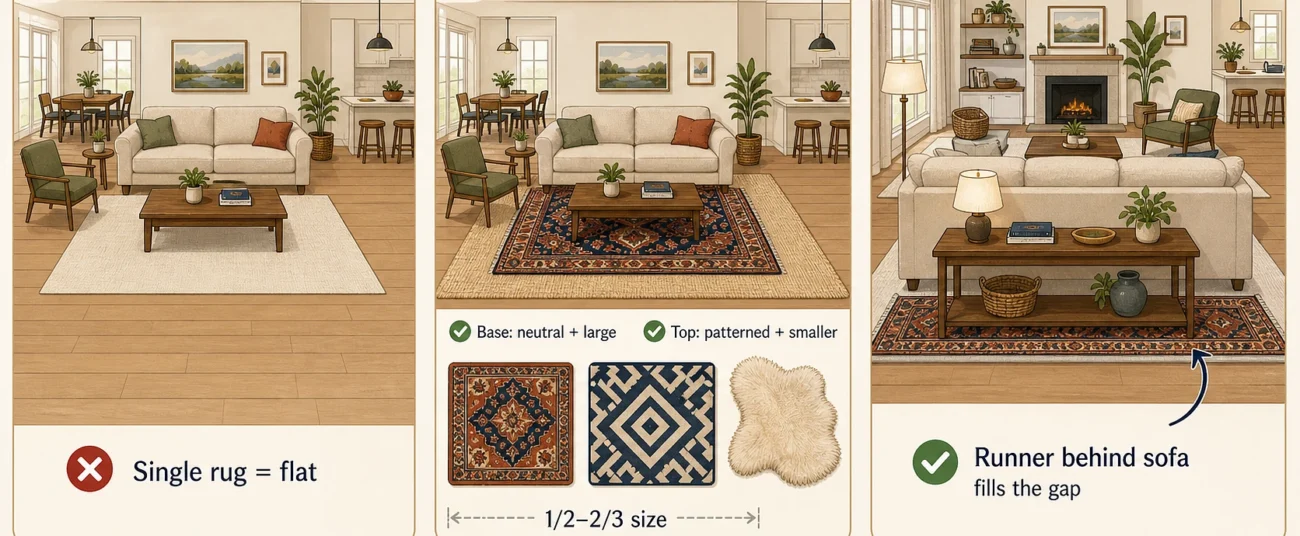
Single-rug lounges can feel one-dimensional, especially in larger open-plan spaces or rooms with high ceilings. Layering — putting a smaller, more decorative rug over a larger neutral one — adds depth and gives you a way to introduce pattern without committing to a giant printed surface.
The base layer should be neutral, large, and ideally jute or low-pile wool. The top layer is where you have fun: a vintage Persian, a bold geometric, a sheepskin thrown casually at an angle. The top rug should be roughly half to two-thirds the size of the base.
This is also where runner rugs come into play in unexpected ways. A runner laid behind a sofa that floats in the middle of an open-plan lounge fills the gap between sofa-back and wall, especially if there’s a console table there. It’s a designer trick that costs nothing extra to deploy.

5. Live With It Before Deciding It’s Right
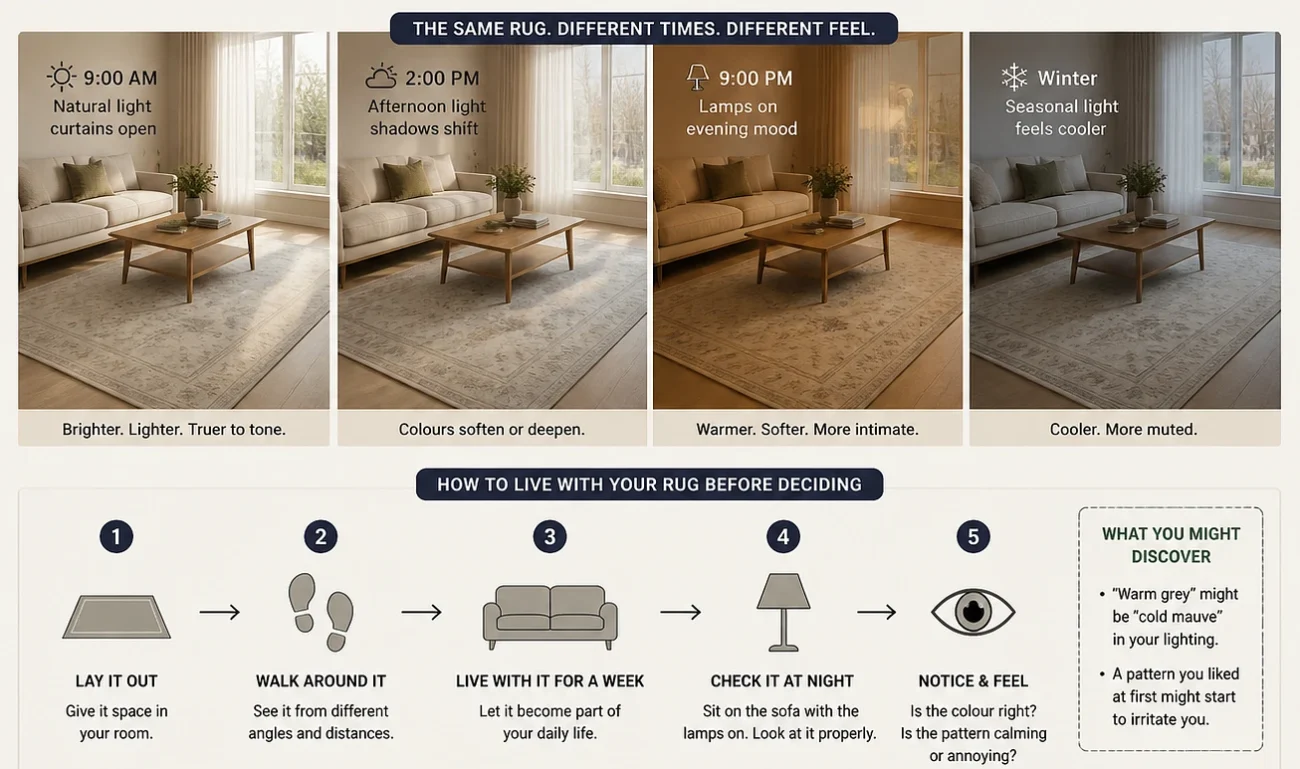
A rug looks different at 9am than it does at 9pm. It looks different with the curtains open, with the lamps on, with the seasonal change in natural light. Buying a rug and committing to it within an hour of unboxing is how people end up with rugs they secretly hate but can’t be bothered to return.
Lay it out. Walk around it for a week. Sit on the sofa at night with the lamps on and look at it properly. Notice whether the colour you thought was “warm grey” is actually “cold mauve” under your specific lighting. Notice whether the pattern is calming or annoying after seven days of it being there.
This is why a 60-day return window matters more than a discount code. Boutique Rugs offers exactly that, plus free shipping, which removes the “I’ve spent too much to send it back now” guilt that traps people with rugs they regret.

A good lounge rug costs more than people expect. The £80 rug from a high-street homeware shop will not last, will not look the part next to decent furniture, and will need replacing within two years. The £400-800 rug feels like a lot at the till and like a bargain three years in, when it still looks the way it did the day you bought it.
Buy fewer rugs, better. Get the lounge one right first — it’s the room people actually see — and worry about the rest of the house later.