


Naltrexone has been kicking around since the 1980s. At full dose — 50 to 100 mg — it blocks opioid receptors. That’s what it’s FDA-approved for: helping people with alcohol and opioid dependence. Straightforward stuff.

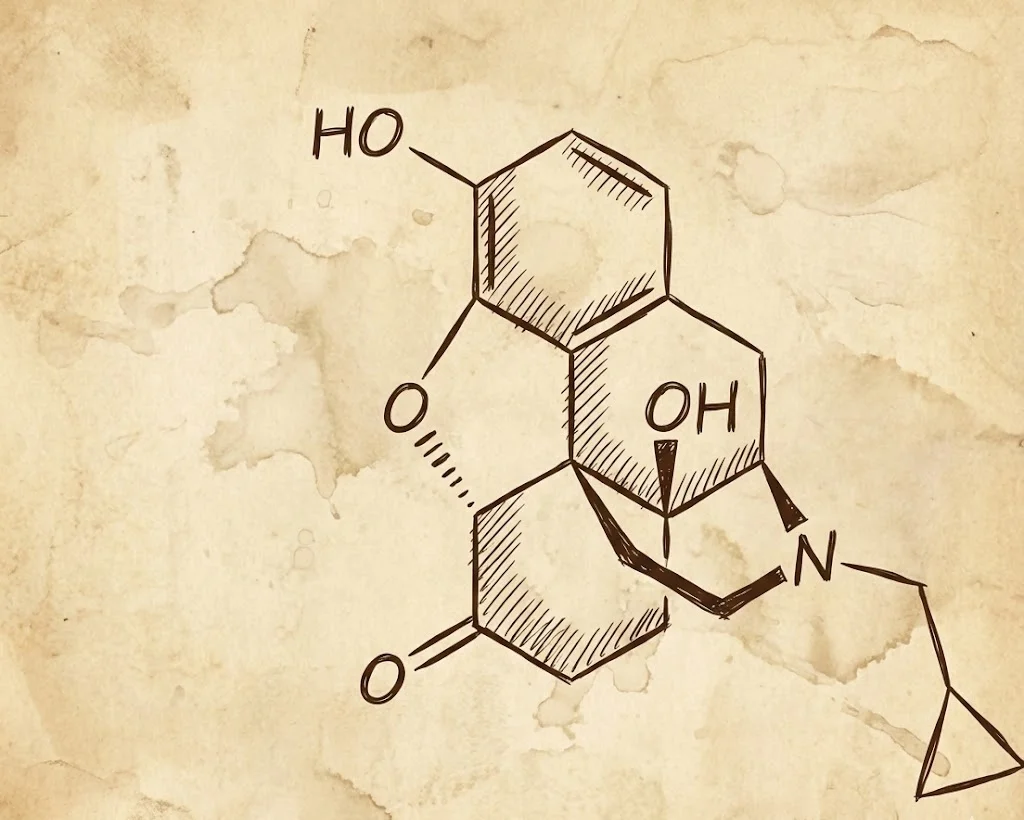
Drop the dose down to between 1 and 5 mg, though, and something weird happens. The drug stops being just a receptor blocker and starts messing with the immune system in ways nobody originally intended. It dials down inflammation — not by hammering the immune system into submission like steroids or biologics do, but by coaxing it back toward something closer to normal. A growing stack of small but genuinely interesting clinical trials suggests this works, particularly for conditions where chronic, low-grade inflammation is running the show.
Two Pathways, Both Worth Understanding
LDN pulls off its trick through two separate mechanisms.
First, there’s an endorphin rebound effect. At these tiny doses, naltrexone only blocks opioid receptors for a few hours instead of all day. The body picks up on this temporary blockade and overcompensates — it ramps up production of endorphins and enkephalins, specifically met-enkephalin (also called opioid growth factor, or OGF). When the naltrexone wears off, all those extra endorphins are still floating around, and they get to work. They push down pro-inflammatory signalling molecules like TNF-α, IL-6, and IL-17 while boosting anti-inflammatory ones like IL-10 (Toljan & Vrooman, “Low-Dose Naltrexone (LDN)—Review of Therapeutic Utilization,” Medical Sciences, 2018). Dr. Bernard Bihari first tested this clinically back in 1985 for HIV, and researchers like Dr. Ian Zagon at Penn State have spent decades mapping out the OGF-OGFr receptor axis that makes the whole thing tick.

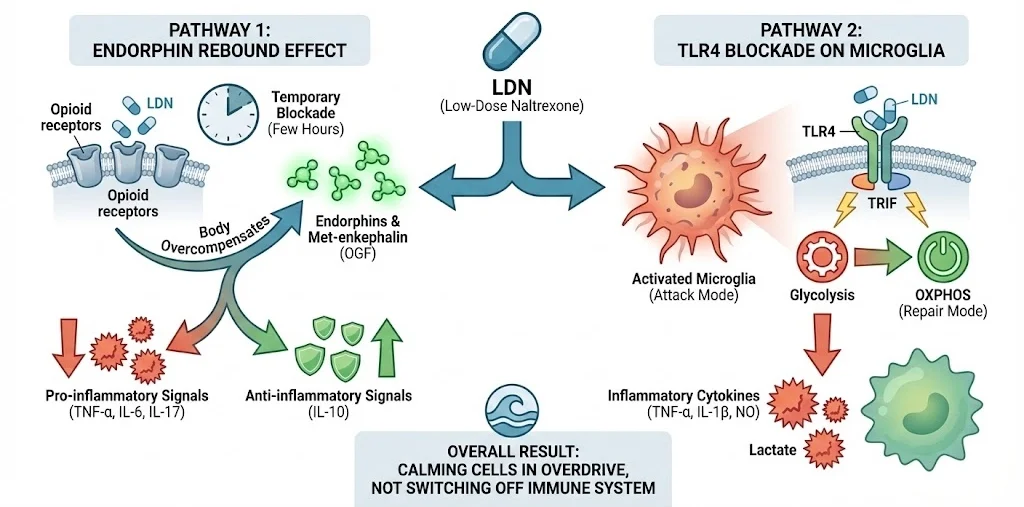
Second — and this one’s arguably more fascinating — LDN blocks Toll-like receptor 4 (TLR4) on microglial cells. Microglia are the brain and spinal cord’s own immune cells, and when TLR4 fires them up, they go full attack mode. Their metabolism shifts to glycolysis, they start pumping out inflammatory cytokines (TNF-α, IL-1β, interferon-β, nitric oxide), and in chronic conditions they can stay stuck in this overactivated state more or less indefinitely. LDN jams a wrench into this by blocking the TRIF portion of TLR4’s downstream signalling.
A 2021 study on BV-2 microglial cells showed this in action. Naltrexone treatment pushed activated microglia from their pro-inflammatory glycolysis-dominant state toward oxidative phosphorylation (OXPHOS) — flipping them from attack mode into something more like repair mode. The treated cells had lower iNOS (a pro-inflammatory marker) and produced less lactate.
So LDN isn’t switching the immune system off. It’s finding the immune cells that are stuck in overdrive and telling them to calm down.
The Clinical Evidence (Promising, With Caveats)
Most of the trials run so far have been small. The results are encouraging, but it would be dishonest to pretend the evidence base is anywhere near what exists for established immunosuppressants. Worth keeping that in your back pocket while reading through what’s actually been tested.
Fibromyalgia is where most of the LDN research has happened. Dr. Jarred Younger at Stanford ran a pilot with 10 women and found LDN cut symptoms by more than 30% compared to placebo. The interesting wrinkle: people with higher baseline erythrocyte sedimentation rate (ESR, a general inflammation marker) responded best. That matters because it suggests LDN is specifically tackling the inflammation component, not just doing something vaguely helpful.
Younger followed up with a proper RCT involving 31 women. Pain dropped 28.8% on LDN versus 18% on placebo (p = 0.016). Thirty-two percent of participants met clinical response criteria on LDN compared to 11% on placebo (Younger et al., Arthritis & Rheumatism, 2013). A separate 10-week trial from the same group drilled into the immune markers and found significant reductions in 17 out of 63 pro-inflammatory cytokines after eight weeks on LDN — including IL-1β, IL-6, TNF-α, IL-17A, interferon-α, and TGF-β.
Crohn’s disease produced some of the most eye-catching early numbers. Dr. Jill P. Smith at Penn State put 17 patients on 4.5 mg LDN daily in an open-label pilot. After 12 weeks, 89% had a clinical response (a 70-point drop on the Crohn’s Disease Activity Index) and 67% hit full remission. The main side effect was disrupted sleep.
Her double-blind RCT with 34 IBD patients backed it up: 88% response rate in the LDN group versus 40% on placebo. Thirty-three percent of the LDN group achieved endoscopic remission compared to 8% on placebo, and 72% showed endoscopic response versus 25% (Cochrane Review, 2018). A separate pilot in 14 children with moderate to severe Crohn’s found LDN was safe and well-tolerated in paediatric patients too — 25% achieved clinical remission and 67% showed improvement on the Paediatric CDAI.
Multiple sclerosis data is thinner — mostly a pilot study of 40 patients and a retrospective look at 215. Both reported reduced spasticity, less fatigue, and improved quality of life, but we’re still waiting on bigger trials to know what those findings are really worth (Patten et al., Pharmacotherapy, 2018).
| Condition | Result | Study Type (Sample Size) | Source |
|---|---|---|---|
| Fibromyalgia | 28.8% pain reduction vs 18% placebo; 17 cytokines reduced | RCT (31); pilot (8) | Younger et al., Arthritis & Rheumatism, 2013; Parkitny & Younger, Biomedicines, 2017 |
| Crohn’s Disease | 89% response, 67% remission (pilot); 88% vs 40% response (RCT) | Open-label (17); RCT (34) | Smith et al., Am J Gastroenterol, 2007; Smith et al., Dig Dis Sci, 2011 |
| Crohn’s (paediatric) | Safe and tolerable; 25% remission, 67% improvement | Pilot RCT (14) | Smith et al., J Clin Gastroenterol, 2013 |
| Multiple Sclerosis | Reduced spasticity and fatigue; stable progression | Pilot (40); retrospective (215) | Patten et al., Pharmacotherapy, 2018 |
Two Big Trials That Could Change Everything
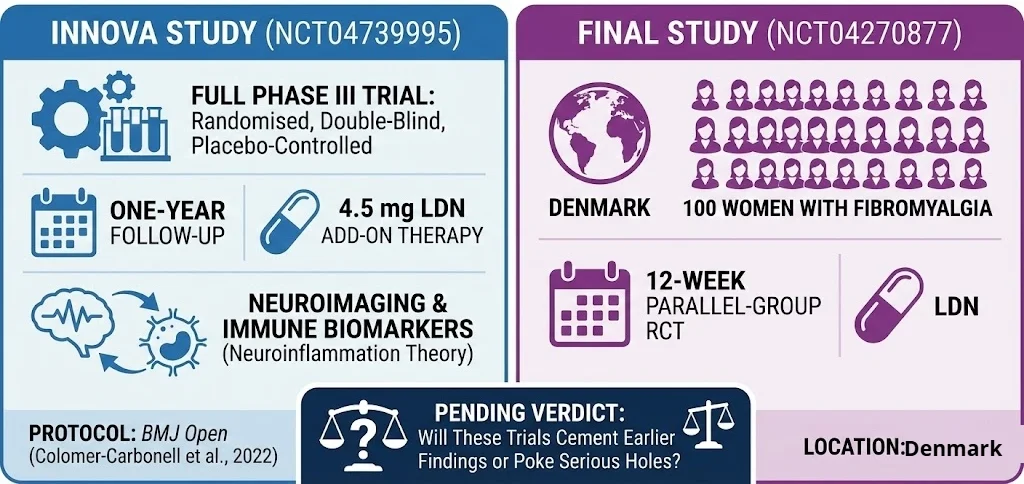
The early data is one thing. What really matters now is whether it holds up under proper scrutiny, and two major trials are currently putting that to the test.
The INNOVA study is a full Phase III trial — randomised, double-blinded, placebo-controlled — testing 4.5 mg LDN as an add-on therapy for fibromyalgia with a one-year follow-up. It includes neuroimaging and immune biomarkers to figure out whether LDN actually modulates neuroinflammation the way the theory says it should. The protocol was published in BMJ Open in 2022 (Colomer-Carbonell et al. — Trial registration: NCT04739995).
The FINAL study out of Denmark is testing LDN in 100 women with fibromyalgia across a 12-week parallel-group RCT (ClinicalTrials.gov: NCT04270877).
Results from both are still pending. These are the ones that will either cement the earlier findings or poke serious holes in them.

How It Differs from the Usual Approach
This is where LDN gets conceptually interesting, separate from any single condition.
The standard playbook for chronic inflammatory conditions — corticosteroids, methotrexate, biologics like infliximab and adalimumab — works by broadly suppressing immune function. These drugs are effective and for many patients absolutely necessary. But they carry real baggage: higher infection risk, weakened immune surveillance, and sometimes long-term organ damage. They’re blunt instruments, and the trade-offs are worth it right up until they aren’t.
LDN appears to sidestep most of that. Rather than suppressing immunity wholesale, it targets overactivated microglia specifically and helps rebalance T-cell subsets (Th17/Treg, Th1/Th2) without knocking the whole system flat. The safety data is reassuring on this front — a review covering over 11,000 people taking naltrexone at various doses found no serious adverse events above what placebo produced. Side effects with LDN are mild. Vivid dreams are the big one (roughly 37% of participants report them), plus occasional headaches, some transient insomnia, and sometimes a bit of nausea.

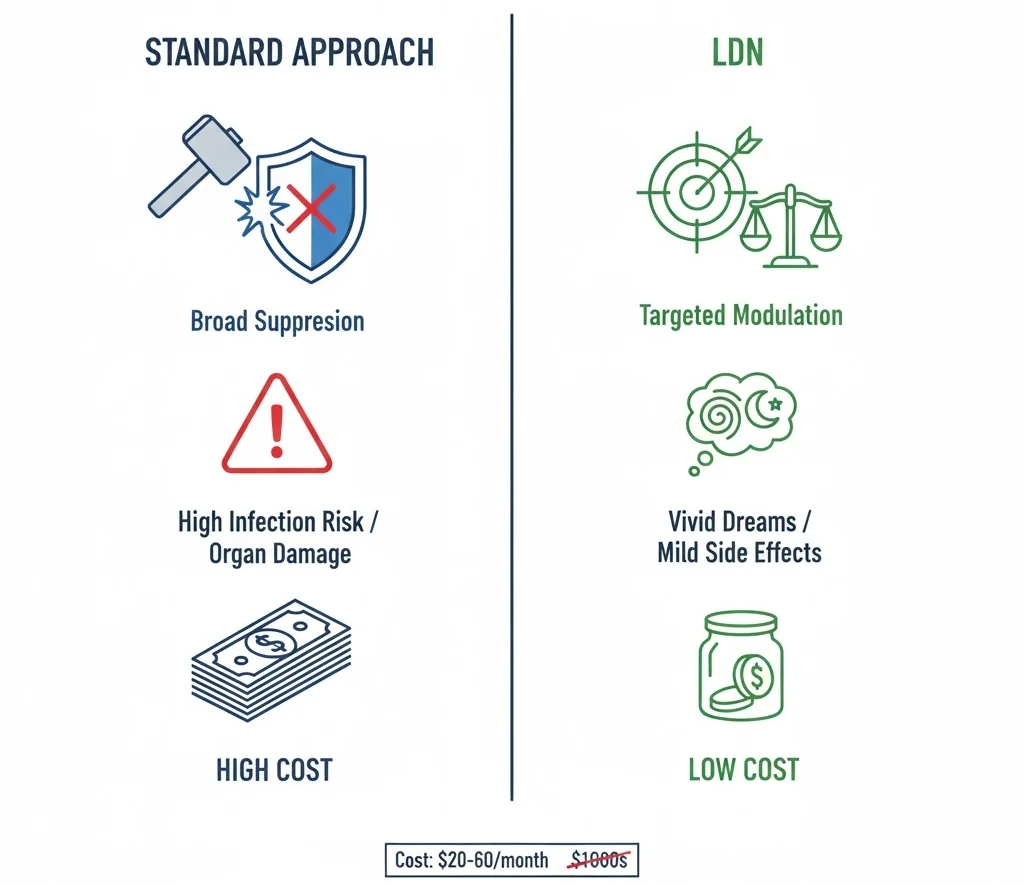
Cost is barely worth mentioning. LDN runs about $20-60 per month from compounding pharmacies. It’s not FDA-approved for any inflammatory condition, so it’s entirely off-label and insurance typically won’t cover it — but even out of pocket, it’s a rounding error compared to what biologics cost.
Worth Knowing Before You Bring It Up With Your Doctor
LDN isn’t a miracle drug and anyone selling it as a proven fix for autoimmune disease is running ahead of the science. The evidence is early-stage, sample sizes are small, and the two trials that could genuinely shift the conversation haven’t reported yet.
Still, a few practical things. You can’t take it alongside opioid medications — LDN is an opioid antagonist and will block their effects, which can throw opioid-dependent patients into withdrawal. Most protocols have you take it at bedtime, starting at a low dose (often 0.5 to 1.5 mg) and working up to 4.5 mg over several weeks. You’ll need a compounding pharmacy since nobody manufactures naltrexone at these doses as a standard product.
If you’re dealing with something where chronic inflammation sits at the centre — fibromyalgia, Crohn’s, MS, or similar — it’s worth raising with your doctor. The risk profile is genuinely low, the cost is almost nothing, and even though the evidence isn’t definitive, the biological reasoning is sound and the early data was good enough to get multiple research groups across the US, Spain, and Denmark investing serious trial infrastructure to test it properly.
The worst-case scenario is a few weeks of weird dreams. Medicine has far worse gambles than that.