


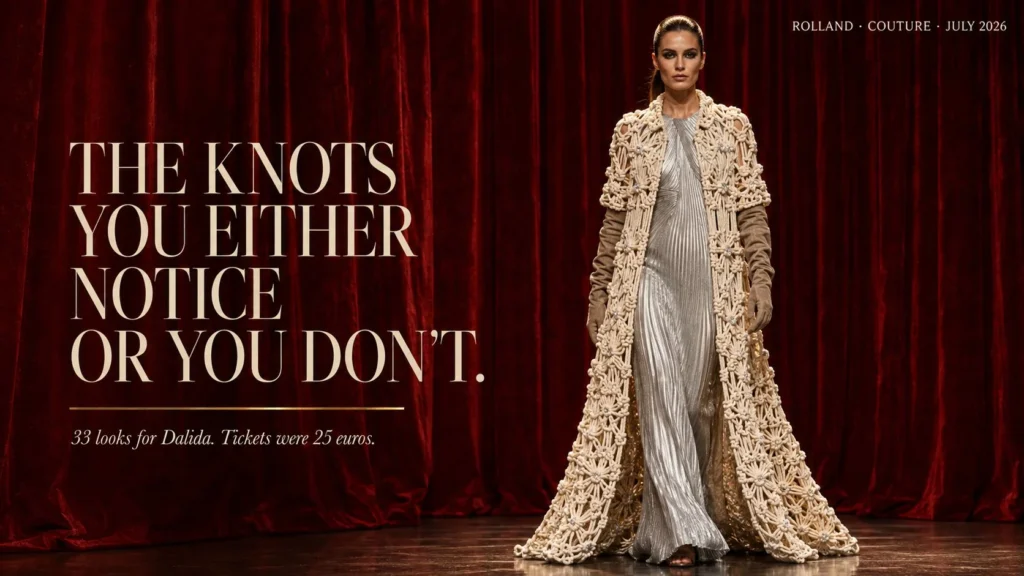
Paris ran thirty couture shows across four days this July. The one I keep going back to happened in a music hall, not a salon, with tickets anyone could buy.
The basics:
| The show at a glance | |
|---|---|
| House | Stéphane Rolland |
| Season | Haute Couture Fall/Winter 2026-27 |
| Collection title | Dalida, From the Orient to Paris |
| Venue | L’Olympia, Paris |
| Date | July 7, 2026 |
| Looks | 33 |
| Opening palette | White in crêpe, gazar, chiffon, organza, satin |
| Stones used | Rock crystal, agate, onyx, mother-of-pearl, porcelain, diamonds |
| Music | Live orchestra, conducted by Hany Farahat |
| Finale | Singer Oumaima Taleb in backless white crêpe |
| Tickets | 25 to 55 euros, proceeds to the Fondation des Hôpitaux |
Tickets Cost 25 Euros, Which Is Not How Couture Works
Couture audiences get assembled, not sold. Buyers, clients, editors, a wall of photographers. Rolland put Olympia seats on public sale instead, 25 to 55 euros, the money going to the Fondation des Hôpitaux through the Pièces Jaunes campaign.
So a person with no connections whatsoever could book this like a concert. Which fits. The Olympia is a concert hall, Dalida sang there through most of her career, the whole collection was built as a tribute to her. There was a live orchestra playing in the room too.
Rolland has staged shows at the Olympia before. He keeps going back. Hard to blame him when the house red curtain does half the set design for free.
White Opened the Show, Gloves Included on Nearly Every Exit
The first act was white almost without a break. Crêpe, gazar, organza, satin, the color drained out so you end up staring at seams and volume instead.

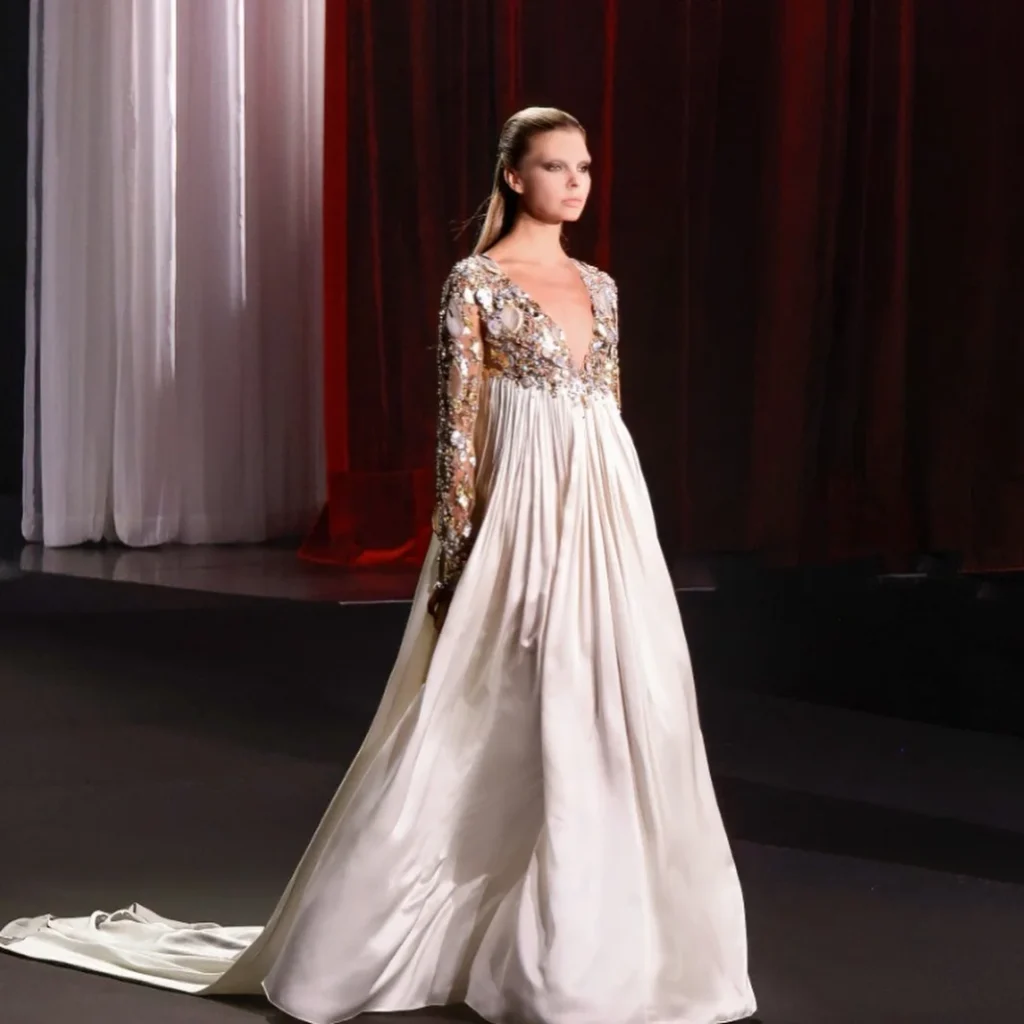
An empire gown early in the running order had a plunging bodice loaded with crystal, pearl, bits of gold, then plain ivory satin the rest of the way down. Bridal on paper. Not bridal in person, mostly because of the styling.
Every model walked with hair slicked flat into a ponytail, eye makeup smoked out dark, no jewelry beyond what was sewn on. Plus those ruched taupe suede gloves, pushed up past the elbow, on look after look. Someone on the styling team really believed in those gloves. I counted them on more exits than I could keep track of.
The Coats
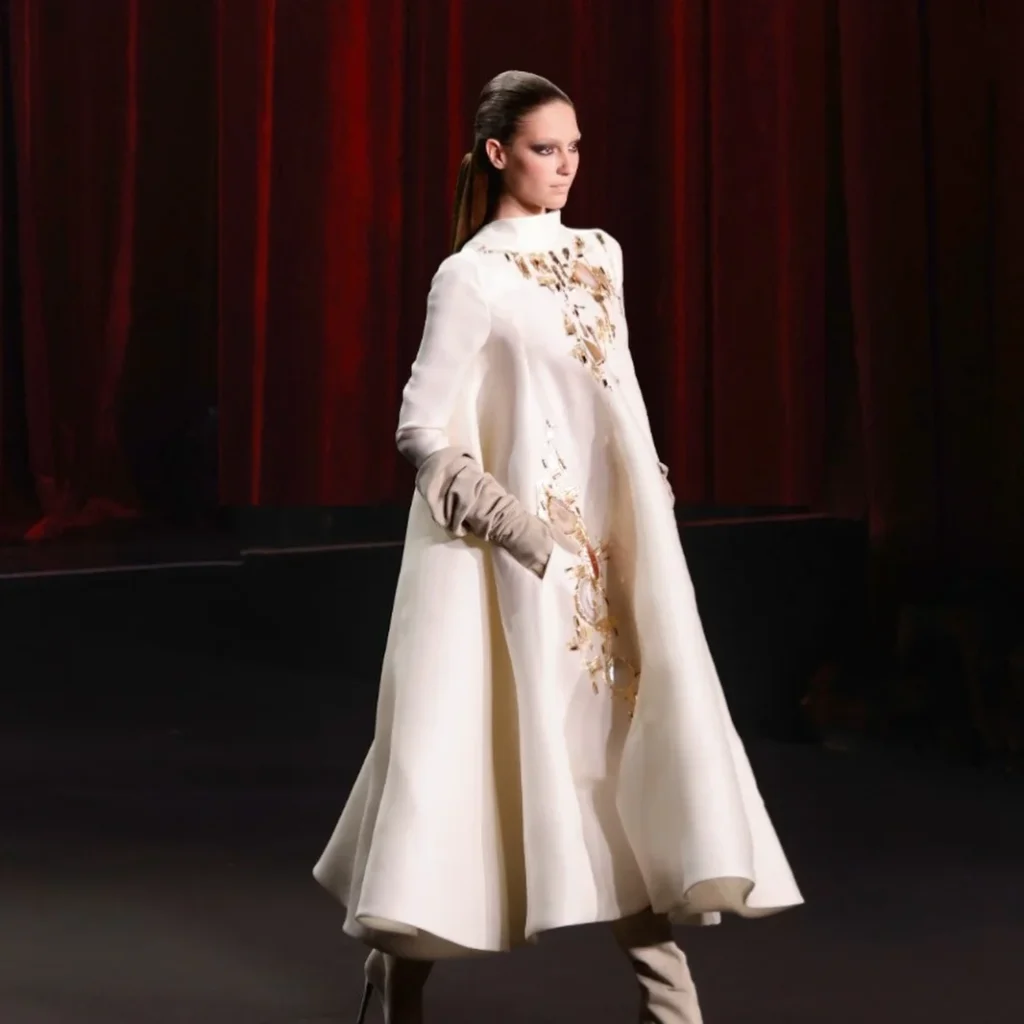
A high-collar A-line coat in ivory carried gold fragments down the front, sharp-edged pieces, not sequins. It moved stiff on purpose. Gazar does that when you let it.
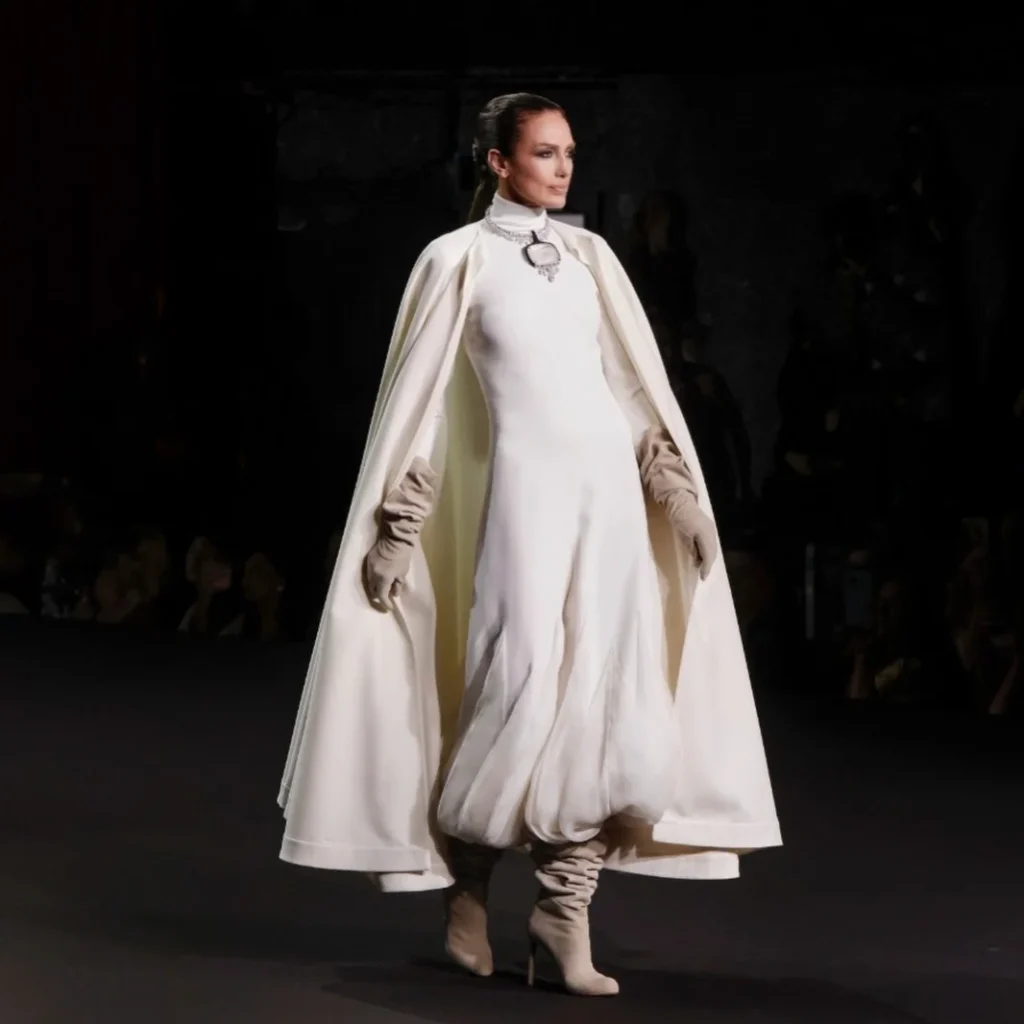
Later a full-length cape went over a white column with one heavy jewel sitting at the throat, slouched taupe boots underneath. The cape exits were where the show slowed down. On a stage that size a cape gets maybe four extra seconds of drag time, so the audience gets four extra seconds of looking.
The Skirts
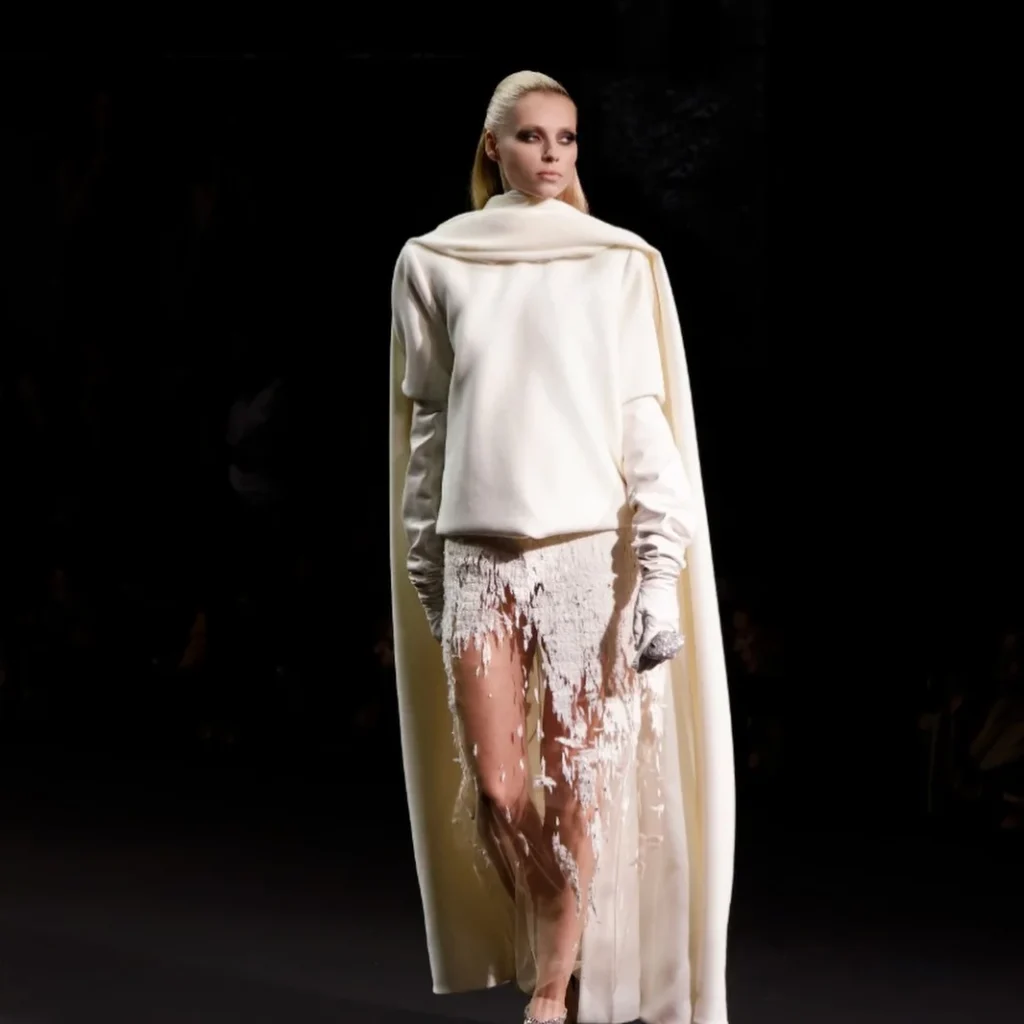
The skirts went the opposite direction from the coats. One look had a plush ivory sweater with a scarf-cape over a skirt that was barely there, torn tulle with white feather pieces scattered through, leg visible through the gaps. Cozy on top, falling apart below. I liked it more than I expected to.
The Macramé Pieces Are the Reason to Care About This Show
Everything above is good couture. This part is the part I’d steal.
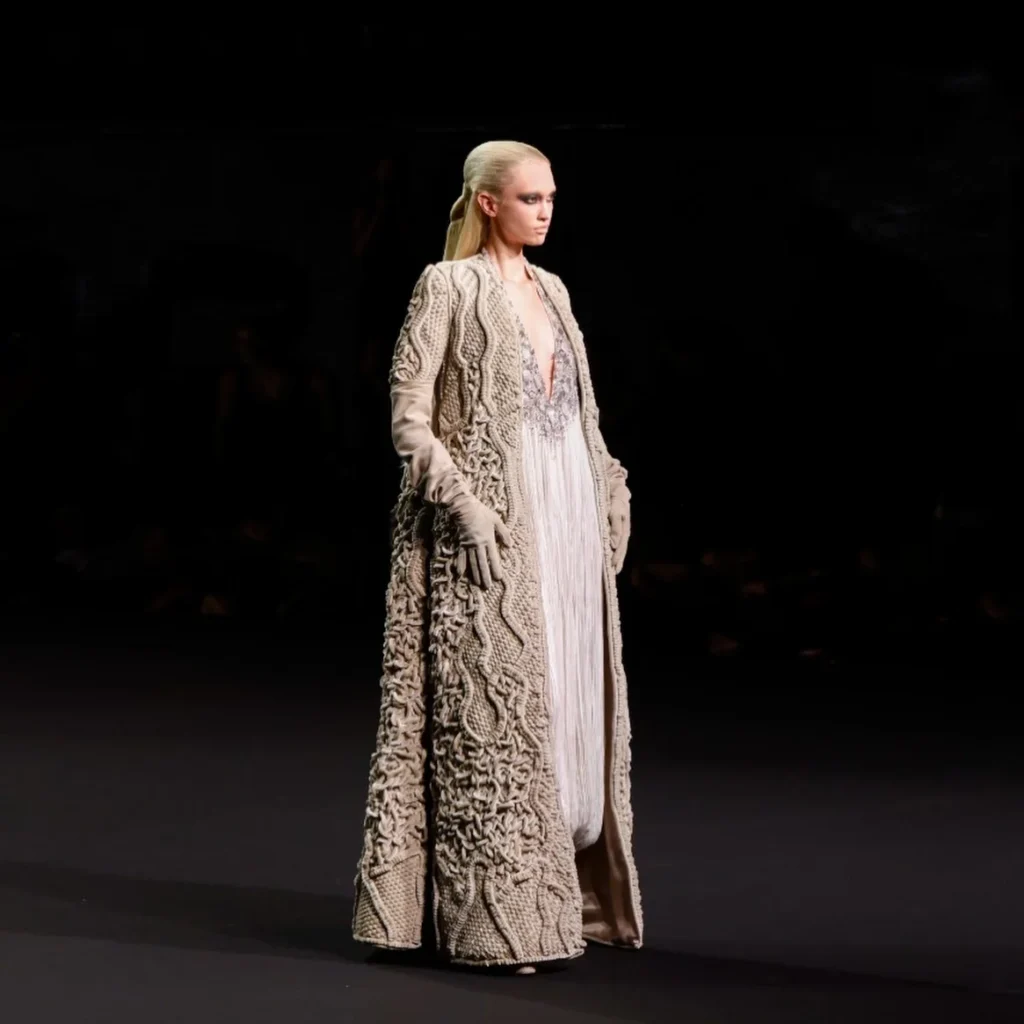
A floor-length coat in cream, worked entirely in knotted satin cord, worn over a pleated silvery column. From a distance it reads as heavy cable knit. Up close the pattern is way too irregular for knitting, the cords cross in loops and clusters, raised off the surface, some sections dense, some open.
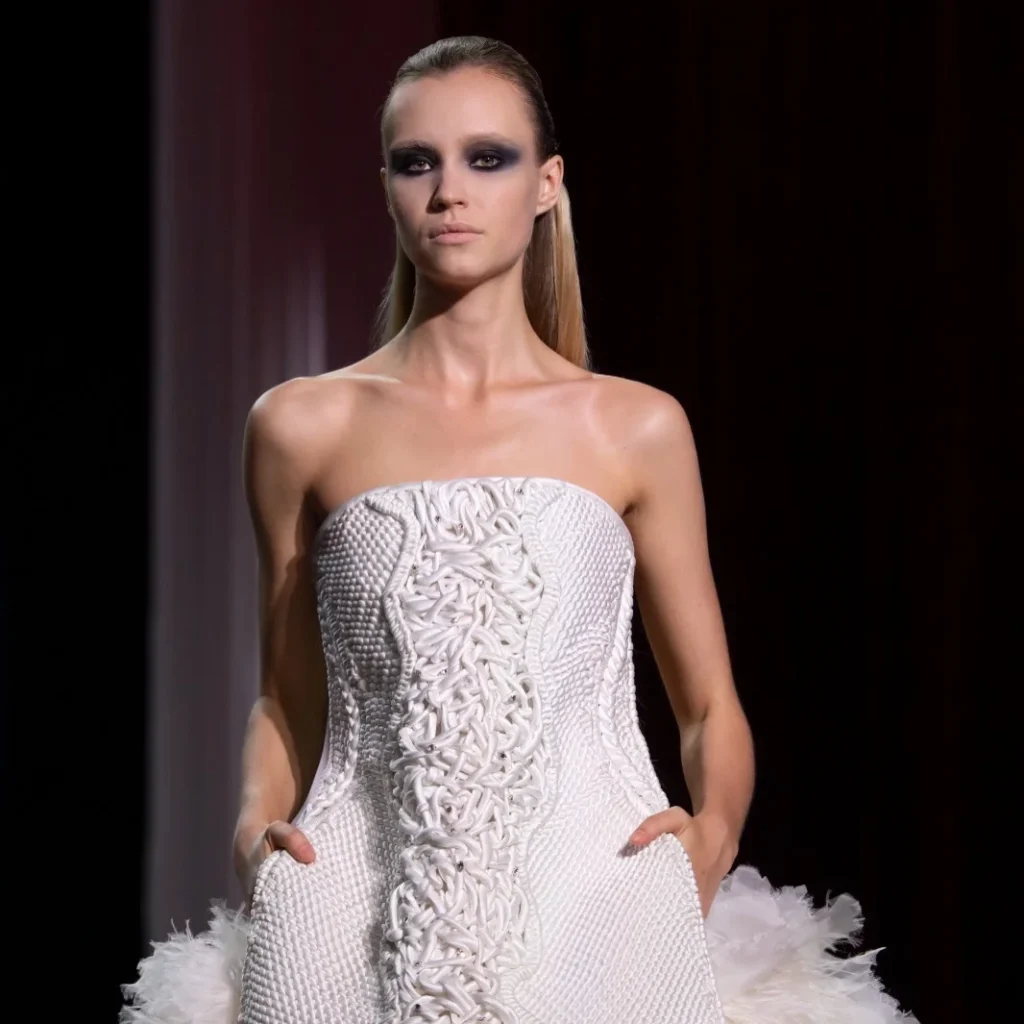
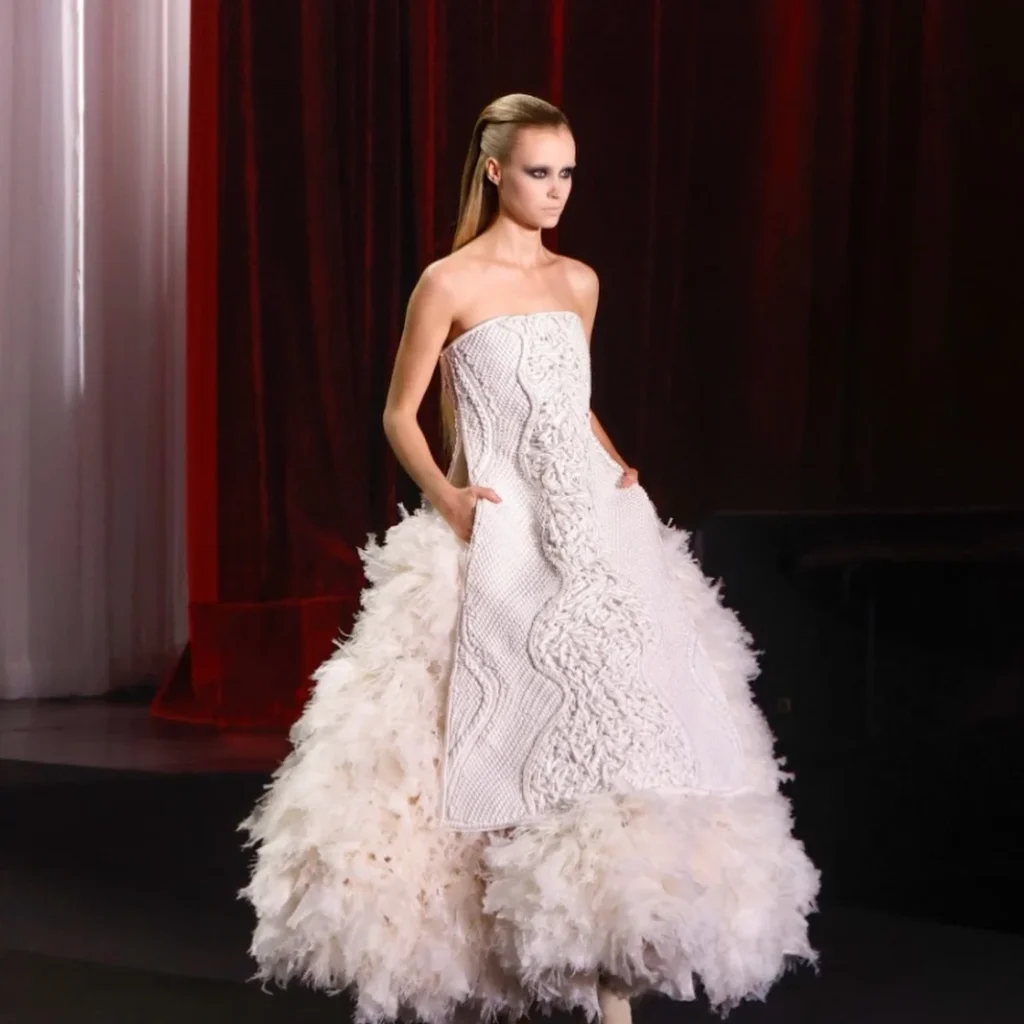
The same technique showed up as a strapless corset over a big ostrich feather skirt. The close-up press shot is worth zooming into. There are tiny crystals set inside the knots, placed where the cords cross, so the surface glints in points rather than washing out in shine.
I couldn’t confirm what the cord actually is. Satin over some kind of core, presumably, the show notes don’t say. What I do know is that every knot in a piece like that gets placed by hand, so a single coat can eat hundreds of atelier hours before anyone touches the lining. That kind of labor doesn’t photograph. You either notice or you don’t.
The other material worth flagging: raw porcelain, sewn on as embellishment next to agate, onyx, rock crystal. Ceramic on gazar. I’ve been watching couture streams for years, that one was new to me.
The Back Third Went Red and Black, Then Ended Quietly
After the long white stretch the palette turned. Olympia red first, black behind it, some silver. Backless tuxedo jackets, suits with open latticework cutting, coats cut along kimono lines. Sharper, more nightclub than chapel, closer to the Dalida of the disco years.
I remember this section less clearly than the white one, which probably says more about me than about the clothes.
The finale pulled back to white. Singer Oumaima Taleb closed in a long backless crêpe gown with crystal embroidery, no big production around her. For a designer whose reputation is built on scale, ending small was a choice, a good one given whose life the show was about.
Jennifer Lopez Wore a Piece From This Collection in the Street Days Later
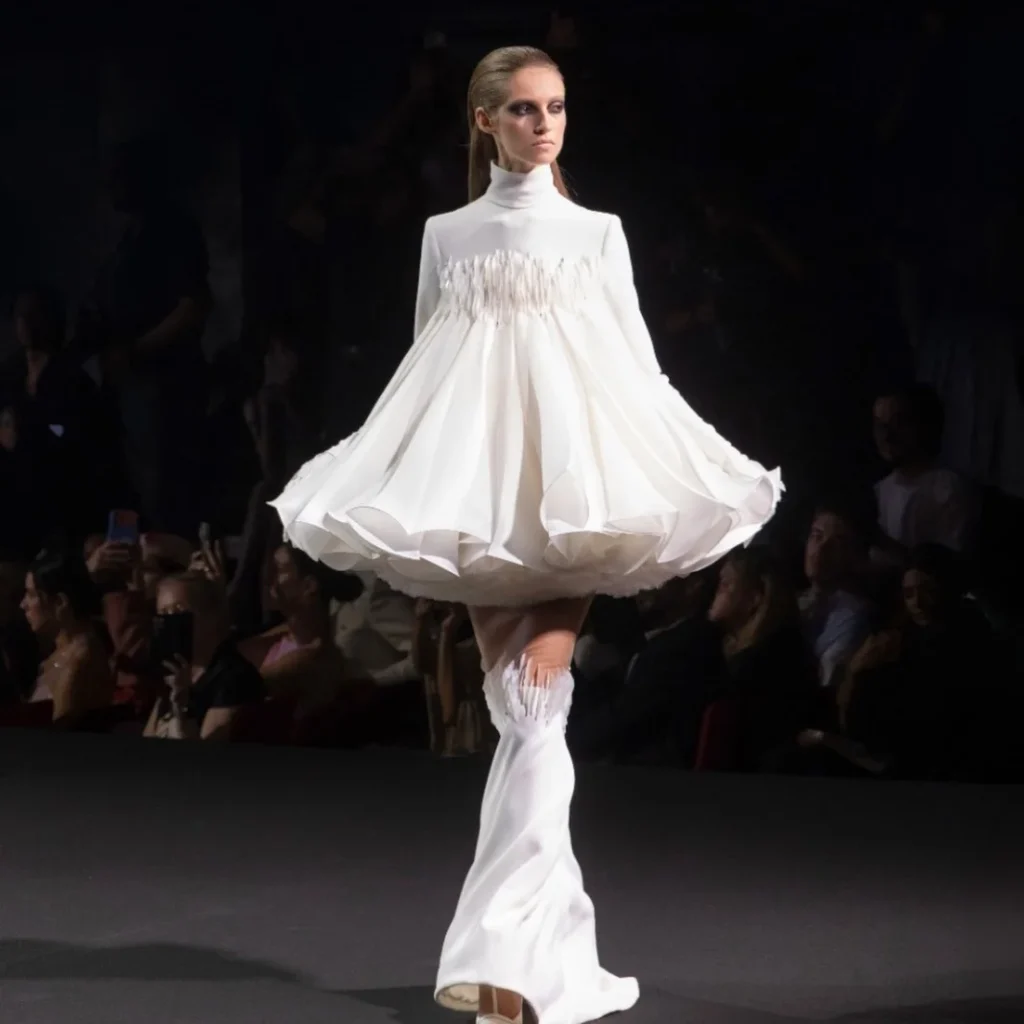
The most photographed runway look was the bell dress, a white mini flaring out in petal layers over a separate fishtail column underneath. You can see the phones up in the audience shot. Everyone in the room clocked it in real time.
Then the collection got a second life outside the theater. Jennifer Lopez left her Paris hotel with her sister Lynda in white Rolland from this collection, high neck, long sleeves, a huge peplum blooming at the waist with a sheer nude panel under it. Rolland reshared the clips on his own account.
Celebrity placement is marketing, obviously. Still, a couture gown holding up in daylight on a sidewalk is a harder test than a runway pass, plenty of showpieces would collapse into costume out there. This one didn’t.
Best white of the week for me, no real contest. My complaints are small: the taupe gloves overstayed, the cape count crept toward self-parody by the final third. The macramé coat alone would have justified the ticket price, even at the 55 euro end.