


The 25th Tribeca Festival ran June 3–14, 2026. Its three top prizes went to an American addiction drama (Cotton Fever), a Canadian Inuk mystery set on a cargo freighter (Labrador – Autopsy of Silence), and a documentary about a recording studio inside an overcrowded Cameroonian prison (Jail Time Records). Labrador and Jail Time Records each won three awards. The audience narrative prize went to One Woman One Bra (Kenya/Nigeria). The audience documentary prize went to Mexicanaamerican. A$AP Rocky took Tribeca X Director of the Year. The complete verified winner list is below.
Year twenty-five usually means nostalgia. Tribeca chose the opposite. The festival ran June 3 through 14, 2026, and the curatorial signal was geographic expansion, not retrospective. The three biggest prizes went to an American addiction drama, a Canadian Inuk mystery on a cargo freighter, and a documentary about a recording studio built inside an overcrowded prison in Cameroon. That spread is not accidental, it’s the point.
What the Top three Winners Actually Are?

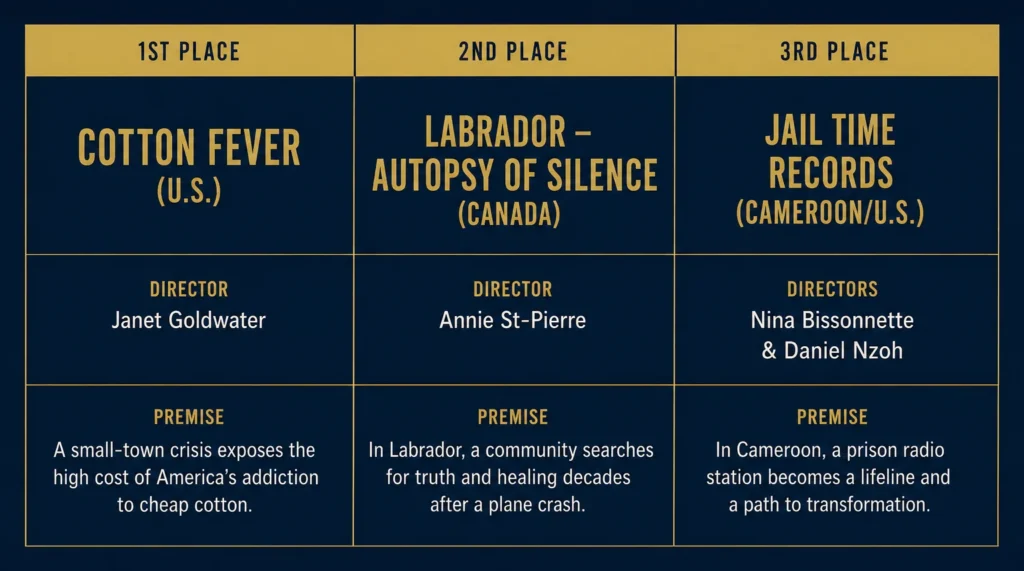
The Founders Award for Best U.S. Narrative Feature went to Cotton Fever, directed by Daniel Blake Schwartz. The film follows several groups of people struggling with addiction. The jury called it “a heartbreaking exploration of addiction and the difficulties of escaping its damaging effects.” It also took Best Cinematography in a U.S. Narrative Feature for Tom Acton Fitzgerald.
The International Narrative Competition went to Labrador – Autopsy of Silence, directed by Rodrigue Jean. It follows an Inuk mechanic suspected of murder on a cargo freighter. The jury, which included Nas and Mira Nair, praised it as “confidently crafted, spiritually mindful.” It won three awards total: Best International Narrative Feature, Best Performance for Christopher Angatookalook, and Best Cinematography for Mathieu Laverdière.
The Documentary Competition went to Jail Time Records, co-directed by Dione Roach and Steve Happi. The film tracks Africa’s first in-prison recording studio, built within an overcrowded prison in Cameroon. Inmates produce music that gets broadcast on local radio. The jury statement called it “a cry to be heard from the depths of incarceration, and we are listening.” It also won Best Cinematography in a Documentary Feature and the Albert Maysles Award for Best New Documentary Director.
The Other Awards That Matter
Summer of Three, from Puerto Rico, won two awards: Best Performance in a U.S. Narrative Feature for Marcel Ruiz, Paolo Schoene, and Kiki Montilla and Best Screenplay for Carlitos Ruiz-Ruiz, Marcel Ruiz, and Mariana S. Belaval. The jury said the actors made them “want to jump on the back of the motorcycle and careen across Puerto Rico.”
The Audience Awards, voted by actual ticket buyers, went to One Woman One Bra (narrative) and Mexicanaamerican (documentary). One Woman One Bra is a Kenya-Nigeria co-production. It also earned a Special Jury Mention in the Viewpoints section.
The Viewpoints Award itself went to Crocodile, a Nigeria-New Zealand co-production directed by The Critics and Pietra Brettkelly.
The Nora Ephron Award, for an exceptional female filmmaker, went to Dina Duma for Skateboarding Is Not for Girls, a North Macedonia-Belgium-Slovenia-Croatia co-production.

The Complete Winner List
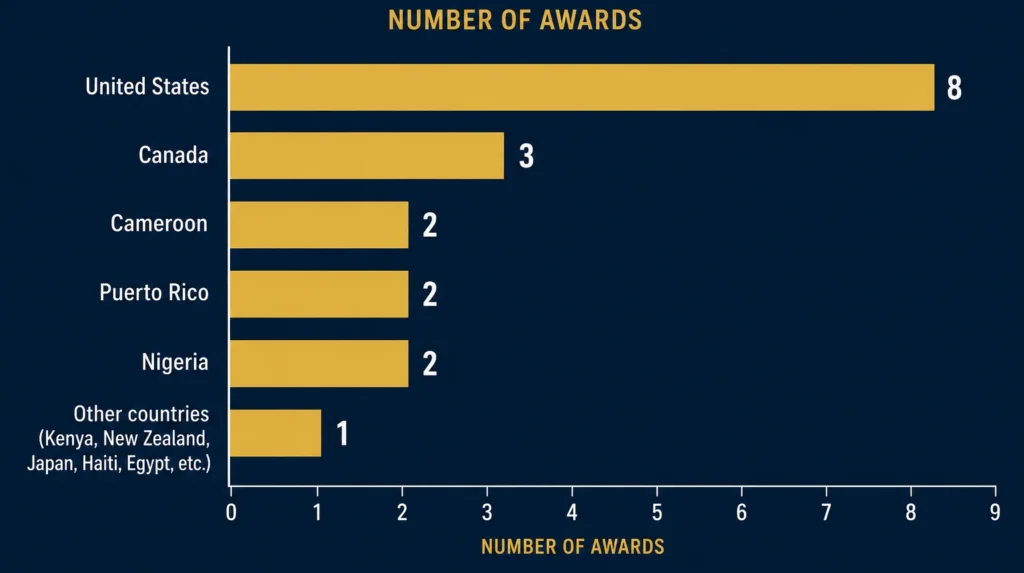
Here is the full competition results, verified against The Hollywood Reporter (June 19, 2026), Vulture (June 12, 2026), Deadline (June 12, 2026) and the official Tribeca site.
U.S. NARRATIVE COMPETITION
- Best U.S. Narrative Feature: Cotton Fever, Daniel Blake Schwartz.
- Special Jury Mention: Here I’m Alive, Joshua Z Weinstein.
- Best Performance: Marcel Ruiz, Paolo Schoene, Kiki Montilla for Summer of Three.
- Best Screenplay: Carlitos Ruiz-Ruiz, Marcel Ruiz, Mariana S. Belaval for Summer of Three.
- Best Cinematography: Tom Acton Fitzgerald for Cotton Fever.
INTERNATIONAL NARRATIVE COMPETITION
- Best International Narrative Feature: Labrador – Autopsy of Silence, Rodrigue Jean.
- Best Performance: Christopher Angatookalook for Labrador – Autopsy of Silence.
- Special Jury Mention: Duda Santos & Mc Nem for Funk.
- Best Screenplay: Alex Camilleri for Zejtune.
- Best Cinematography: Mathieu Laverdière for Labrador – Autopsy of Silence.
DOCUMENTARY COMPETITION
- Best Documentary Feature: Jail Time Records, Dione Roach and Steve Happi.
- Special Jury Mention: Time Warp, Allison Berg.
- Best Cinematography: Dione Roach, Urberto Rapisardi, Steve Happi for Jail Time Records.
- Special Jury Mention: Lukas Gut for Siege of Paradise.
- Best Editing: Rebecca Adorno, Viridiana Lieberman for Jean-Michel.
- Special Jury Mention: Christopher A. Peterson, Peter Norrey for American Zoo.
VIEWPOINTS
- Winner: Crocodile, The Critics and Pietra Brettkelly.
- Special Jury Mention: Sarah Karei for One Woman One Bra.
BEST NEW NARRATIVE DIRECTOR
- Winner: Miiku Sakanishi for Memorizu.
- Special Jury Mention: Elisee Junior St. Preux for The Tropic Sun and His Eyes.
ALBERT MAYSLES AWARD
- Winner: Dione Roach, Steve Happi for Jail Time Records.
- Special Jury Mention: Natalie Baszile, Hyacinth Parker for Harvest.
NORA EPHRON AWARD
- Winner: Dina Duma for Skateboarding Is Not for Girls.
SHORTS
- Best Narrative Short: 32B, Mohamed Taher.
- Best Documentary Short: Listen, Taliesin Black Brown.
- Best Animated Short: Violet and Marlowe Rob a Bank, Wesley Wang.
- Best New York Short: Insufficient Fare, Michael Gugger and Varvara Kanellakopoulou.
- Best Music Video: Fingers Crossed – The Moth & The Flame, Rebecca Thomas.
- Student Visionary Award: Found&Lost, Reza Rasouli.
TRIBECA GAMES
- Winner: There are No Ghosts at the Grand, Anil Glendinning and Rachel Glendinning.
TRIBECA PODCASTS
- Audio Nonfiction Reporting: The Fastest Girl in Somalia, Teresa Krug.
- Audio Fiction: THE DOUBLE[S], Winnie Kemp and Alexander Kemp.
- Audio Investigative Nonfiction: The Most Wanted Olympian, Michelle Shephard.
- Audio Memoir: Reaching Out, Sayre Quevedo.
TRIBECA X
- Director of the Year: A$AP Rocky.
- Best Feature: Meal Ticket from McDonald’s.
- Best Short: The Book of George from Stio.
- Best Commercial: Last Coke in the Desert from Coca-Cola.
- Best Episodic: Built to Move from Autodesk.
- Best Content Creator: The Master of Speed & Stability from Beats.
- Best Audio/Podcast: To Catch a Thief from Rubrik.
- Social Impact Award: The Philipstown WireCar Grand Prix from Accenture.
- Environmental Impact Award: The Theory of Spice from Yogi Tea.
What This Actually Means
Tribeca programmed winners from at least fourteen countries this year. The top documentary prize went to a prison in Cameroon. The top international narrative went to an Inuk-language mystery on a freighter. The audience favorite in narrative came from Kenya and Nigeria. This is not a festival shrinking back to Lower Manhattan. It’s using its twenty-fifth year to screen films that most American audiences would not otherwise encounter.