Podiatrists And Barefoot Shoe Fans Do The Same Shoe Test And Want Opposite Answers
Pick up a shoe in any store and try to wring it out like a wet towel. A podiatrist watching...
Read moreDetails

The brochure version is a family parked beside a gorge a thousand kilometres from anywhere, an espresso machine humming off a solar array. Lovely image. The actual data tells a quieter, more useful story.
Australians took 17.3 million caravan and camping trips in 2025, generating 57.9 million nights and $12.6 billion in expenditure, with 87% of trips in regional Australia. The shift is real. But read further and the picture changes.
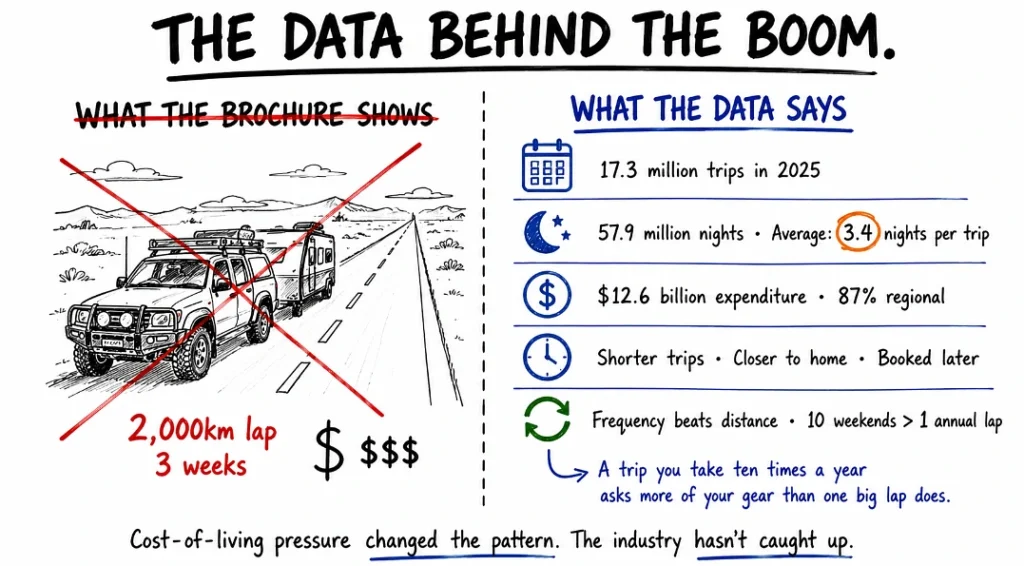
The average trip is now just 3.4 nights. Travellers are choosing shorter, closer-to-home holidays, booking later, and prioritising value as cost-of-living pressure bites.
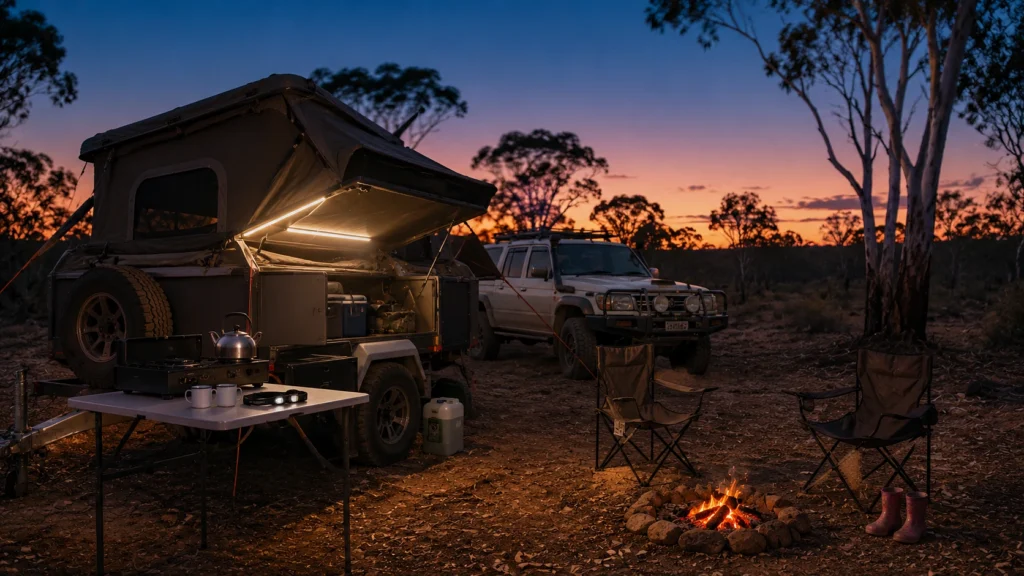
Setup time is the thing that makes or breaks a short trip. Spend two hours pitching and levelling on a Friday night and the magic’s gone before it started.
The point isn’t luxury. Low friction is what gets a busy family out the door more than twice a year.
Most of the hard numbers are British, not Australian. The Outjoyment Report, run by Liverpool John Moores and Sheffield Hallam University with the Camping and Caravanning Club, found 44% of campers were flourishing, meaning optimal mental health, against 31% of non-campers, and campers were around 23% less anxious.
These reward a genuinely self-sufficient setup. For families ready to go further than a weekend:
None of this needs a thousand kilometre lap or a five figure rig to start. A camper that sets up fast, a free weekend, and somewhere a few hours out with no reception covers most of what families are really after, a couple of days together with the screens off because there’s nowhere to plug them in anyway.

Pick up a shoe in any store and try to wring it out like a wet towel. A podiatrist watching...
Read moreDetails
Copyright © 2024 NoodleMagazine - All Right Reserved