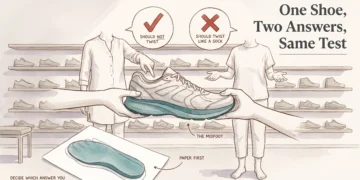
Podiatrists And Barefoot Shoe Fans Do The Same Shoe Test And Want Opposite Answers
Pick up a shoe in any store and try to wring it out like a wet towel. A podiatrist watching...
Read moreDetails

What appears simple hides a common issue. Although online shopping appears simple, a large number of transactions never finish. People look around, weigh options, place items aside – then leave before payment. Such pauses ripple through sectors worldwide. Two phrases are commonly used to describe it: Cart abandonment and checkout abandonment.
Both reduce revenue. The difference is that they happen at different stages. Cart abandonment shows hesitation, while checkout abandonment reflects stronger purchase intent. Recognising distinctions allows precise detection of obstacles. Mistaken solutions are less likely when patterns are clear. Insight here shapes better interactions – and results follow naturally.
Occasionally, someone places products into their basket and then exits without proceeding further, a behaviour commonly described as Cart abandonment. Intent remains uncertain during this phase. Some individuals view the cart more as a temporary list than a commitment, which often leads to cart abandonment. Price comparisons might take place elsewhere at that moment. Timing could also influence whether they return later.
Hesitation at checkout appears frequently and plays a major role in cart abandonment. It tends to lack seriousness, easily undone by small doubts. Some visitors step away to compare options elsewhere. Delivery details sometimes trigger second thoughts. A study reveals that about 70% of digital shopping carts get left behind worldwide. Such figures highlight how routine cart abandonment truly remains.
A purchase trail halts when someone starts checkout yet walks away prior to paying. Near-final intent marks this phase of the journey. Exit here often reflects unease or doubt taking hold. Desire to complete remains – barriers interfere instead.
Fees that appear late often spark frustration, while mandatory sign-ups add friction instead of trust. Even a small hurdle hits directly at the user’s sense of fairness. When compared to earlier hesitation during shopping, leaving at this stage suggests something has already gone wrong in how the checkout was set up.
What happens when we mix up these two actions? Decisions suffer. One path shows curiosity – leaving a cart. The other reveals disruption – quitting at checkout. Solutions must differ. Pushing speed at the start might seem pushy. Overlooking pain points near payment loses those prepared to buy.
Prioritising fixes begins with grasping the user’s purpose. Clarity matters most when people leave early – reassurance keeps them engaged. Speed takes over once decisions near completion, paired with minimal steps. Respecting these shifts sharpens how companies allocate effort. Precision replaces guesswork where adaptation aligns with timing.
Several factors drive cart abandonment, and most are not emotional. Shoppers may be multitasking or interrupted. Some add items to calculate totals or save favourites. Others leave due to unclear delivery timelines.
Poor product descriptions also contribute. Limited images or missing specifications create doubt. Slow-loading pages increase impatience. These issues create hesitation, not rejection. Addressing them reduces early drop-offs without pressure.
Checkout abandonment is usually caused by friction. Unexpected charges feel misleading and break trust. Long forms demand effort when motivation is highest. Limited payment options restrict convenience.
Security concerns also play a role. Shoppers hesitate if trust signals are unclear. According to Statista checkout abandonment data, many users exit due to payment-related concerns. These exits are costly because intent was already strong.
Cart abandonment solutions focus on guidance. Clear pricing, delivery transparency, and strong visuals build confidence. Saved carts and gentle reminders support decision-making. The aim is to nurture interest, not rush it.
Checkout abandonment solutions focus on removal. Fewer steps, guest checkout, and clear progress indicators help. Trust badges and fast-loading pages maintain momentum. These changes respect the shopper’s readiness to pay.
Analytics help separate cart abandonment from checkout abandonment clearly. Funnel reports show where users leave. Heatmaps reveal hesitation points. Session recordings provide context behind exits.
When data is segmented correctly, patterns emerge. Businesses can then prioritise fixes with confidence. This avoids guesswork and improves results. Behaviour-based insights are more valuable than assumptions.
Many businesses focus only on recovering abandoned carts. While useful, this ignores checkout failures. Checkout abandonment often offers quicker wins. These users need fewer changes to convert.
Ignoring this stage creates blind spots. Revenue potential remains untapped. A balanced approach considers both behaviours equally. Each stage deserves attention based on the intent level.
Insights from cart abandonment patterns inform better design decisions. They highlight where clarity is missing. They also reveal which information users seek before committing. This feedback improves product pages and navigation.
When design supports decision-making, hesitation reduces. The journey feels logical and respectful. This encourages progression without force. Experience quality improves naturally.
Cart abandonment and checkout abandonment are not interchangeable. They reflect different intentions and different frustrations. Addressing them separately leads to smarter optimisation. It also creates a smoother shopping journey.
Understanding this difference turns drop-offs into insights. With the right approach, businesses reduce friction and build trust. When users feel supported, completion becomes the natural next step. Exploring cart abandonment thoughtfully makes all the difference.

Pick up a shoe in any store and try to wring it out like a wet towel. A podiatrist watching...
Read moreDetails
Copyright © 2024 NoodleMagazine - All Right Reserved