
Podiatrists And Barefoot Shoe Fans Do The Same Shoe Test And Want Opposite Answers
Pick up a shoe in any store and try to wring it out like a wet towel. A podiatrist watching...
Read moreDetails

An actor sat behind a gray office desk beneath a Rodin bronze and read Dante aloud while NFL players walked a runway and this happened in San Francisco, two nights before the Super Bowl, as the official opening act of American fashion’s fall season. New York would not start for another five days. The season’s strangest show got there first and the strangeness was the point.
What followed, once NYFW proper ran February 11 through 16, was a week of American fashion refusing to play small. A historic debut. A 45th anniversary staged at the opera. And underneath the spectacle, most of the major collections kept circling the question Tory Burch asked outright: in unstable times, what actually endures?
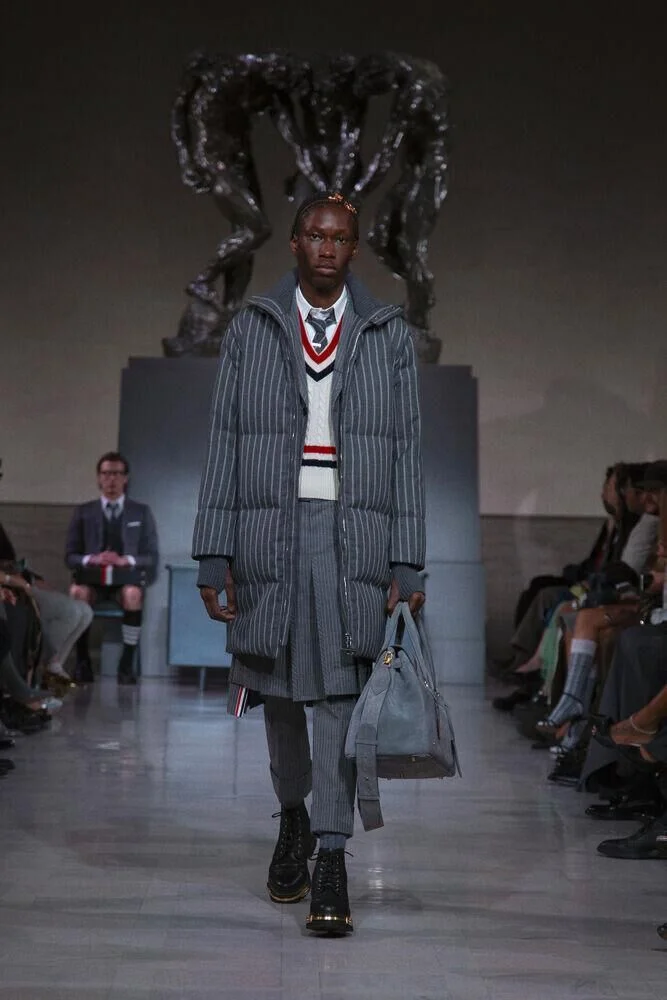
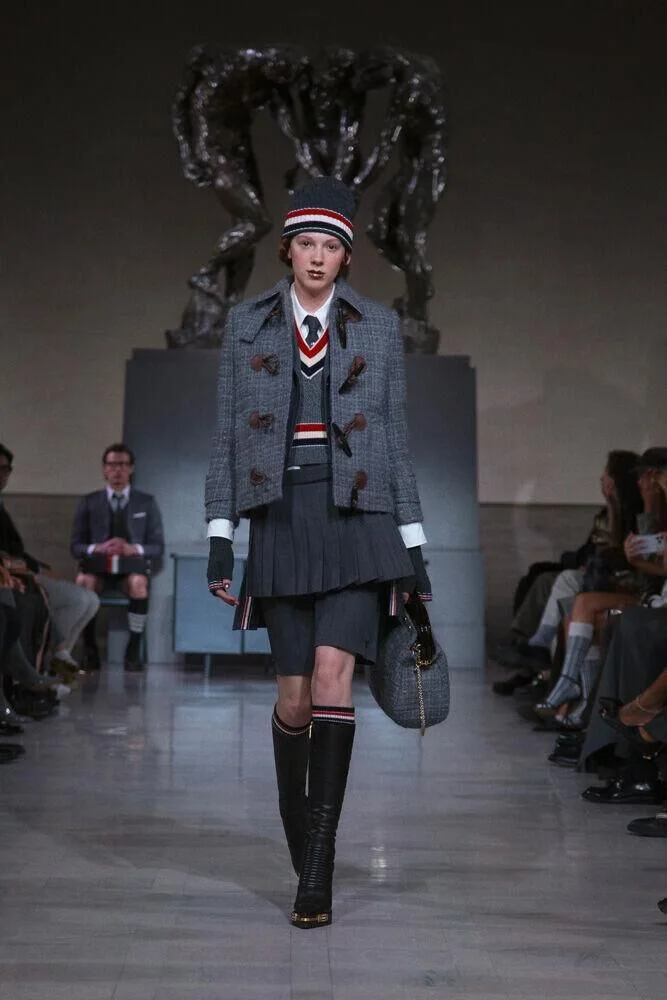
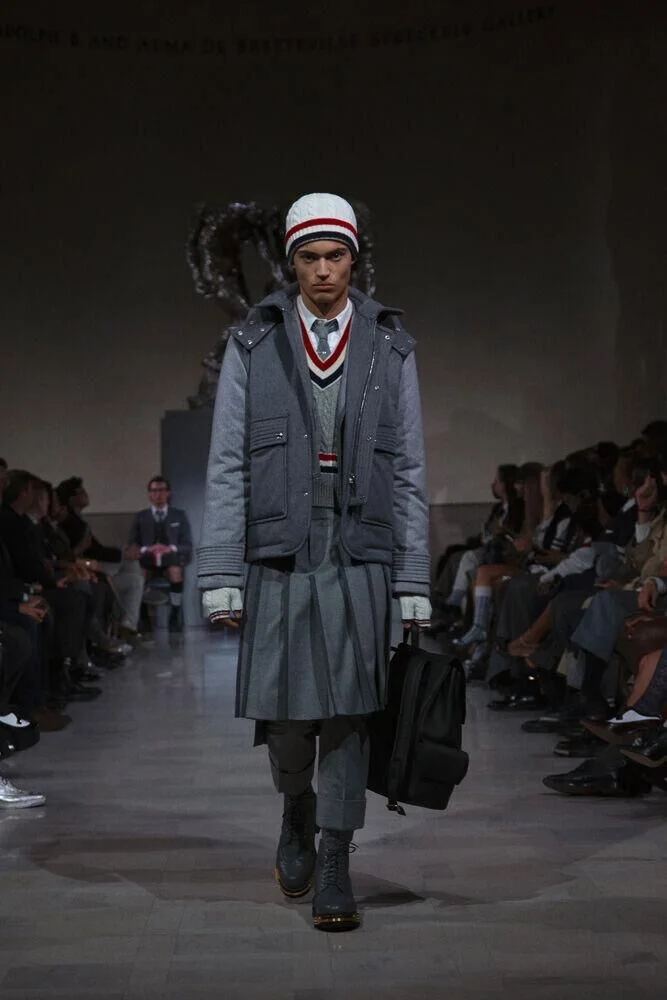
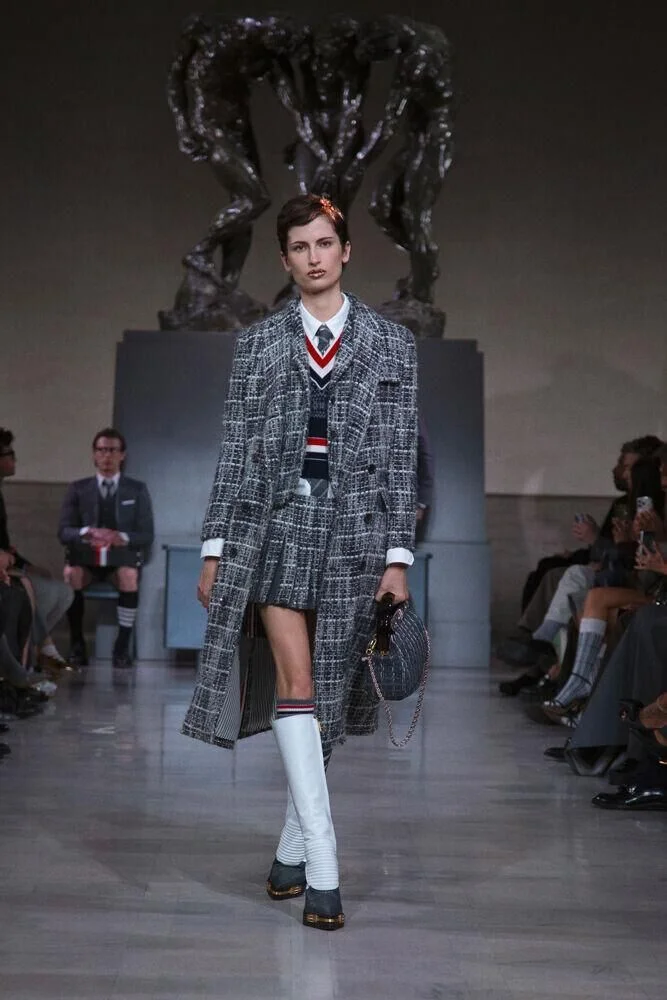
The Thom Browne show came first chronologically and stayed first in most conversations. The occasion was the GQ Bowl on February 6, a pre-Super Bowl partnership that put DeAndre Hopkins and Justin Jefferson on the runway and Browne, handed every excuse for a pigskin-and-fireworks spectacle, staged the opposite. Beneath Auguste Rodin’s The Three Shades, a sculpture born out of the artist’s Gates of Hell, Yahya Abdul-Mateen II narrated cantos from the Inferno from behind a Browne-gray office desk.
The clothes ran the same wire between discipline and theater. Signature gray through precisely cut sack jackets over short-shorts, Bermudas and kilts, Browne 101, executed in custom flannels, high-twist wools, structured cashmere Aran cables and Donegal mohair tweed. A perfecto stretched and refined into a leather trench. The closing looks were a tulle trench and a cape drowning in hand embroidery, pure atelier flex and sneaker-watchers got a Browne-ified Asics Gel-Kayano 14 out of the night. Everything that came after it looked slightly cautious and I don’t think that was accidental.
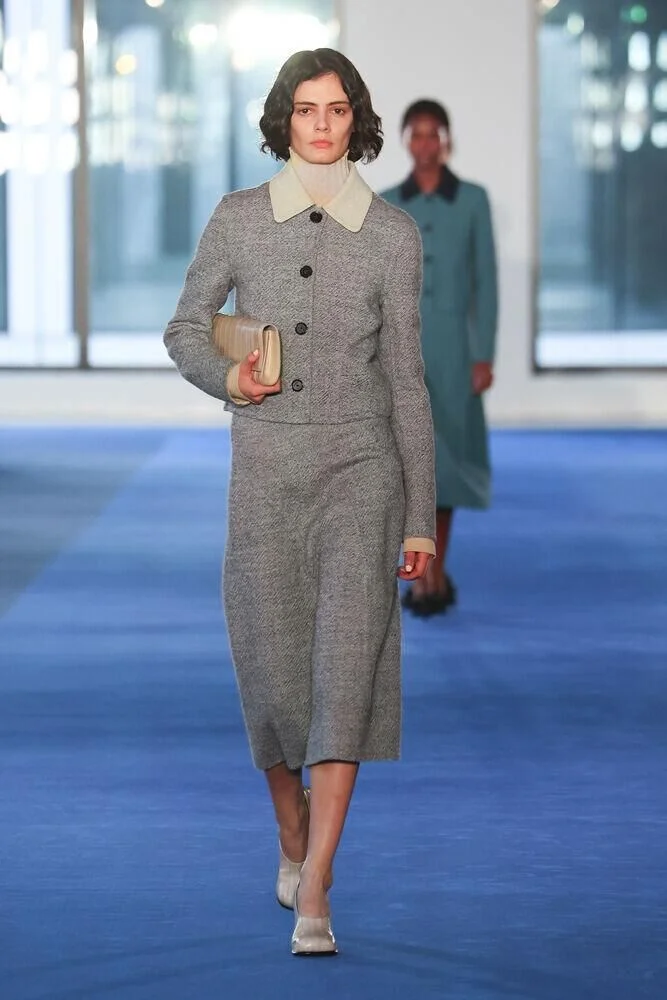
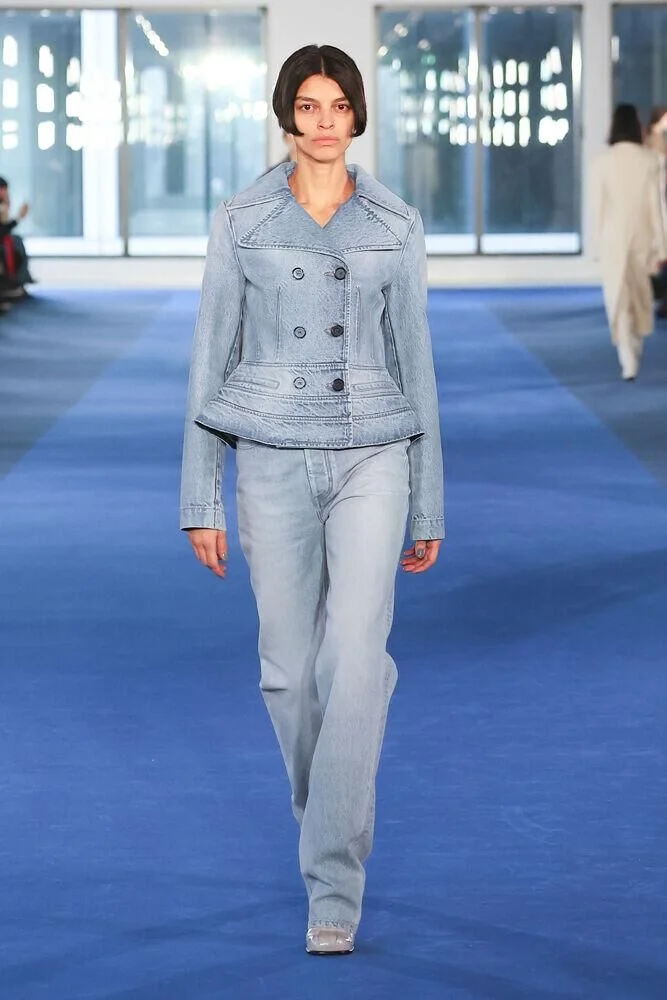
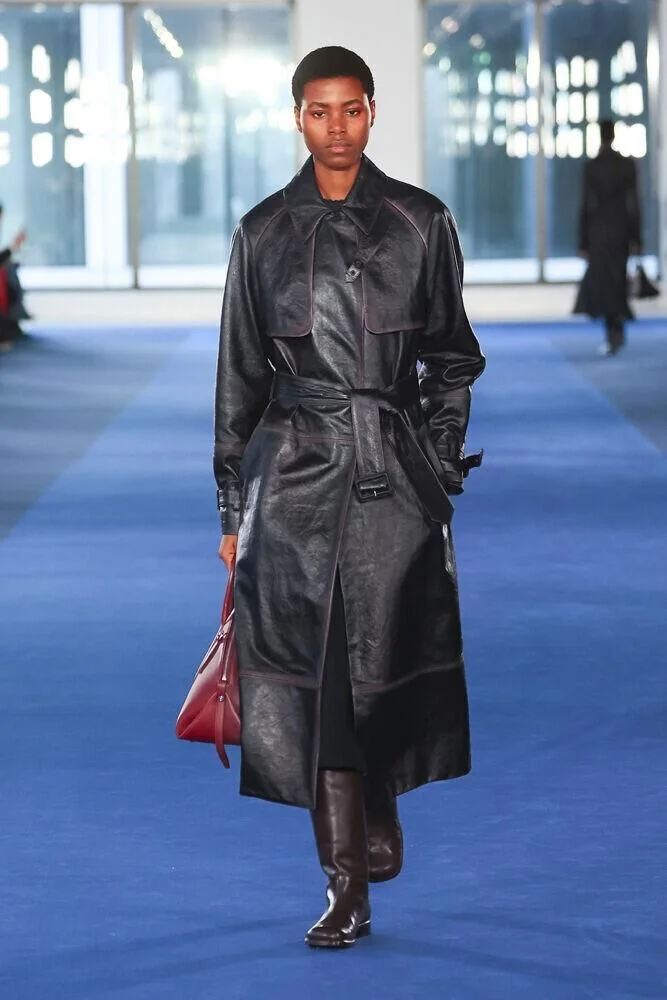
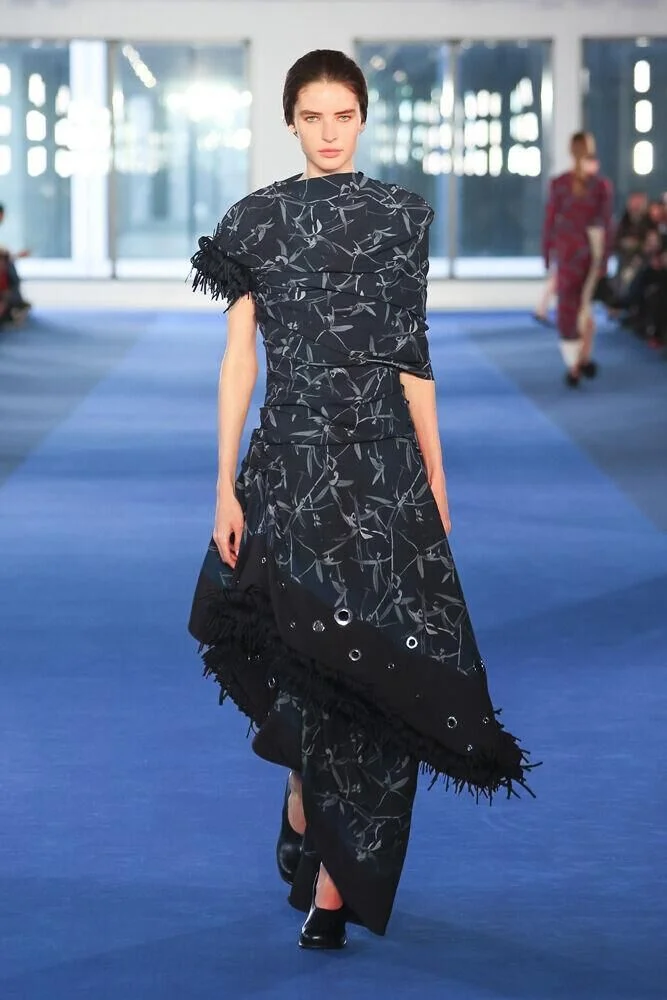
New York’s opening slot on February 11 belonged to Proenza Schouler and to a moment bigger than one show. Rachel Scott, the Jamaica-born founder of Diotima and 2024’s CFDA Womenswear Designer of the Year, took over the house last September after founders Jack McCollough and Lazaro Hernandez left for Loewe. That made her one of vanishingly few Black women ever handed an American house at this scale and the room knew it.
Her answer to fourteen years of the founder’s cool precision was to loosen it’s grip on purpose. The first look was a peacock-blue maxi dress with twisted seams and the argument ran from there through the whole lineup: buttons deliberately left partially undone, skirts twisted across the back, darts exposed, draping just off-kilter, the Proenza woman dressed in a hurry and unbothered about it. “As a woman, I find perfection imprisoning,” Scott said backstage. That was the quote of the week and the thesis of the show and she said it wearing an “ICE OUT” pin, which mattered too. Around the idea she built a genuinely wearable wardrobe of roughly 42 looks, sharp trouser suits on one side, crumpled fluid dresses on the other, nocturnal orchids hand-painted onto leather and the archival Hex bag revived in calf hair.
Days later she did it again under her own name. Her Diotima show built an entire collection around the Cuban modernist Wifredo Lam, his Femme Cheval paintings translated into organza intarsia and second-skin merino knits, his Omi Obini woven into tapestry jacquard with the painting’s exploding color hidden inside the garment. Scott called Lam a Trojan horse, an artist who pushed anti-imperialist ideas through beautiful work. In a week where most designers went quiet on politics, she was the exception twice and the description she gave Lam fit her own fortnight better than she may have intended.
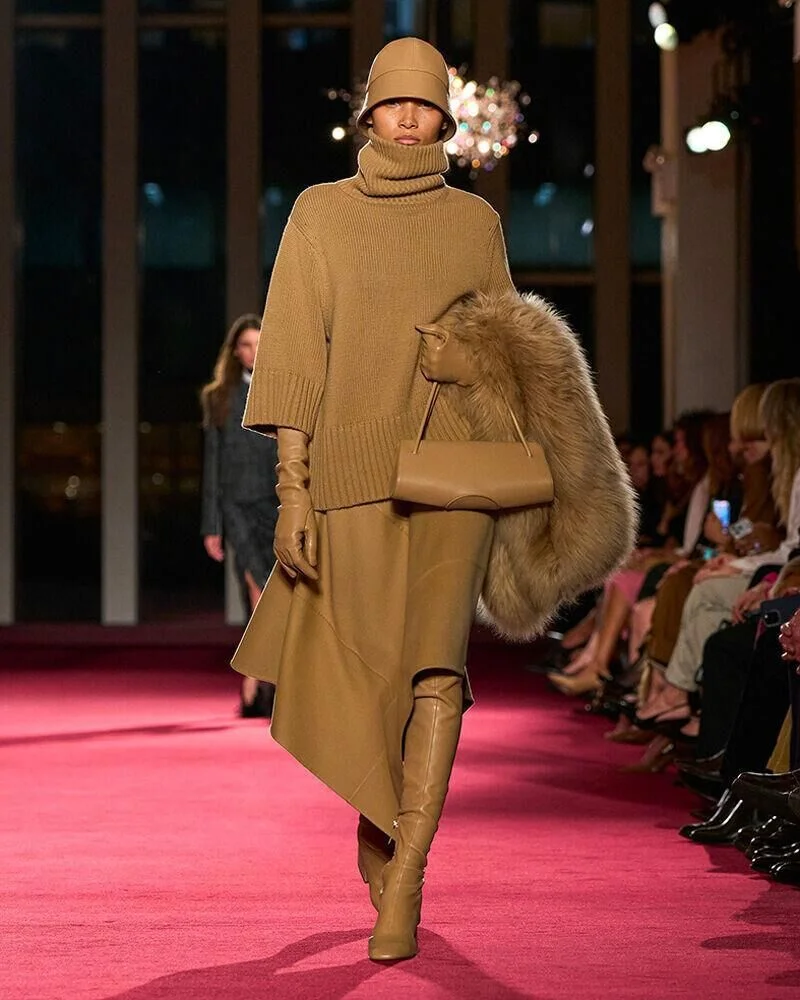
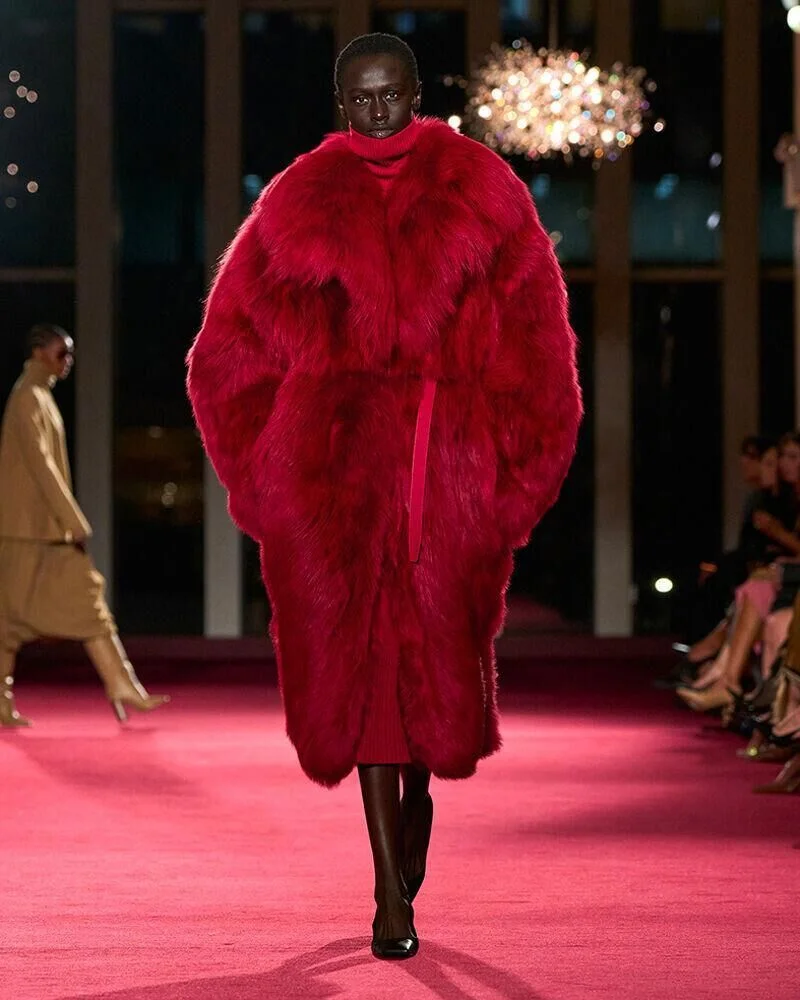
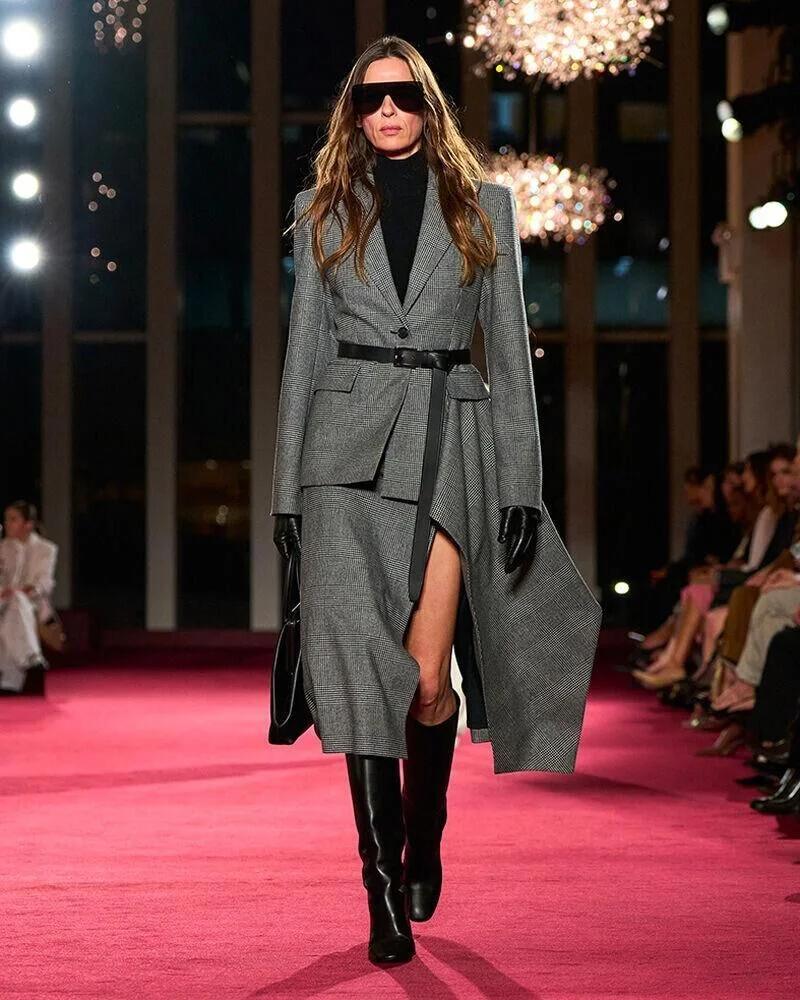
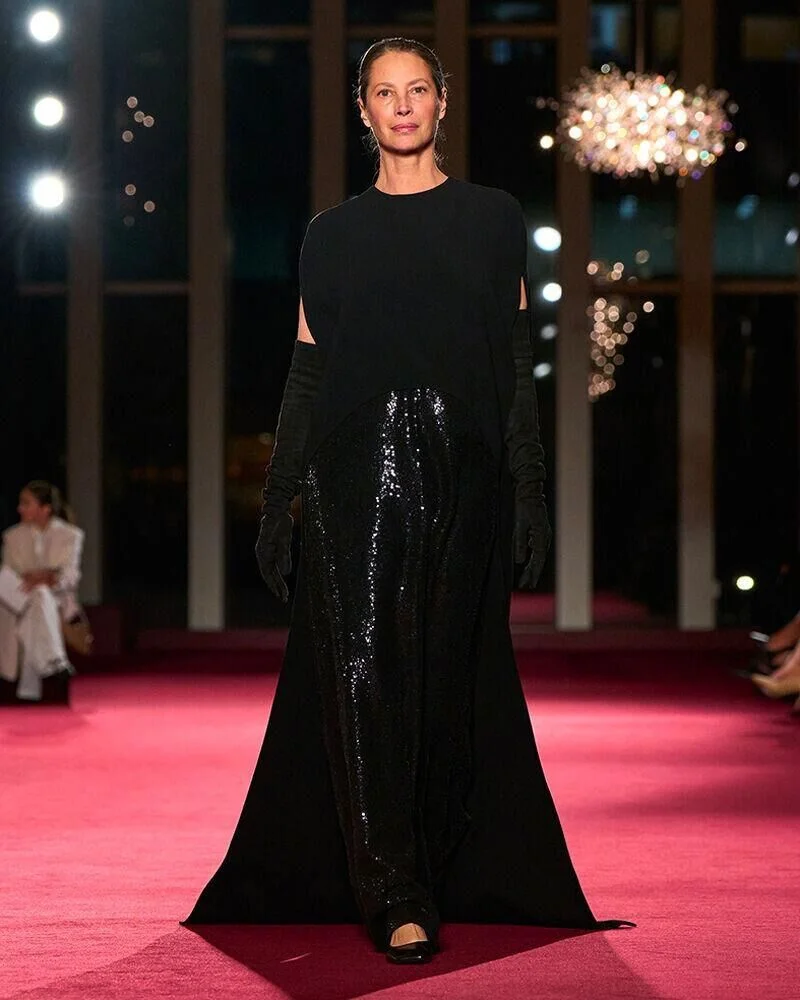
Forty-five years in business, marked February 12 at the Metropolitan Opera House with exactly the show the venue demanded. Opera gloves, feathered gowns, a red satin opera cape, waterfall earrings, brooches sparkling on the men as well as the women. The palette ran urban neutrals, his beloved camel rebranded “fawn” this season, shot through with ruby, raspberry and wine, while the soundtrack mashed Sia into Swan Lake. His stated theme was New York’s dual nature, roughest and most glamorous city at once. The finale settled any argument about the night: Christy Turlington walked the show shut. Then the front row, Uma Thurman, Mary J. Blige, Dakota Fanning, Martha Stewart, Gabrielle Union, decamped to P.J. Clarke’s for cheeseburgers and martinis, which is about as Kors as an evening gets.
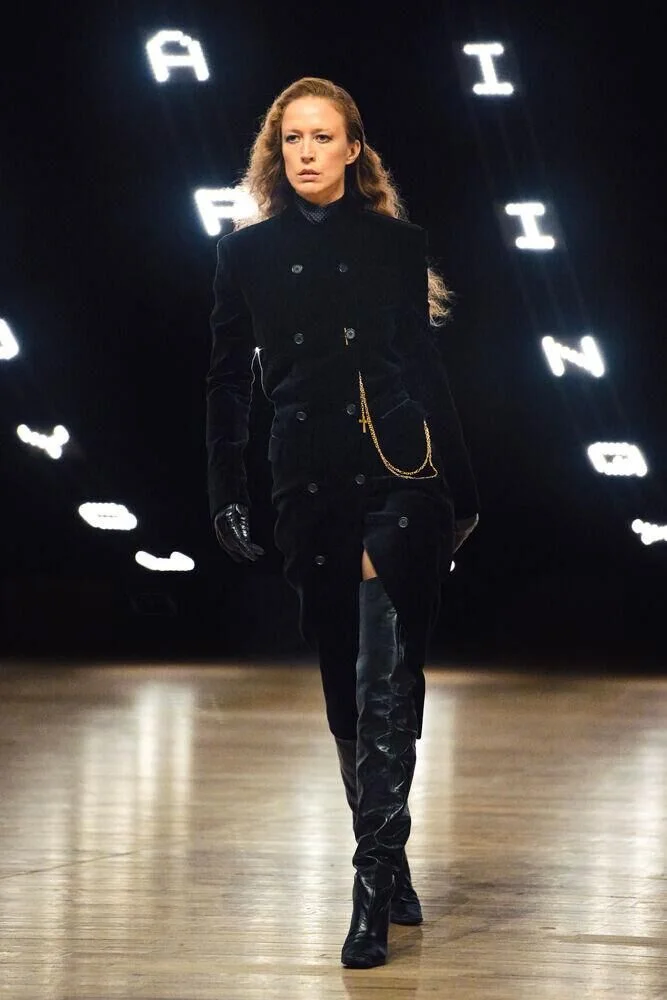
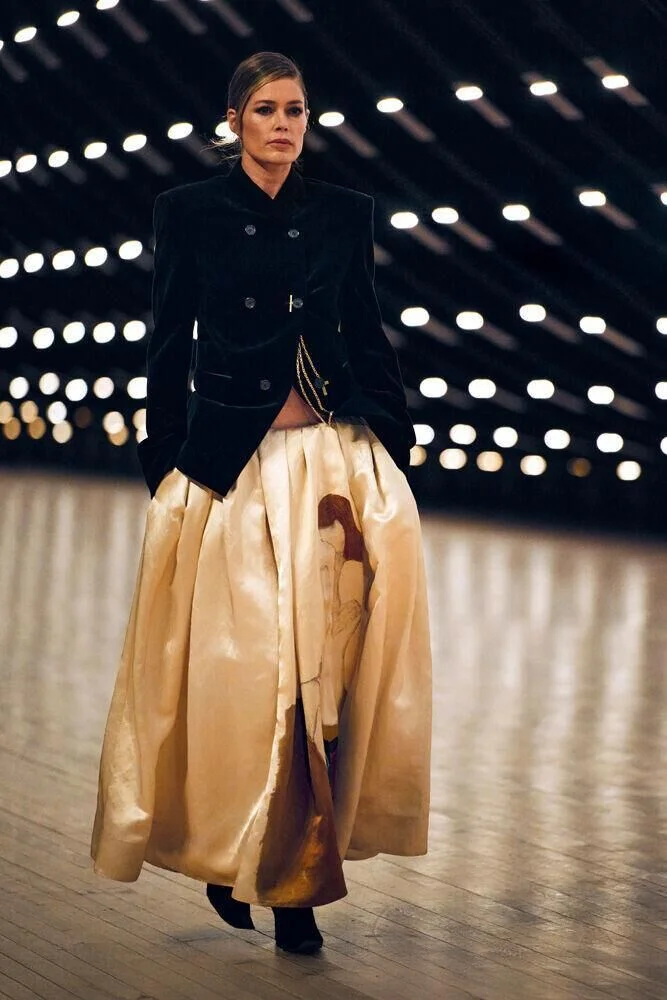
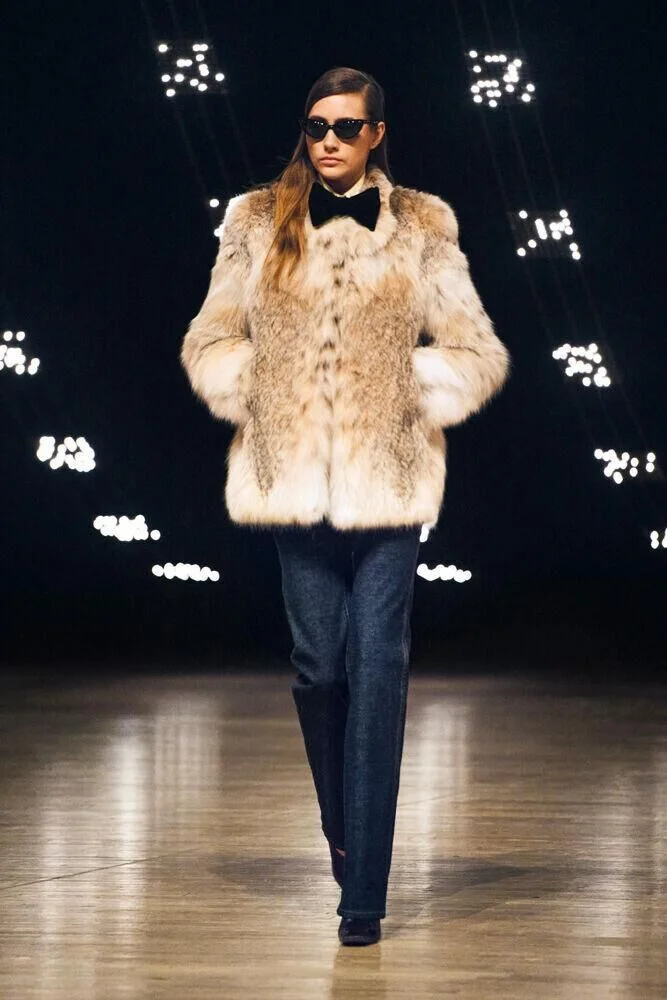
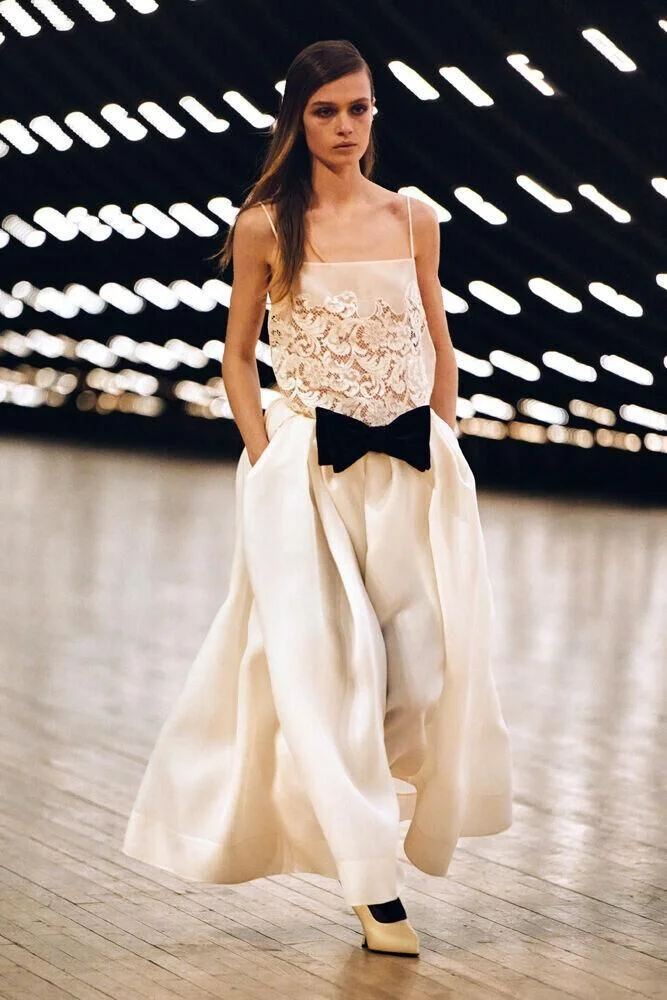
Stuart Vevers opened Coach’s Cunard Building show in film-noir grays and blacks and broke into color at look 12, Dorothy-style, a Wizard of Oz structure carried through grungy plaids and distressed Bermudas. Skate culture threaded the casting, bags were built from a vintage football and an old baseball mitt and the new Kisslock Frame bag, reviving Bonnie Cashin’s turn-and-lock hardware from the sixties, left the building as the season’s likeliest viral object.
Tory Burch, at Sotheby’s Breuer building, skipped spectacle entirely and opened with her father’s corduroys, rebuilt as slouchy wide-wale trousers. What endures, her stated question, ran through Shetland cardigans stitched with gold badla embroidery from India, sardine brooches, shell buckles and raffia basket bags riffing on the Deadhead totes of her youth. Quietly, this was one of the week’s most complete arguments and it made it’s case without raising it’s voice once.
Calvin Klein was the sharpest edit of the week. Veronica Leoni’s third outing dug into the house’s late-seventies DNA, an archaeology of American seduction in severe black-and-white tailoring, consciously guided draping and collars, leather, shearling, oversized, doing most of the talking, with Dakota Johnson, Lily Collins and Alexa Chung watching from the front row. Khaite filled the Park Avenue Armory with gothic romance, officer jackets and gold braid against ivory slips and transparent blouses, crocodile embossing meeting hoodie fleece, a wall of LED code pulsing behind the runway and seat cards reading “the crushing weight of words.” Wes Gordon built Carolina Herrera around seven real muses, artists and gallerists including Amy Sherald and Ming Smith present in person, dressed in autumn florals, animal prints and total-black elegance with a wink. Even denim showed intent, 7 For All Mankind under Nicola Brognano sending out slim-illusion black in bootcut and stovepipe.
The through-line, once you look for it, is permanence over novelty. Burch’s corduroys. Kor’s forty-five years. Browne evolving rather than changing, by his own long-standing insistence. Scott honoring an archive while bending it toward her own politics. Everyone argued, in their own register, for clothes that outlast the moment producing them and I’d call that conviction rather than nerves, though a nervous year makes the two hard to tell apart. The March shows in Europe got the follow-up question. But New York, for once, didn’t spend it’s week waiting for Paris to say what mattered.

Pick up a shoe in any store and try to wring it out like a wet towel. A podiatrist watching...
Read moreDetails
Copyright © 2024 NoodleMagazine - All Right Reserved