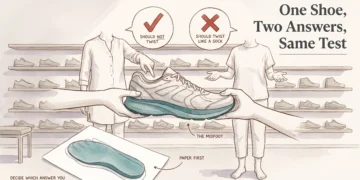
Podiatrists And Barefoot Shoe Fans Do The Same Shoe Test And Want Opposite Answers
Pick up a shoe in any store and try to wring it out like a wet towel. A podiatrist watching...
Read moreDetails

The food safety timer doesn’t start when guests arrive, it starts the moment the salads leave the fridge. The snags on the bench, the pasta salad sitting out while you set up, the cheese platter you put out early, all of it is already on the clock before the first car pulls in. That’s the thing that actually makes people crook at a barbecue, not the cooking.
Food poisoning bacteria grow fastest between 5°C and 60°C, and that time adds up across the whole day. Food Standards Australia New Zealand calls this the temperature danger zone, and the rule runs on total time out of the fridge:
The word that bites is cumulative. The clock includes preparation, storage, transport and display, so you add up every stretch the food has been out, not just its time on the table. In that zone bacteria can double roughly every 20 minutes, so a salad that sat out for an hour during setup has already used half its window before anyone takes a bite.
Keeping drinks cold and keeping them straight solves two problems at once. In the heat a can warms fast, and once a few people put a glass down nobody can tell whose is whose, so half get abandoned and everyone grabs a fresh one.
Handing each guest a Custom Stubby Holder as they arrive keeps the drink cold longer and works as a name tag, so there’s no mix-up and no one shares a drink by accident.
Serve in small batches straight from the fridge or grill instead of laying everything out at once. That single habit keeps most of the spread out of the danger zone.
None of this makes hosting harder. It mostly means treating the fridge as the default and the table as the exception. Get the timing and the cold sorted and the day looks after itself, which is the whole point of having people over.

Pick up a shoe in any store and try to wring it out like a wet towel. A podiatrist watching...
Read moreDetails
Copyright © 2024 NoodleMagazine - All Right Reserved