
Best Spots for a Work Dinner That Doesn’t Feel Like a Work Dinner
If you're trying to impress a client or honestly just want your own team to have a decent time for...
Read moreDetails
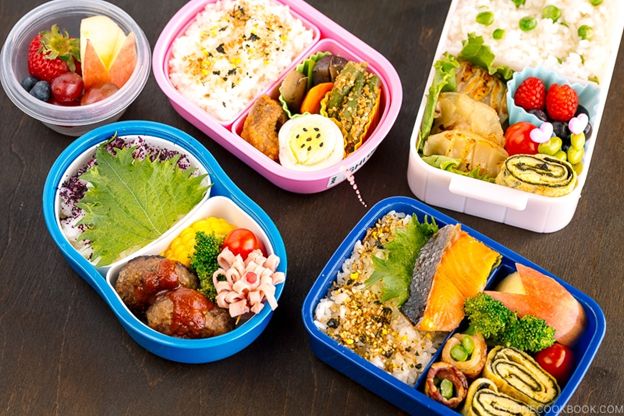
The problem with packing your own lunch was never motivation. It’s that a sandwich in a bag, some grapes in a second bag and a container of leftovers is three decisions and three dishes and by Wednesday night the whole system quietly collapses back into buying lunch. The bento box works on that specific failure and understanding why is more useful than another list of benefits.
The dividers do the thing your eyes are bad at. Portion sizes have crept upward for decades and most people are genuinely poor at estimating them, which is why the visual guides exist at all: a serving of protein about the size of your palm, grains about a cupped handful, vegetables filling roughly half the plate. A sectioned box builds those ratios into the physical object, so you’re not measuring anything, you’re just filling shapes. The classic bento ratio is a useful starting point, roughly four parts carbohydrate to one part protein to two parts vegetable and fruit, which lands close to what most dietary guidelines suggest without anyone doing math at 7am.
The other half of it is that a divided box makes a bad lunch look obviously wrong. An empty vegetable compartment is visible in a way that a missing side dish never is when you’re packing loose containers. That’s a small thing that changes behavior more than most nutrition advice does.
The specs that matter are mundane and rarely advertised: whether the seal is genuinely leakproof with something wet in it, whether it survives the dishwasher and microwave and whether the compartment sizes match how you actually eat rather than how the product photo is styled. Modular systems have an advantage here since you can reconfigure sections for a salad day versus a leftovers day and the bento lunch box range from Tupperware is built around that kind of stackable, sealed design. Whatever brand you land on, buy the one with fewer, larger compartments if you’re new to this. Boxes with eight tiny sections photograph beautifully and get abandoned by week three.
Household food waste is genuinely enormous and the mechanism is boring rather than dramatic: food gets bought with vague intentions, sits in the fridge without a specific job and eventually goes out. A packed lunch assigns a job. The half-cup of rice left from dinner becomes tomorrow’s carbohydrate section instead of the container you throw out on Sunday.
The compartments help here too, oddly, because small sections are easy to fill with the awkward remainders that are too little to be a meal on their own. Three roasted carrots, a spoonful of beans, the last of the cucumber. Loose in a fridge those are garbage in four days; in a bento box they’re a side dish. The FDA’s guidance on reducing food waste covers the broader habits, storage temperatures, understanding date labels, planning around what you already have and the packed-lunch habit sits neatly inside all of it.
The elaborate character bentos that circulate online are a craft hobby and if that’s your hobby, wonderful. For everyone else the visual argument is narrower but still true: food that looks deliberate gets eaten. This matters most with kids, where a divided box of separate, identifiable things clears more reliably than a mixed container, since a lot of picky eating is really objection to foods touching. It matters some for adults too, mainly because an appealing lunch reduces the odds you abandon it for whatever’s downstairs.
What it does not do is make you a better cook or turn twenty minutes of prep into five. Anyone promising that is selling a box.
A bento holds a fixed volume, which is the entire point and also it’s constraint. If you have high energy needs, lift seriously or work a physical job, a single standard box will not feed you and you’ll be hungry by three, so size up or pack a second component. Soups and anything heavily saucy need a genuinely sealed container, not a divided tray with a snap lid. And the boxes only save time if you fold them into an existing routine, packing tomorrow’s while cleaning up tonight’s. Treated as a separate morning task, they’re just another thing to do badly at 7am.
None of this is a lifestyle transformation. It’s a container that removes about four small frictions from a habit most people already want to keep and habits usually fail on friction rather than intent. That’s a modest claim and it’s the true one.

If you're trying to impress a client or honestly just want your own team to have a decent time for...
Read moreDetails
Copyright © 2024 NoodleMagazine - All Right Reserved