
Your Bathroom Fan Is Why the Vanity Is Swelling
Quick answer: the exhaust fan is the only thing standing between your shower steam and every surface in the bathroom,...
Read moreDetails
A room reaches you through your senses before you’ve consciously registered anything about it and that’s the useful way to think about making a home relaxing. Not as a shopping list of throw pillows and scented candles, but as four channels, what you see, what you touch, what you smell, what you hear, each of which is either winding you down or quietly keeping you tense. Some of the standard advice here is backed by real research. Some of it is decor-blog folklore that gets repeated because it sounds nice. Worth knowing which is which before you spend money.
Sight is the channel that carries the heaviest load and it splits into two things: clutter and nature.
Clutter is the one to deal with first because it’s free and the effect is immediate. A room full of visual noise keeps a low-grade pull on your attention whether you notice it or not and clearing it genuinely lowers that background hum of overwhelm. You don’t need a system, just start with one room, be honest about what you actually use and then keep it from creeping back with something like a one-in-one-out habit and a real home for things so they stop piling on surfaces. Bedrooms especially benefit from clear nightstands and dressers, since a calm bedroom is doing double duty for sleep.
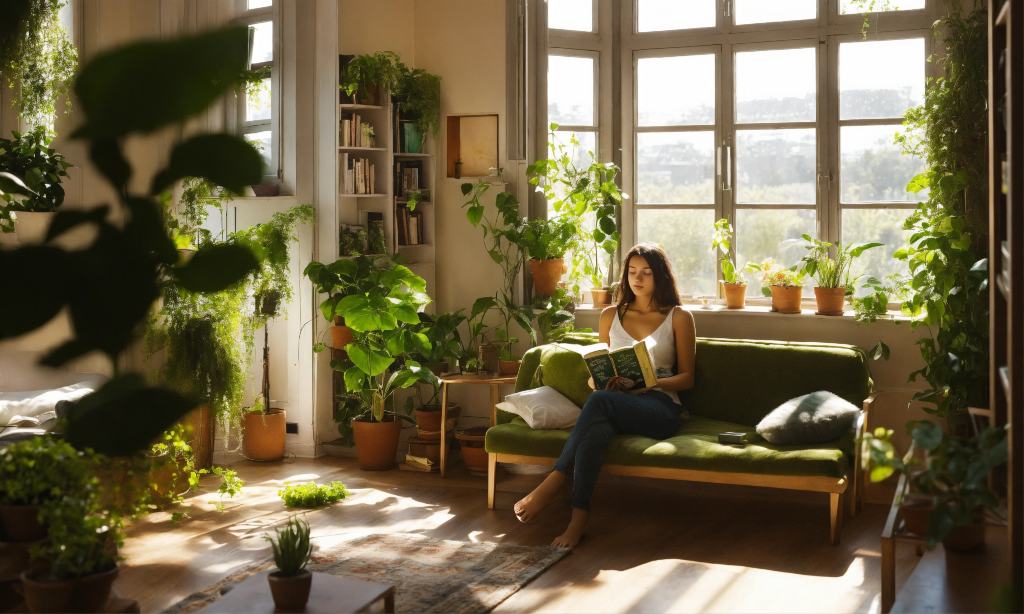
The nature part is where the evidence is genuinely strong, not just pleasant-sounding. The classic study by Roger Ulrich found hospital patients with a view of greenery recovered faster and had lower stress markers than those facing a brick wall and more recent work measuring skin conductance and blood pressure keeps confirming it, rooms with plants and daylight measurably drop physiological stress compared to rooms without. So this isn’t decor advice, it’s the most evidence-backed move in here.
In practice that means two things. Get more natural light, keep windows clean and unobstructed, swap heavy drapes for sheer light-filtering curtains and put a mirror opposite a window to bounce it deeper into the room. And add real greenery, forgiving plants like pothos, snake plants or ZZ plants if you’re not confident keeping things alive, plus fresh flowers if you want them. Wood, stone and other natural materials feed the same effect, the research groups them with plants and light as the elements that consistently help.
On colour, the muted palette advice is sound if unremarkable, soft blues and greens, warm neutrals like beige and taupe, pale lavender read as calming to most people and keeping a limited palette across rooms stops the eye from constantly resetting. It’s real, it’s just less potent than the light-and-greenery piece, so don’t repaint before you’ve dealt with the windows.
Texture works on you more than you’d guess, largely because it’s tactile and unconscious. A room that invites you to sink into it feels safe in a way a hard, sparse one doesn’t. This is the cheap, high-return layer, plush throws and pillows, a soft rug underfoot, natural materials you actually want to run a hand over. Bedding is where it matters most: a genuinely comfortable mattress and breathable natural-fibre sheets, cotton or linen, do more for how a bedroom feels than any decorative object on the shelf. If you’re going to spend on one tactile thing, spend it here.
Scent is powerful and immediate, it routes almost directly to the emotional part of the brain, which is why a smell can drop your shoulders before you’ve thought about it. Scented candles or wax melts, potted herbs like mint or rosemary, fresh flowers all work. The honest caveat is that scent is personal and easy to overdo, what reads as calming to one person is a headache to another, so this is a lighter touch than the visual work, not a centrepiece. A subtle, clean scent beats a room you can smell from the hallway.
Sound is the channel people forget until a neighbour’s noise reminds them. Soft instrumental music or nature sounds help and a white-noise machine or app earns it’s place if you’re masking traffic or thin walls, especially for sleep.
Here’s the one worth flagging, though. Indoor water features, the tabletop fountains that show up on every relaxing-home list as a must, are the weakest element in the research. Studies on biophilic design consistently find water features weaker and more context-dependent than plants, light and natural materials and some multisensory work found piped nature sounds could actually distract rather than soothe during focused tasks. So if a trickling fountain genuinely relaxes you, keep it. But don’t buy one believing it’s doing what a plant and a clean window do, because the evidence says it isn’t.
Once the senses are handled, it helps to have a spot in the home that’s explicitly for slowing down, because a dedicated space makes the habit easier to keep. It doesn’t take much. A comfortable chair, a throw and good light make a reading nook. A cushion or mat, a clear bit of floor and something calming to look at make a corner for meditation or stretching. If you’ve got outdoor space, a comfortable seat and a few potted plants turn it into somewhere you’ll actually sit.
You don’t need to do all of this and you definitely don’t need to do it at once. Start with the two things the evidence actually backs, clear the clutter and get more light and greenery in and you’ll feel the difference before you’ve touched the paint or the candles. The rest is refinement and it’s easier to layer on once the room already feels like somewhere you want to be.

Quick answer: the exhaust fan is the only thing standing between your shower steam and every surface in the bathroom,...
Read moreDetails
Copyright © 2024 NoodleMagazine - All Right Reserved