Your Bathroom Fan Is Why the Vanity Is Swelling
Quick answer: the exhaust fan is the only thing standing between your shower steam and every surface in the bathroom,...
Read moreDetails

How much of a home’s energy actually goes to heating and cooling? About 48 percent, according to the US Energy Information Administration’s Residential Energy Consumption Survey. And that figure is the improved one. In 1993 it was 58 percent, and it only came down because insulation and equipment got better. Half the bill, every month, for as long as you own the house.
Which is why it’s strange that in most renovations, the climate system gets decided last, after the tiles and the tapware have already eaten the budget.
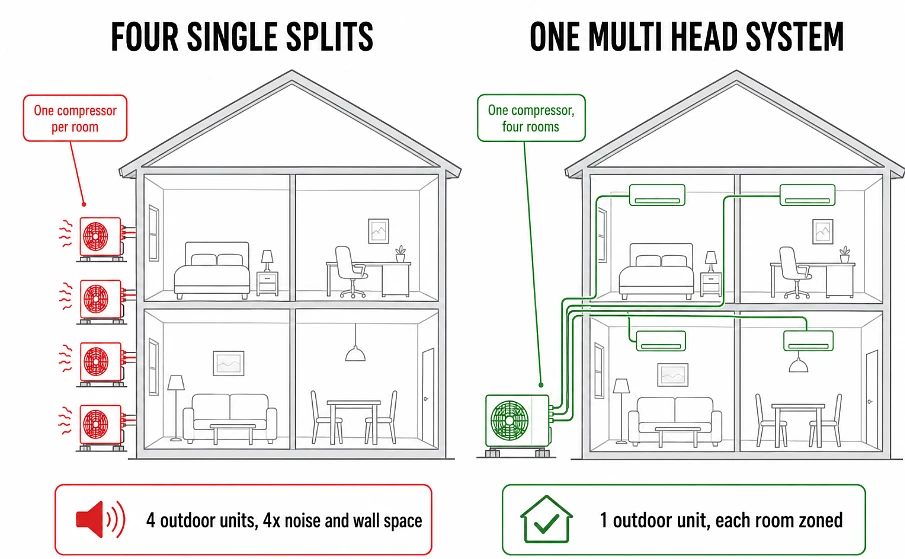
Because the default way to cool several rooms was one unit per room, and each unit brought its own compressor box. Line four of them up along the side wall and your outdoor dining area sits next to a humming metal chorus.
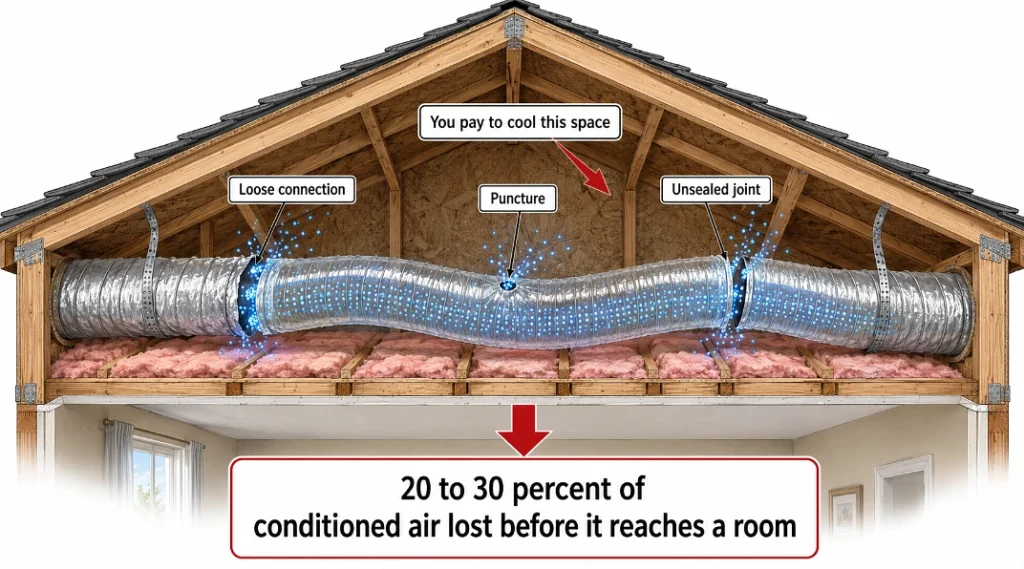
Ducted central air avoids the boxes but hides a worse problem in the ceiling. The Department of Energy estimates that 20 to 30 percent of the air moving through a typical duct system leaks out through holes and bad connections before reaching a room. You pay to cool your roof cavity. And plenty of homes can’t take ducts anyway, older houses with no ceiling space, or extensions with high raked ceilings.
A multi head split system runs several indoor units off one single outdoor compressor, so each room controls its own temperature and there’s only one box outside. No ducts, so nothing leaks in the ceiling, and the exterior stays clean.
The room by room control is the part that changes daily life:
Installed, expect $4,000 to $9,000 for a two or three zone setup and $7,500 to $15,000 for four or five zones. Adding a zone to an existing outdoor unit later runs about $1,500 to $3,000.
That last number is why timing matters. One national installer, Filterbuy, reports from its own installation work across Florida and Texas that homeowners who size the outdoor unit for two zones upfront, even if they only switch one on at first, save an average of $1,200 to $2,000 versus adding the second zone later. Qualifying high efficiency systems can also claim a federal tax credit of up to $2,000, with utility rebates often stacking on top.
60 to 67 degrees Fahrenheit, according to Dr. Okeanis Vaou, a neurologist and sleep medicine specialist at UT Health San Antonio. Her explanation is blunt: your body drops its own temperature to prepare you for sleep, so the room needs to cooperate. She even warns patients off the classic warm bath before bed, because warming up can wake you up.
No one wants a living room at 62 degrees. With one thermostat, hitting Vaou’s range means freezing the whole house all night. With zones, you chill one bedroom and leave the rest alone, so the medically sensible option is also the cheap one.
So when the renovation drawings come out, put the climate plan next to the floor plan, not after it. Half the energy bill is riding on that decision, and none of it is riding on the splashback.

Quick answer: the exhaust fan is the only thing standing between your shower steam and every surface in the bathroom,...
Read moreDetails
Copyright © 2024 NoodleMagazine - All Right Reserved