
Your Bathroom Fan Is Why the Vanity Is Swelling
Quick answer: the exhaust fan is the only thing standing between your shower steam and every surface in the bathroom,...
Read moreDetails

The most useful thing I can tell you about bronze came from a mistake. Three years ago I fitted oil rubbed bronze handles on every cabinet in a kitchen, and within eight months the two handles by the sink looked nothing like the other ten. Lighter, brassier, worn through at the grip point. No one warned me bronze keeps changing after you install it. So consider this that warning, plus everything else I’ve learned the slightly expensive way.
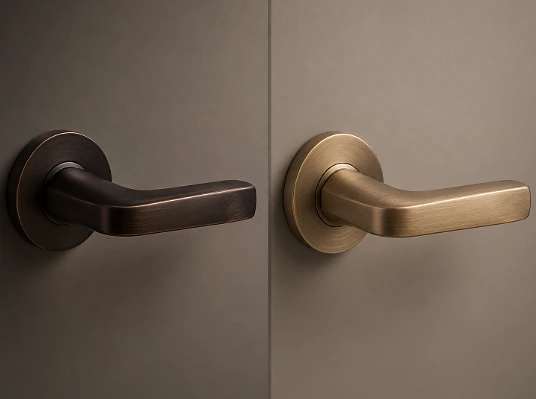
Oil rubbed bronze for traditional and rustic homes, satin or brushed bronze for contemporary ones. But the showroom won’t show you the real difference, which is how each one survives daily hands.
Oil rubbed bronze is a darker, almost black surface with rich brown undertones underneath, and that dark layer is exactly what wears away at contact points. On a door lever that gets touched forty times a day, expect the high spots to lighten within the first year. In an older property that reads as character. On a minimalist kitchen it reads as damage.
Satin or brushed bronze belongs in modern homes with luxury interior details, and it earns its keep in one specific way: fingerprints. I did a side by side once, polished bronze plate next to brushed on the same door for a month. The polished one needed wiping twice a week. The brushed one I cleaned when I remembered, which was roughly never.
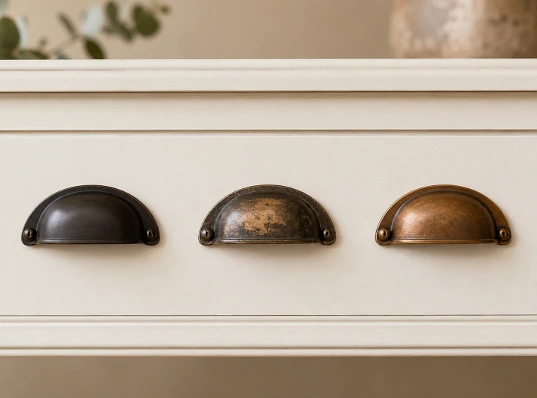
A living finish means the surface keeps reacting to air, moisture and skin oils, and develops a patina you didn’t choose. Here’s the part the product pages soften: the change is not uniform. It happens fastest wherever hands land, so a handle patinas in a grip shaped patch while the backplate stays dark.
Those two sink handles from my kitchen story? I left them. Eighteen months later the rest of the kitchen had caught up and the whole run looked deliberately aged, better than new honestly. That’s the deal you’re signing. Bronze looks worst between month six and month eighteen, in that awkward half changed phase, then it comes good. If you want hardware that looks identical in year ten to the day it arrived, buy PVD coated finishes instead and skip real bronze entirely.
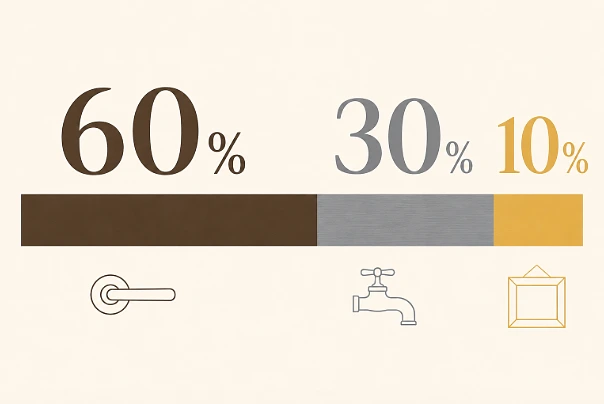
Use the 60/30/10 split. All bronze rooms go flat, I’ve seen it enough times to stop arguing about it.
Because it’s the difference between a room that feels designed and one that feels like a catalogue page. The eye needs one bright thing to land on. In a client’s study we tried skipping it, all bronze and steel, and the room felt like a hardware audit until one polished brass lamp went in.
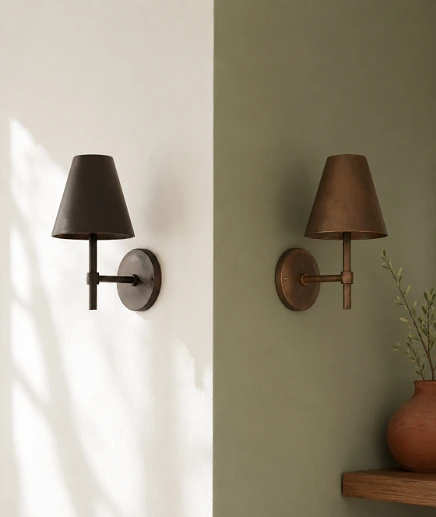
Crisp whites take a stark, clean bronze. Earthy palettes take an organic, grounded one. Bronze is an alloy of copper and tin, and that copper base makes it warm, so it either contrasts with a palette or blends into it.
Against high contrast whites and ivory the bronze becomes the outline of the room, so it needs to be dark and definite. Among sage green, terracotta and warm taupe, the metal and the walls pull in the same warm direction, and a softer bronze disappears into the scheme in a good way.
Warm water, a drop of soap, soft cloth. That’s the entire routine. I learned the hard way what spray cleaners do: one pass of a bathroom multi surface spray took the oil rubbed layer clean off a corner of a cabinet pull, and there’s no undo for that. The finish is a treatment sitting on the metal, not the metal itself.
Skip the scrubbing too. The patina you’d be scrubbing off is the protection. Done right, bronze asks less of you than almost any metal in the house, provided you can leave it alone.

Quick answer: the exhaust fan is the only thing standing between your shower steam and every surface in the bathroom,...
Read moreDetails
Copyright © 2024 NoodleMagazine - All Right Reserved