Your Bathroom Fan Is Why the Vanity Is Swelling
Quick answer: the exhaust fan is the only thing standing between your shower steam and every surface in the bathroom,...
Read moreDetails
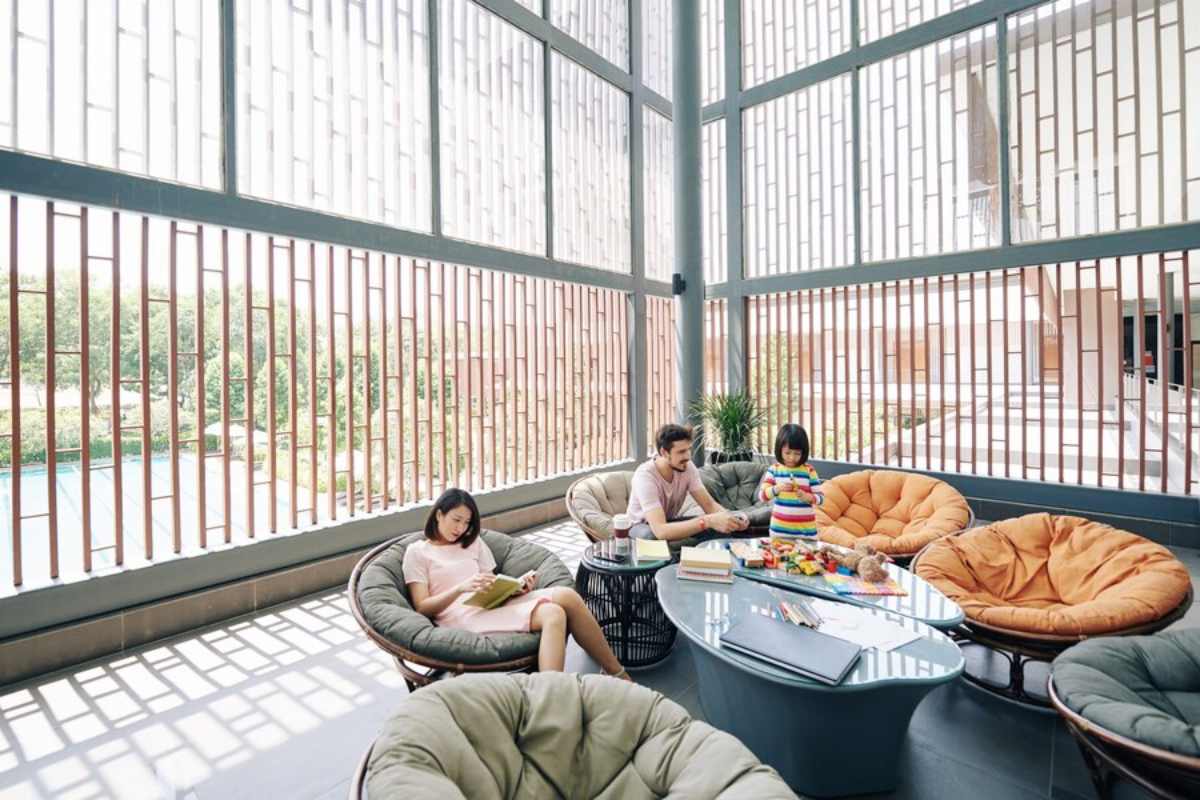
Picture the enclosure on a July evening with none of the upgrades this article covers. The furniture is fine. The screens keep the bugs out. And the space still feels like a porch you pass through rather than a room you stay in, which is the whole problem this page exists to solve and it rarely takes one big renovation to solve it. Four or five small decisions, made in the right order and the order is the part people get wrong.
If the enclosure sits above grade at all, a step, a raised deck, a walkout over a slope, start here and don’t argue with it. Patio railings on the private, ground-adjacent side of the house are mostly a sturdiness-and-style decision. Porch railings at the front carry a second job, they’re part of the house’s face, so the design follows the architecture rather than the furniture and the fastest way to make that call is looking at installed work instead of catalog renders. A gallery of finished patio enclosures puts the rail profiles against real house styles, which is the comparison a catalog page never gives you. For anything with height under it, a balcony, a second-story room, forget looks and buy on structural rating. A rail that flexes when someone leans into it has already failed. It just hasn’t been caught yet.
ADA-compliant railings belong in this section too and I know how that reads, like a commercial requirement wandering into a backyard article. The household version of the question: can a parent with a cane or a kid on crutches in October, get into your enclosure without a hand? Graspable profile, continuous run, correct height. Cheap to do during a railing job, annoying to retrofit and the guest list it protects gets longer every year whether you plan for it or not.
The fix layers. String lights overhead for the warmth everyone wants, a lantern or two where people sit, a spotlight only if something specific deserves one and motion-activated fixtures at the entries, which do their security work by not being on all the time. The common mistake is one bright fixture in the middle of the ceiling. That gives you the visual warmth of a garage and no cushion budget recovers from it. Three cheap layers beat one expensive glare. Add dimmers. You will use them the first evening and every evening after.
Plants return more per dollar than anything else in the space. Potted so you can rearrange your mind seasonally. A climbing vine if you can wait a year or two for it to do anything. An herb pot by the door, because rosemary you cook with beats a fern on every measure except pretending you don’t cook. A small fountain adds a sound layer if the space is quiet enough to hear it. Near a busy road, skip it, the road wins.
Furniture is where the budget goes and the buying rules are short. Outdoor-rated frames. Cushion covers that unzip and wash. A clear walking line through the layout, since a room you sidle through is a room you stop using. An outdoor rug makes the space read decided. Modular sets earn their premium if you host at different sizes and are pure marketing if you don’t. Then the calendar chores that keep all of it alive to year five, covers on before the first hard freeze, shade up before the first heat wave.
None of this needs a permit and most of it fits in a Saturday at a time, but if any of it touches structure, the railings above everything, get a contractor’s eyes on the load path even when you’re installing it yourself. My actual ranking, having watched people spend on these spaces in the wrong order: rail, lights, plants and the furniture last, because good light makes cheap furniture look intentional and no furniture survives a dark room.

Quick answer: the exhaust fan is the only thing standing between your shower steam and every surface in the bathroom,...
Read moreDetails
Copyright © 2024 NoodleMagazine - All Right Reserved