
Open-Box Electronics: The Smartest Way to Buy Tech in Canada Right Now
Canadian tech buyers are in a squeeze. Prices on monitors, peripherals, and smart home gear keep climbing, the dollar isn't...
Read moreDetails

Most skiers obsess over skis. Boot fit gets some attention too, usually after a painful first day. Bindings? They’re an afterthought — something the shop tech adjusts while you’re busy eyeing the jacket rack. That’s a mistake, and it ends seasons early.
Bindings are doing two things at once, and those two things are basically opposites. They need to grip your boot through everything — hard carves, rough ice patches, the kind of landing where you feel it in your back teeth — and then let go the instant the forces shift from “aggressive skiing” to “you’re about to blow your knee.” Getting that balance wrong in either direction costs you. Pre-release on a steep pitch is its own kind of terrifying. Failing to release during a fall is worse.
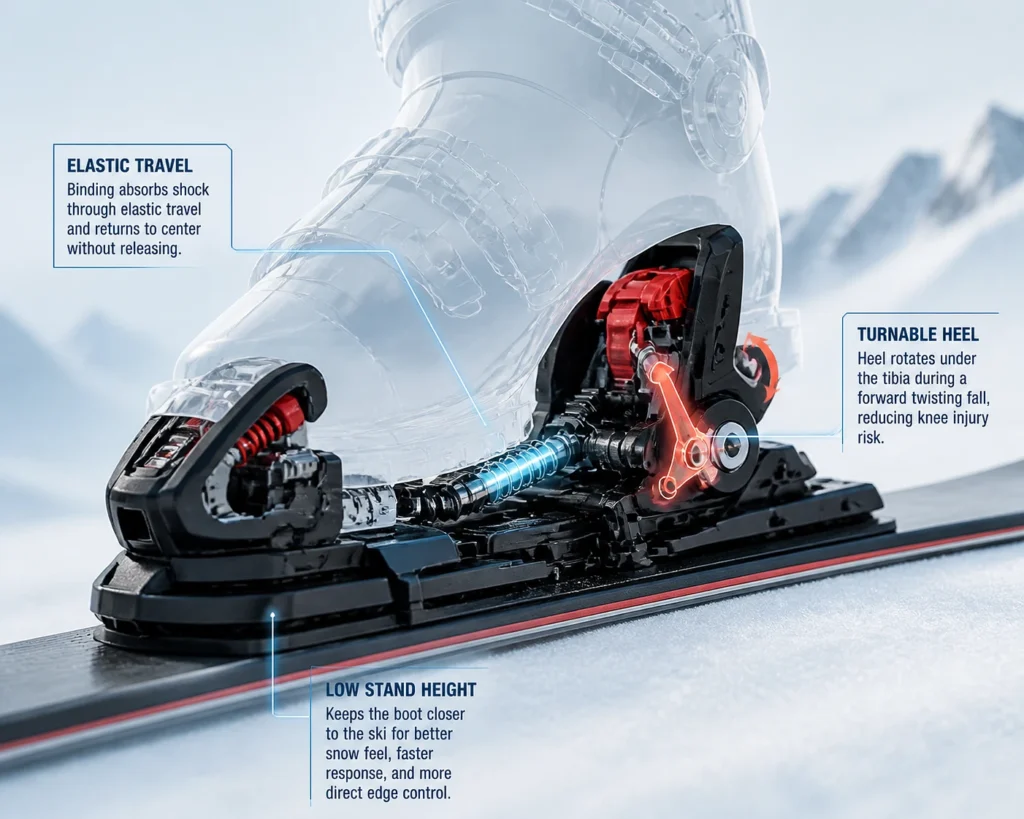
The engineering inside a modern binding is genuinely interesting once you start pulling at it. The core concept is elastic travel the binding’s ability to absorb a sudden shock and return to centre without ejecting your boot. Hit a rut at speed, land a jump slightly off-balance, and the binding flexes, absorbs, and recovers. Without that elasticity, you’d get pre-releases constantly, or the system would be tuned so stiff it wouldn’t release when you actually needed it to.
Turntable heel pieces take this further. Instead of a fixed pivot, the heel rotates directly under the tibia during a forward twisting fall — the kind that historically destroyed ACLs before anyone figured out the geometry of what was happening. It’s not dramatic-looking technology. It’s just a smarter axis of rotation.
Stand height matters more than people realise. A binding that sits your boot higher off the ski creates leverage. More leverage means more pressure through the edge, which sounds like a good thing until you’re on ice and your feedback is arriving slightly late because you’re further from the snow than you need to be. Lower stand height is faster, more direct, and more honest about what the snow is doing.
For anyone actually shopping, Sundance Ski & Snowboard carries a solid range of performance bindings specifically selected for elasticity and retention, which matters if you’re skiing at a level where those specs stop being marketing language and start being relevant.
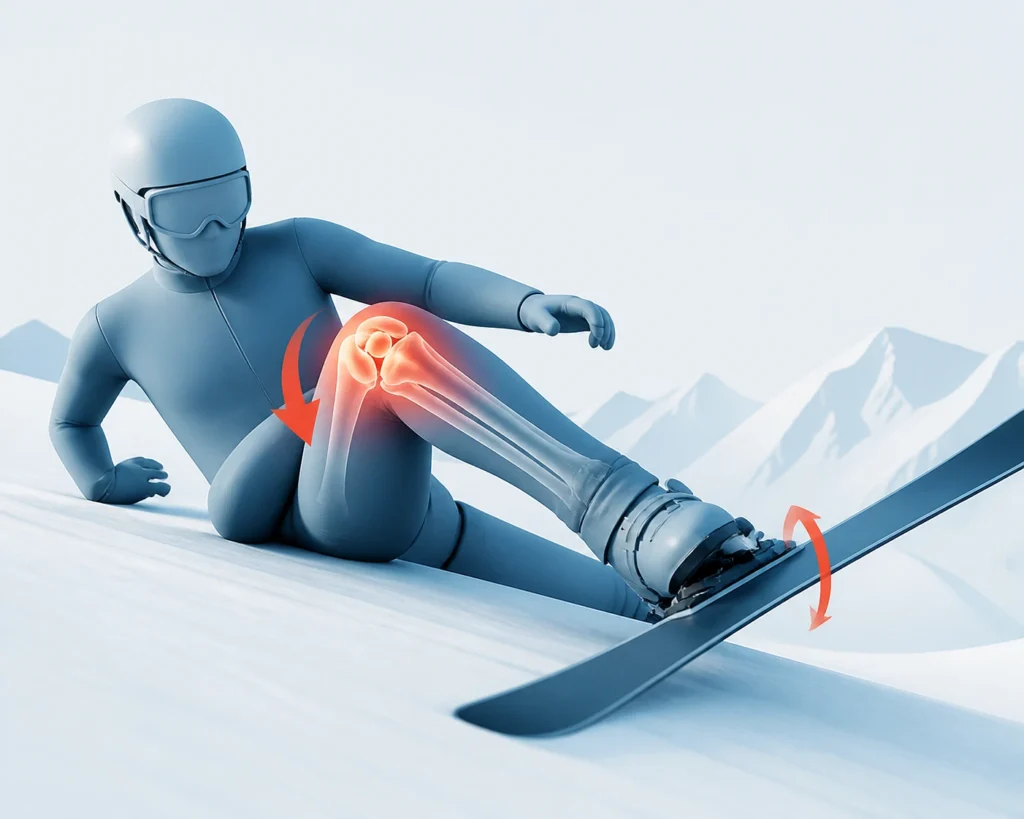
ACL tears dominate skiing injury lists — the American Academy of Orthopaedic Surgeons has published injury data on this for years, and the knee consistently comes out worst. The exact figures shift season to season, but the pattern doesn’t. The mechanism is usually the same: ski stays attached, leg rotates, knee absorbs the full lever force of however many centimetres of ski you’re running.
Proper DIN setting — the release threshold — is calculated from your height, weight, age, and ability level, and it needs to be set by someone with a torque tester, not eyeballed. That’s not a disclaimer, it’s just how the math works. A setting that’s right for a 180-pound aggressive intermediate is dangerously wrong for someone 40 pounds lighter skiing the same mountain. The binding doesn’t know who’s in it. The tech does.
Mounting position changes things, too. A shorter mounting footprint lets the ski flex naturally underfoot instead of being stiffened by a rigid plate spanning too much of the running surface. That uninterrupted flex affects edge grip on hardpack in ways you feel before you consciously identify what changed.
Bindings don’t last forever, and most people treat them like they do. Internal springs lose tension. Salt from the parking lot slush works into the mechanism. Toe pieces get knocked around while loading and unloading from roof racks. None of this is visible from the outside.
Start of every season: get them tested. A computerised torque test checks whether the release values match what’s printed on the housing. They often don’t after a few years of real use. Cleaning matters — but don’t use harsh degreasers inside the spring housings, because that factory lubrication is doing something and stripping it out creates its own problems.
The skiers who stay on the mountain longest aren’t necessarily the most cautious ones. They’re the ones who treat equipment as a system — skis, boots, bindings, maintenance — rather than three separate purchases made at different times with different levels of attention. Bindings are where the system either holds together or doesn’t.

Canadian tech buyers are in a squeeze. Prices on monitors, peripherals, and smart home gear keep climbing, the dollar isn't...
Read moreDetails
Copyright © 2024 NoodleMagazine - All Right Reserved