
Protect Your Child: Guiding Them Through Separation with Compassion and Understanding
Separation is among the most challenging changes a family can experience, and for children, its impact can be both emotionally...
Read moreDetails

The biggest risk in a commercial lease is the costs that never appeared in the advertised rent. Outgoings, compliance upgrades, maintenance and end of lease obligations all live in the fine print, and the document binds you to them for five or ten years. Having Sydney property lawyers review the lease before signing costs a few hundred dollars. Finding a bad clause after signing can cost tens of thousands, and by then it’s a negotiation you’ve already lost.
If your lease counts as a retail lease, the landlord pays the full cost of preparing it, including the mortgagee consent fee. That’s section 14 of the Retail Leases Act 1994, and it has teeth. A landlord who seeks or accepts key money, any payment just for granting or renewing the lease, faces a fine of up to $11,000, and you can recover whatever you paid.
The Act’s reach is wider than people assume. Since January 2023 it also covers gyms, fitness studios, yoga and pilates studios, dance studios and small bars with capacity up to 120 patrons, not just shopfronts and cafes.
Under the same Act, a cash bond must be lodged with the NSW Government’s Retail Bond Scheme within 20 business days of the landlord receiving it. The government holds it, not the landlord. If your landlord is sitting on your bond personally, that’s a problem worth raising in writing.
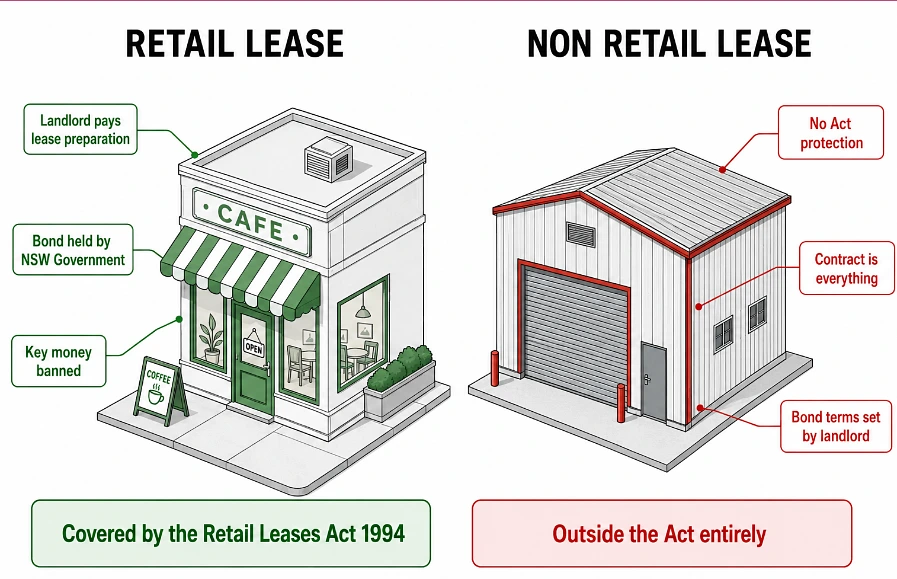
A non retail premises, a warehouse, an office suite, a storage facility, falls outside the Act entirely. There the contract is the whole ballgame, which makes the pre signing review more important, not less.
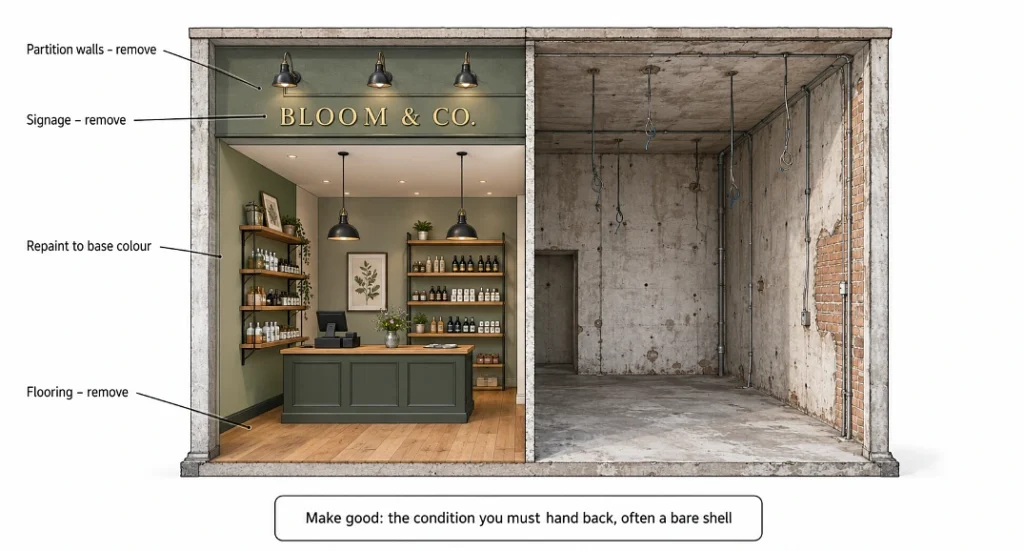
A make good clause dictates the condition you must return the property in, and it’s one of the most litigated issues at the NSW Civil and Administrative Tribunal because the bill arrives at the worst moment, when you’re already paying to move. Some clauses require stripping the space back to a bare shell. That can run to tens of thousands of dollars, on premises you’re walking away from.
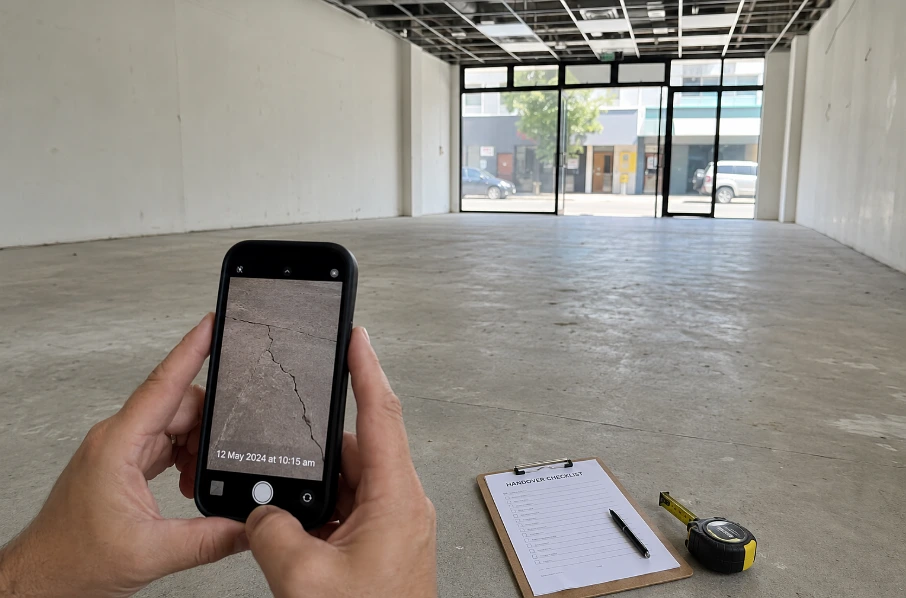
The defence is boring and cheap: a dilapidation report before you move in. Photograph everything, document the condition on day one, and the future argument over what “original condition” means never gets started.
A breach can move fast. An unauthorised fit out change or overdue outgoings can be enough for a landlord to move toward termination and eviction. There’s a remedy called relief against forfeiture that can halt an eviction and save your premises, but it’s an urgent legal application made under pressure, not a form you download.
Two smaller protections worth handling at signing time:
Roughly $500 to $1,500 plus GST at most Australian firms for a fixed fee review of the lease and disclosure documents. Negotiating amendments costs more depending on how much resistance the landlord’s solicitor puts up. Set that against a lease worth hundreds of thousands over its term and it’s the cheapest clause by clause insurance available.
The lease is the one document in your entire business move that was written by the other side. Read it like it.

Separation is among the most challenging changes a family can experience, and for children, its impact can be both emotionally...
Read moreDetails
Copyright © 2024 NoodleMagazine - All Right Reserved