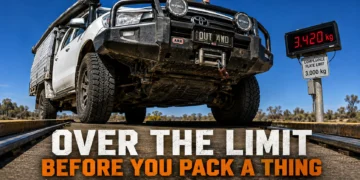
Why a Kitted Out Touring 4×4 Can Be Over Its Legal Limit Before You Pack a Thing
A fully built touring rig can sit over its legal weight while completely empty. No water, no fridge, no swags. Just...
Read moreDetails

Australians bought a record 1,241,037 new vehicles in 2025, the third record year running, and SUVs took 60.7 percent of them. The Prado 250 was right in the thick of it with 26,106 sales, losing the large SUV segment to the Ford Everest by just 55 registrations. So the vehicle is a hit. The catch sits on the compliance plate: depending on variant, the new Prado carries a factory payload of just 580kg to 615kg, and every upgrade decision flows from that number.
Kerb weight on the 250 Series is up roughly 150kg across the range compared with the old 150 Series, partly down to the 48 volt system bolted to the 2.8 litre diesel. GVM rose to match, 3100kg on five seat variants and 3200kg on the Kakadu, but the payload maths stayed tight. Fill the tank, seat four adults, and the margin left for gear is slim before you’ve packed a single swag.
That’s why weight has to lead every decision when you’re choosing accessories for Toyota Prado builds. Carsales ran the numbers on Toyota’s own factory options: steel bull bar up to 57kg, winch 32kg, roof platform 20kg, tow kit, underbody protection, recovery points and lights, and the remaining payload can dip below 100kg. Toyota’s sales boss Sean Hanley has openly said serious off roaders will make their own adjustments, which is about as close as a manufacturer gets to telling you the aftermarket is part of the plan.
The 250’s braked towing capacity jumped to 3500kg, but GCM, the combined legal weight of vehicle and trailer, is 6600kg. Hook up a full 3500kg trailer behind a Kakadu and the arithmetic leaves about 255kg of payload for every person and item on board. Two adults and not much else. Anyone planning to drag a big van to the Cape needs to run these numbers before ordering accessories, not after.
Engineered GVM upgrades fix the payload squeeze legally. Lovells has released two kits for the 250 Series, a 3650kg Touring kit and a 3900kg Platinum kit, both with a revised GCM of 6800kg, giving up to roughly 800kg of extra carrying capacity over standard.
The compliance route matters:
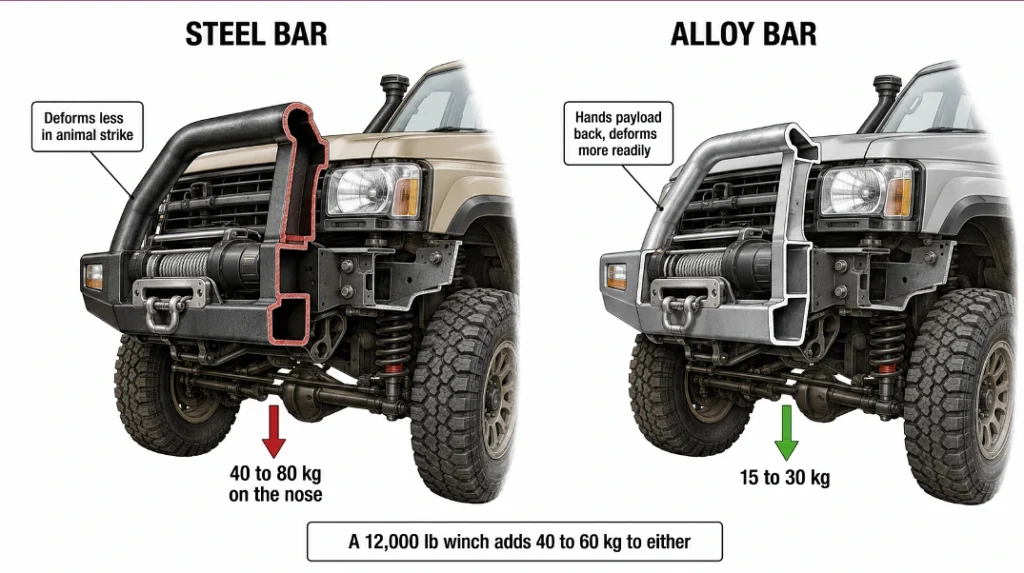
A steel bull bar runs 40kg to 80kg, which on a standard Prado swallows 10 to 15 percent of the entire payload on its own. Alloy bars weigh 15kg to 30kg and hand most of that capacity back, at the cost of deforming more readily in a solid animal strike. A 12,000lb winch adds another 40kg to 60kg straight onto the front axle, which is often the point where a suspension upgrade stops being optional. Drawers, long range tanks and roof racks stack on top, and it all counts toward GVM.
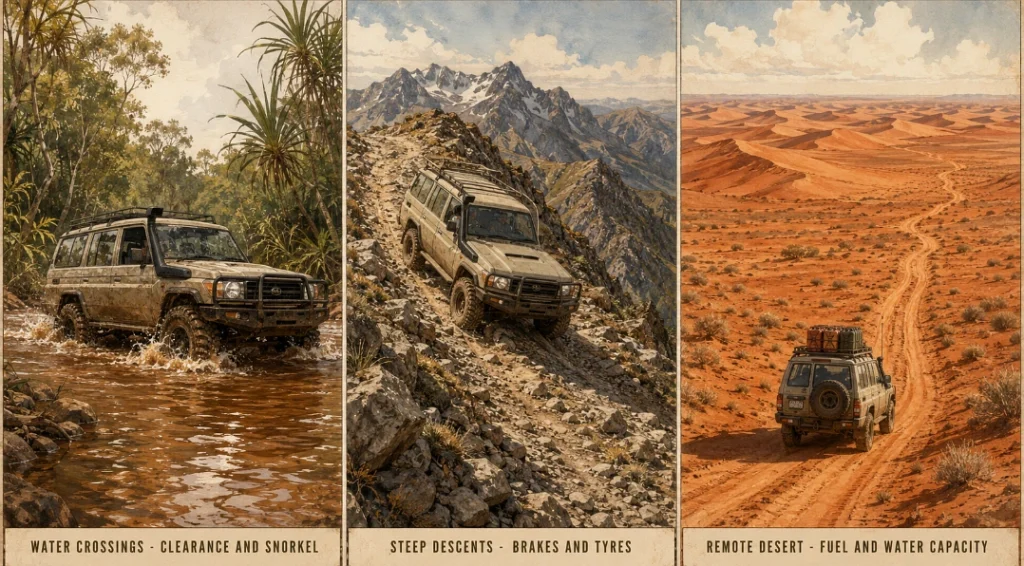
Where you’re headed decides the priorities. The Old Telegraph Track wants clearance and a sealed snorkel for the water crossings. The Blue Rag Range wants brakes and tyres. The Canning Stock Route wants fuel and water capacity above everything, which is exactly the gear that weighs the most.
Mainstream GVM upgrades run about $5,000 to $10,000 fitted, with entry kits under $5,000 and heavy specialist builds far beyond. Post registration certification adds roughly $800 to $1,800 depending on state. Before spending any of it, a public weighbridge visit costs $40 to $60 and tells you your real numbers instead of brochure ones. Cheapest step in the whole build, and the one most people skip.
Build to the weighbridge, not the wishlist, and the Prado 250 will do everything the brochure promised.

A fully built touring rig can sit over its legal weight while completely empty. No water, no fridge, no swags. Just...
Read moreDetails
Copyright © 2024 NoodleMagazine - All Right Reserved