
How Spa Visits Actually Help Business Owners Manage Stress
Every wellness article aimed at business owners makes the same promise. Book a massage, melt the stress away, come back...
Read moreDetails

Moving states costs most Australian households somewhere between $2,000 and $6,000 for the transport alone, before stamp duty, storage or any of the quieter expenses join in. Plenty of people are paying it: the ABS counted 371,000 interstate moves in the year to March 2025, with a net 31,000 leaving the capitals for the regions. Queensland gained around 24,000 people net, while NSW kept doing what it has done every year since 1979 and lost residents to other states. Cheaper houses pull people across borders, and then the move itself sends a series of bills their way.
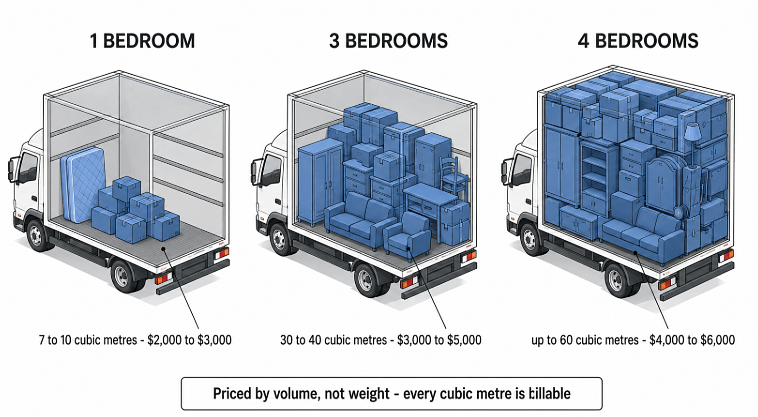
Removalists quote interstate jobs on cubic metres. A one bedroom unit fills roughly 7 to 10 cubic metres, a three bedroom home runs 30 to 40, and a four bedroom place can hit 60. On current rates that puts a one or two bedroom move around $2,000 to $3,000, a three bedroom home at $3,000 to $5,000, and four bedrooms at $4,000 to $6,000, with professional packing adding roughly $700 to $3,000 on top depending on house size. Comparing interstate moving companies costs a couple of months before the move is worth the evening it takes, because quotes for the same house on the same route genuinely differ by thousands, and route matters too. East coast to Darwin costs more than Sydney to Melbourne partly because trucks often come back empty.
Smaller fees hide in the fine print. A piano or pool table attracts a heavy lift fee, around $185 per item, and packed cartons run about $25 each if the crew does the packing. Stairs, lifts and bad parking all add access charges.
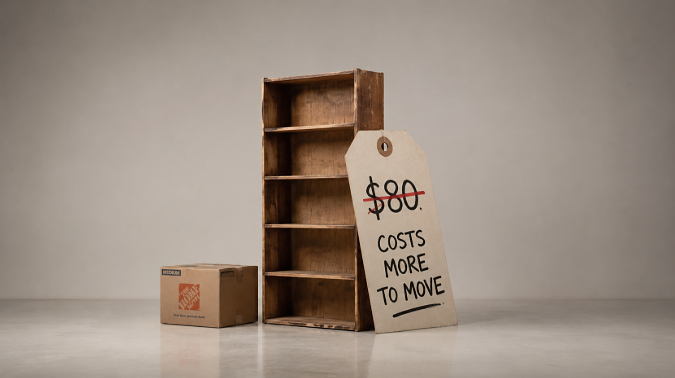
Since the bill is volume based, the cheapest hour of the whole relocation is the one spent culling. That $80 bookshelf takes up paid truck space worth more than the bookshelf. Selling, donating or dumping bulky low value furniture before quote day shrinks the number every other cost is calculated from, and a decluttered house photographs and inspects better if you’re selling, which is its own money.
Transfer duty is state law, so the rules you know stop applying the moment you buy in a new state. The formulas, thresholds and concessions all differ. NSW, for instance, gives first home buyers a full transfer duty exemption on properties up to $800,000, with a concession running up to $1 million, terms you won’t find replicated in Queensland or Victoria. A conveyancer in the destination state, engaged before you sign anything, is the cheap way to avoid learning the local rules on settlement day.
Services Australia expects address updates within 14 days of moving. It sounds like admin trivia until a payment gets suspended, and for anyone on Rent Assistance the new address triggers a reassessment that can work in your favour. Licences and car registration also need transferring, on separate state deadlines, and rego costs differ between states too.
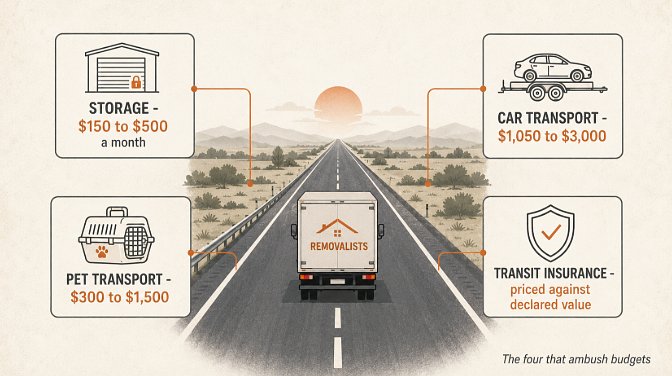
Four items that regularly ambush interstate budgets:
Add your own transport bracket to stamp duty and the quiet four, and you’ve got a real budget instead of a hopeful one. The households that come out of interstate moves without debt aren’t the lucky ones, they’re the ones who did this arithmetic before booking the truck.

Every wellness article aimed at business owners makes the same promise. Book a massage, melt the stress away, come back...
Read moreDetails
Copyright © 2024 NoodleMagazine - All Right Reserved