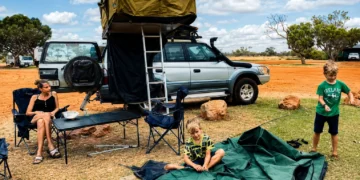
Australian Families Are Taking More Outback Trips Than Ever, Just Not the Way the Glossy Ads Show It
The brochure version is a family parked beside a gorge a thousand kilometres from anywhere, an espresso machine humming off...
Read moreDetails

Oxygen therapy shows up in travel brochures in two very different forms. One is a medical treatment with decades of clinical use behind it. The other is a spa amenity. A trip planned around the first looks nothing like a trip planned around the second, so it helps to know which one a retreat is selling before any flights get booked.
The medical version means breathing pure oxygen inside a hard-shell chamber pressurized to about 2 to 2.5 times normal atmosphere. The pressure loads far more oxygen into the blood than ordinary breathing can. Clinics use it for a defined set of problems: diabetic wounds that refuse to close, tissue damaged by radiation treatment, some serious infections, skin grafts at risk of failing, carbon monoxide poisoning and decompression sickness in divers.
A chronic wound protocol usually runs 20 to 40 sessions of around 90 minutes, scheduled daily on weekdays and supervised by clinicians. Anyone researching this because of an actual wound should start with how hyperbaric oxygen therapy for wounds works in a clinical setting, since a credible program overseas follows the same structure as one at home. Same pressures, same session counts, same supervision.
Spa oxygen is a separate category. Oxygen facials, oxygen bars and low-pressure inflatable capsules can be enjoyable. Evidence that they change anything lasting in a healthy person has not materialized and the detox language sold alongside them has no clinical basis. That distinction runs under everything below.
Costa Rica’s foundation here is medical tourism. San José hospitals treat a steady flow of international surgical patients and an industry of recovery retreats developed around them over the years. These are quiet properties with nursing support where people spend the weeks after a procedure before flying home. Oxygen therapy appears inside some of those recovery programs rather than as a standalone attraction.
The country itself does the rest of the work without making medical claims. Hot springs near Arenal help a sore body. The general pace suits someone who is not supposed to do much. Costs run well below US pricing for comparable care, which is the reason most of those patients came in the first place.
Anyone booking should ask whether the retreat coordinates with an actual clinic or simply offers sessions on-site, because the answer separates the recovery properties from the resorts that added a chamber to the spa menu.
One physical detail worth knowing. Alpine air at altitude contains lower oxygen pressure than air at sea level, not higher. That is the reason endurance athletes train in the mountains. So the crisp-air imagery attached to Swiss oxygen retreats describes a pleasant setting rather than a treatment.
The treatment happens indoors. Swiss private medicine is among the most tightly regulated anywhere, hyperbaric units operate within genuine hospital infrastructure and the country’s famous longevity clinics package medical services with hotel-grade logistics for people who can afford both. Pricing sits at the top of this list by a wide margin. Between appointments the trains, the lake towns and the food need no medical justification.
Tokyo helped launch the oxygen bar trend in the 2000s. Flavored oxygen through a nasal tube, a few hundred yen, ten minutes, no measurable effect beyond the novelty. Japan also popularized soft personal oxygen capsules after several professional athletes were photographed using them, which sent sales far ahead of the supporting evidence.
Behind the gadgets, Japanese hospitals practice standard hyperbaric medicine for the standard indications. What makes the country a genuinely good recovery destination has more to do with everything around a treatment day. Onsen bathing is built into daily life rather than sold as a package. Shiatsu is everywhere. A traveler can structure a slow, restorative trip here more easily than almost anywhere, with or without a chamber involved. I would rank the onsen above the oxygen for what a tired body notices afterward.
Hyperbaric medicine developed out of diving medicine and New Zealand maintains hyperbaric facilities largely because a country surrounded by dive coastline occasionally needs them for decompression cases.
For a healthy visitor the draw is simpler. The air quality ranks among the best measured anywhere. Geothermal areas around Rotorua supply the hot-water side of recovery. Hiking a South Island trail delivers more respiratory effort than any capsule session and costs nothing. This is the destination on the list where skipping the therapy entirely makes the most sense.
South Africa splits cleanly. Cape Town and Johannesburg hold the accredited medical facilities, including hyperbaric units in major centers. The safari lodges hold the rest and a number of upscale ones added spa programs as wellness travel grew, some with oxygen-branded sessions between game drives.
Those lodge sessions belong in the spa category from the top of this article. The practical way to build the trip is sequencing. Any legitimate treatment happens in the city first, on a clinic’s schedule. The reserve comes after, where two silent hours at a waterhole do their own kind of work on a person. I have not found a chamber that competes with that.
Ask what pressure the chamber runs at and who supervises sessions. A real program answers with numbers and a clinician’s name. A vague answer about energy and renewal is also an answer.
And since some readers arrive at this topic carrying a real wound or diagnosis rather than curiosity, the sequence matters: your own doctor first, destination second. The credible clinics abroad expect that order. It is also worth saying that this piece covers travel logistics, not medical advice, so treatment decisions belong in an exam room rather than a comments section.

The brochure version is a family parked beside a gorge a thousand kilometres from anywhere, an espresso machine humming off...
Read moreDetails
Copyright © 2024 NoodleMagazine - All Right Reserved