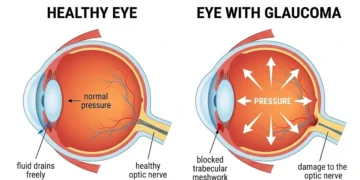
Glaucoma Takes Your Sight Without Telling You, And Your Own Brain Helps It Hide
You trust your eyes to complain when something is wrong. Something gets in, they water. Too bright, you squint. That...
Read moreDetails

Teeth yellow. That’s just what happens. Years of coffee, maybe some red wine, possibly a smoking phase you’d rather forget – and suddenly you’re smiling with your mouth closed in photos.
Whitening helps, up to a point. But some stains don’t budge. Tetracycline marks from childhood antibiotics, grey spots from old dental work, and enamel that was never particularly white to begin with. Strips and trays won’t fix those, no matter how many rounds you do.
Veneers take a different approach entirely. Thin porcelain shells, custom-made in a lab, are bonded permanently to the front of your teeth. They’re not covering up the stain – they’re replacing the visible surface altogether. Chips, gaps, minor crookedness, discolouration that laughs at bleaching treatments: all hidden behind what is essentially a new front for your teeth.
Most people get six to eight done across the top front teeth. The ones that actually show when you talk and smile. Roccadent in Tallinn does this work using digital scans to design shells that fit your specific mouth, which matters more than you’d think – generic shapes look generic.
Porcelain is the standard for good reason. Lasts 10-20 years, resists staining better than your actual enamel does, and the way light passes through it looks genuinely real. Composite resin costs less and gets done in one visit, but you’re looking at replacement within 4-8 years, and they pick up stains faster.
| Type | Lifespan | Cost Per Tooth (USD) | Enamel Removal |
|---|---|---|---|
| Porcelain | 10-20 years | $900-$2,500 | Yes |
| Composite Resin | 4-8 years | $400-$1,500 | Little to none |
| Zirconia | 10+ years | $1,000-$2,000 | Yes |
| No-Prep/Removable | 2-5 years | Cheapest option | Minimal |
Zirconia handles heavy bite pressure better – useful if you grind your teeth. The “no-prep” versions skip most of the enamel removal, which sounds great until you realise they don’t last nearly as long and can end up looking bulky on your teeth.
Here’s the thing. To fit veneers, dentists shave down about 0.5mm of your enamel. Roughly a fingernail’s thickness. Doesn’t sound like much, and it isn’t, but enamel doesn’t grow back. Once you commit to veneers, you’ll need some kind of covering on those teeth for life.
For people with genuine cosmetic problems – the kind that make them self-conscious every time they open their mouth – that exchange makes complete sense. For someone with minor complaints who might be fine with professional whitening? Worth thinking harder about.
The whole process wraps up faster than most people expect.
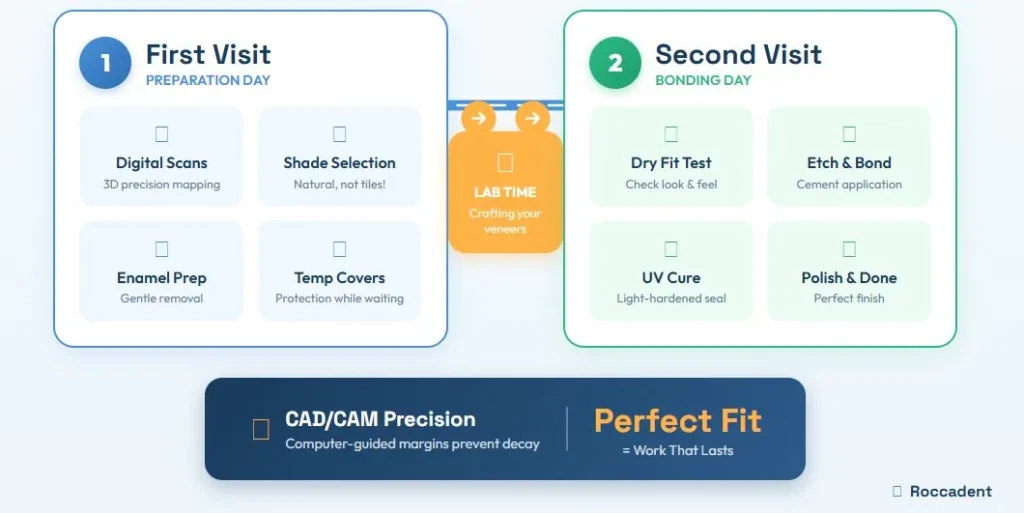
First visit: examination, digital scans, shade selection. You and your dentist pick the colour together – slightly whiter than natural looks good, blindingly white looks like bathroom tiles. Local anaesthetic, gentle enamel removal, and impressions sent off to the lab. Temporary covers protect your teeth while you wait.
Second visit: the finished veneers arrive. Dry fit first to check the look and feel. Then, the etching solution is applied to the enamel, bonding cement, and UV light to harden everything in place. Polish, done.
Roccadent runs this with CAD/CAM guidance, meaning computer precision on where the veneer edge meets the tooth. That margin is where failures happen – a poor fit at the junction lets decay creep underneath. It’s the detail that separates work that lasts from work that doesn’t.
Nothing complicated. Brush, floss, and show up for cleanings twice a year. Don’t use your teeth to open packaging.
Porcelain itself resists stains well, but the bonding cement along the edges can discolour over time. Coffee, wine, tobacco – the usual suspects. Regular professional cleaning keeps that in check.
Night grinders need a guard. Porcelain chips under sustained pressure, just like natural teeth do.
Forget whitening products post-veneers. Porcelain doesn’t respond to bleaching agents. Want whiter teeth overall? Do the whitening before you get veneers fitted so everything matches.
Some sensitivity after placement is normal. Fades within a couple of weeks. Longer than that means something’s not seated right.
Porcelain runs $900-$2,500 per tooth. Eight teeth for a full smile makeover puts you somewhere between $7,000 and $20,000, depending on location and who’s doing the work.
Insurance won’t cover it – cosmetic procedure. Payment plans exist at most clinics. Some people travel for it. Roccadent gets international patients because European pricing undercuts the US and UK, while the technical standards stay high.
Cheap veneers exist. They look like cheap veneers. The ceramist hand-crafting your shells matters as much as the dentist fitting them – rushed lab work shows up as weird colour, unnatural light refraction, edges that don’t seal properly. You get what you pay for, basically.
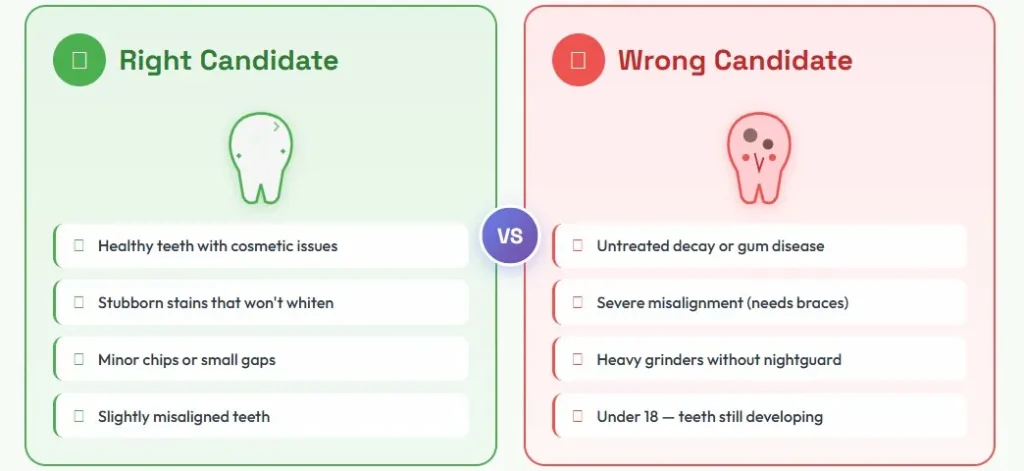
Good fit: healthy teeth with cosmetic problems. Staining that won’t whiten, chips, small gaps, and teeth that sit slightly off.
Bad fit: untreated decay, gum disease, severe misalignment that needs actual orthodontic work. Heavy grinders who won’t commit to wearing a nightguard. Anyone under 18 – teeth are still settling at that age and shouldn’t be permanently altered yet.
Veneers are permanent. You’re modifying healthy teeth because you don’t like how they look. For plenty of people, that’s an obvious yes. Decade of hiding their smile in photos, avoiding certain social situations, thinking about their teeth more than anyone should have to. Two dental appointments later, problem solved.
Others would be better served trying whitening first. Or bonding for that one chipped tooth. Less commitment, less cost, less irreversible.
Digital smile previews help. Good clinics can mock up what you’d look like with veneers before anyone touches your teeth. Seeing the potential result often makes the decision straightforward one way or the other.

You trust your eyes to complain when something is wrong. Something gets in, they water. Too bright, you squint. That...
Read moreDetails
Copyright © 2024 NoodleMagazine - All Right Reserved