Watch New York Fashion Week Shows From Home, February 10 To 14, 2027
Runway 7 is bringing it's New York Fashion Week shows back to Sony Hall from Wednesday, February 10 to Sunday,...
Read moreDetails

Sibiu is a medieval town in Transylvania with a population smaller than most Paris arrondissements. For six days in July it ran more shows than some capitals manage in a season, most of them free to walk into.
Event: Feeric Fashion Week 2026, 16th edition City: Sibiu, Romania Dates: July 21 to 26, 2026 Entry: Free, within each venue’s capacity Countries represented: More than 20 Venues: Immersive Museum, Promenada Sibiu (cinema, indoor parking, rooftop deck), the Sigemo tire warehouse, Boromir Factory, Highway Factory, the village of Porumbacu de Sus, Huet Square for the gala Runway photos: Cornel Petruș
Feeric does not rent ballrooms. The 2026 edition put shows inside an immersive digital museum, on the indoor levels of a shopping center parking structure, up on the rooftop deck, inside a bread factory, inside a tire warehouse, out in a village at the foot of the Făgăraș mountains, then finished with a gala in Huet Square, the medieval center of town.
Entry was free everywhere, limited only by how many bodies fit the room. The week started Tuesday, July 21 with Feeric Hub, the education program, before the runway days took over. Designers came in from Romania, Moldova, Poland, Lithuania, Ukraine, Bulgaria, Lebanon, Egypt, Uzbekistan, China, a dozen more.
The set most of these photos come from is a dark hall dressed as a burnt forest, bare sculptural trees lit copper-orange over a white strip of runway. Whoever built it understood the assignment better than half the clothes did.
The first show belonged to Cardinalia, a Romanian agency that works exclusively with women over 35, paired with Dharug, a wardrobe hunter that sources rare vintage plus early pieces from young labels. No new production on the runway at all.
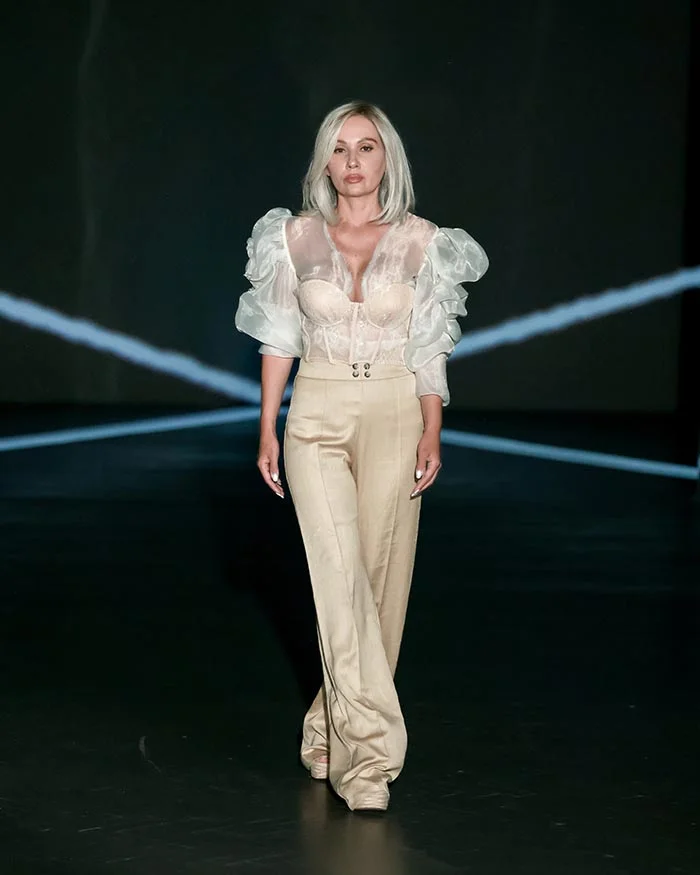
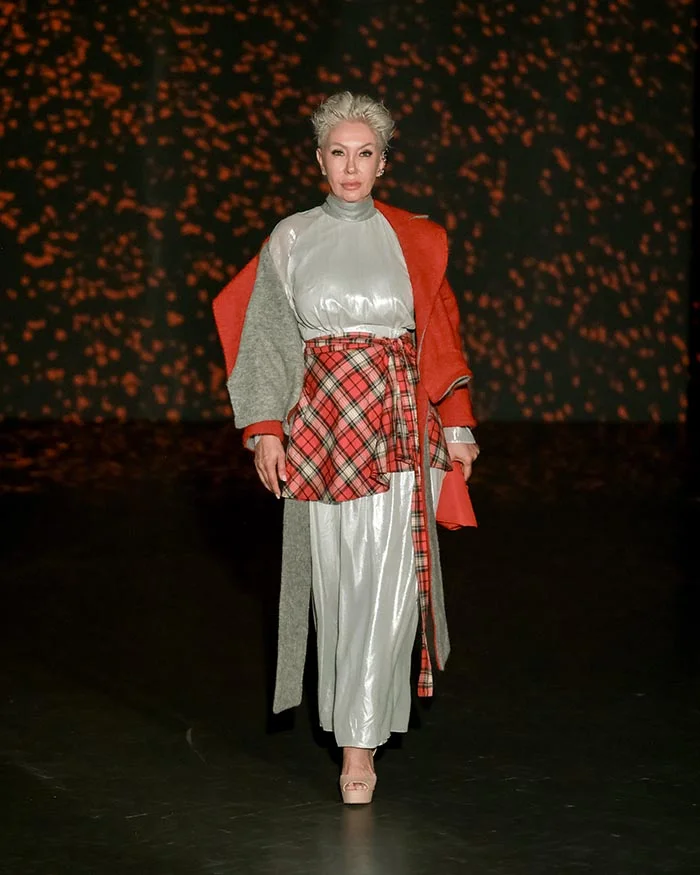
The venue was the Immersive Museum, which explains the light in these two frames. A French digital artist, Jérémy Oury, ran a projection piece called Exo-Cortex around the models while they walked, so the beams behind the organza blouse are part of the show, not a lighting accident.
The walk itself was the argument. These two carried the clothes with the kind of ease that 20-year-old runway models fake through coaching. I would watch a full week of this casting.
Romanian design schools keep going back to the village, this year with results worth the trip.
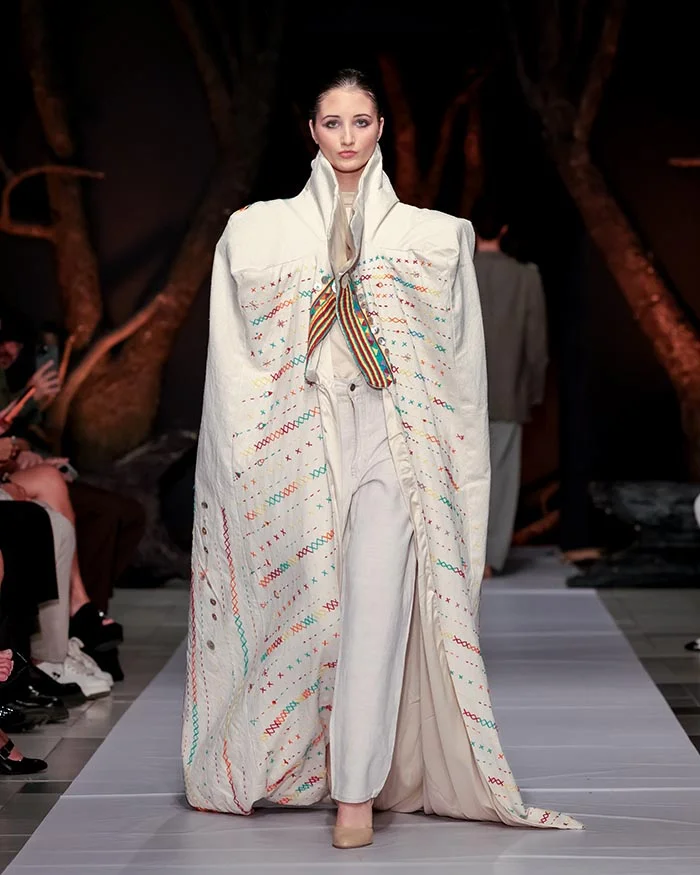
The ivory cape covered in rows of multicolor cross-stitch was one of the strongest single exits of the week. The stitching runs in loose diagonal bands, uneven on purpose, the way an actual heirloom sampler looks after a few generations of hands.
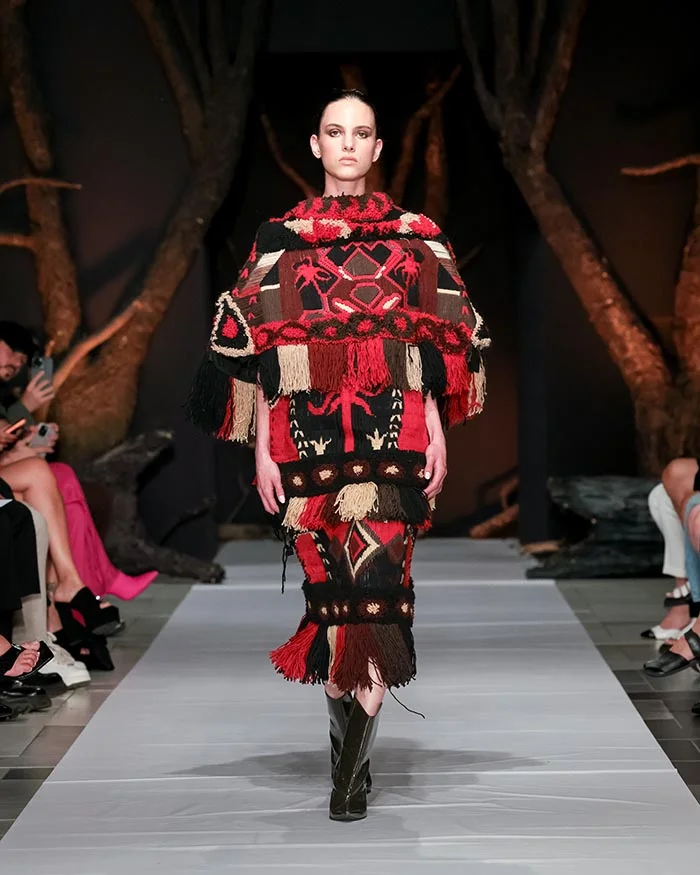
Then somebody sent a wall carpet down the runway. Poncho plus skirt in thick red, black, tan yarn with woven figures through the pattern, fringe at every hem, worn with plain black boots so nothing competed with the textile. Several collections this week worked from inherited cloth, including a capsule by Irina Silaghi with Cornel Crișan built from handwoven textiles made over 60 years ago by Crișan’s grandmother, Ileana Jurj, shown out in Porumbacu de Sus. I could not match every look to every maker from my seat, the run of show at Feeric moves fast. This one stopped the phones either way.
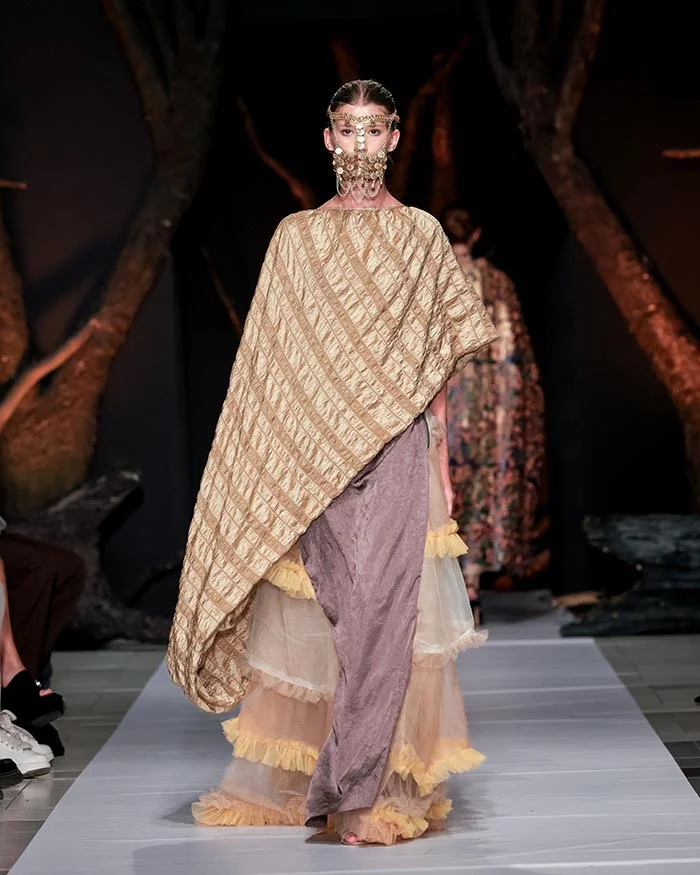
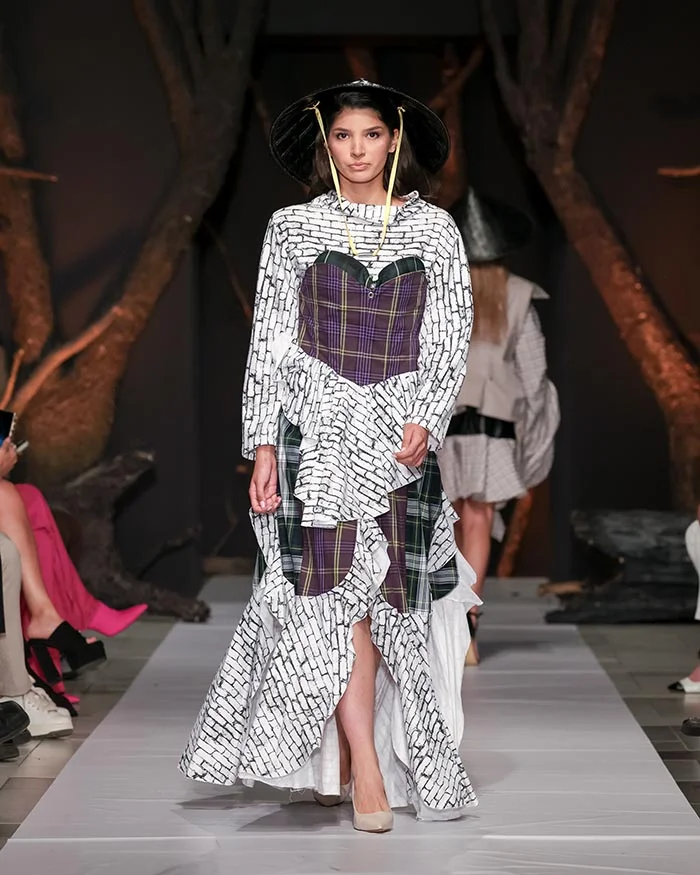
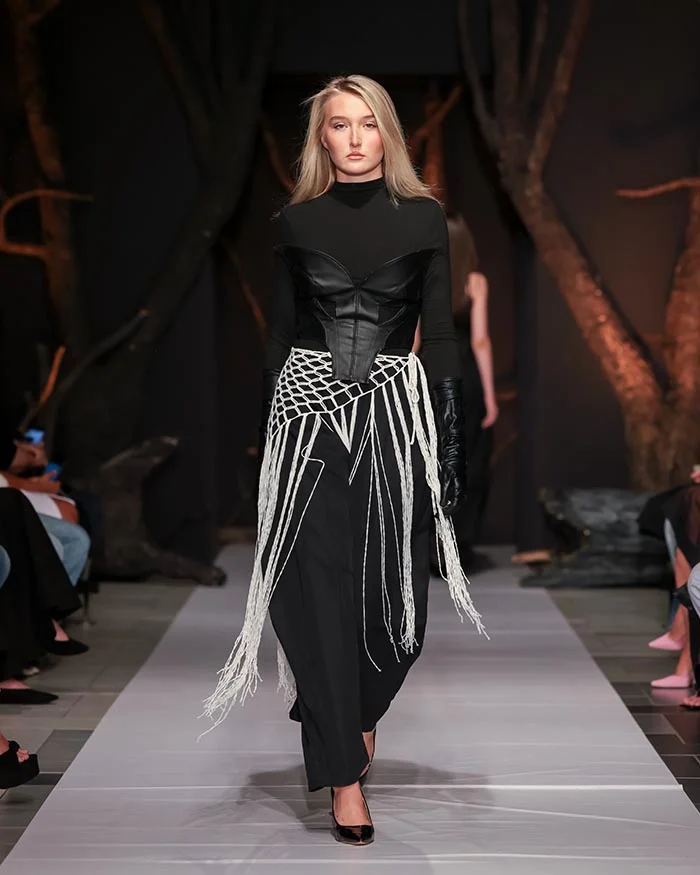
The heritage material got stranger from there. A gold-striped drape worn with a face veil of hanging coins over tiered tulle. A ruffled dress mixing a brick-wall print with tartan under a lacquered conical hat. A black leather corset softened by a white macramé net slung at the hips, fringe swinging to the knee. Schools from Macedonia to Egypt were pulling from their own ornament traditions the same week, so the mix on one runway got genuinely wide.
The materials list at Feeric 2026 reads nothing like a Paris one. Rescued garments supplied by Humana, taken apart by students then rebuilt. Deadstock silk. Natural latex applied by hand. Wool left over after shearing in Kosovo. Mycelium grown into sheet material then laser-cut, which appeared in the Yunnan-born designer Yulu Xia‘s gala looks alongside Bai tie-dye, bark, weathered timber.
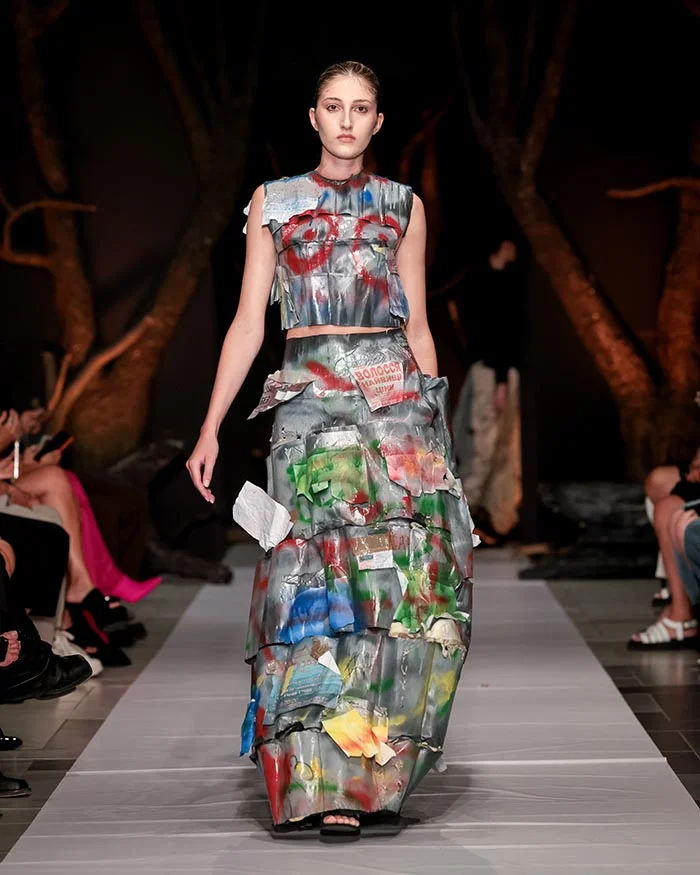
The look built from spray-painted panels carried actual street-poster fragments, one still readable in Ukrainian. Several student groups this year worked directly from what a city throws out, plastic, wood remnants, coffee capsules, some of them designers carrying personal histories out of Ukraine. Against the burnt-tree set the piece stopped feeling like a stunt.
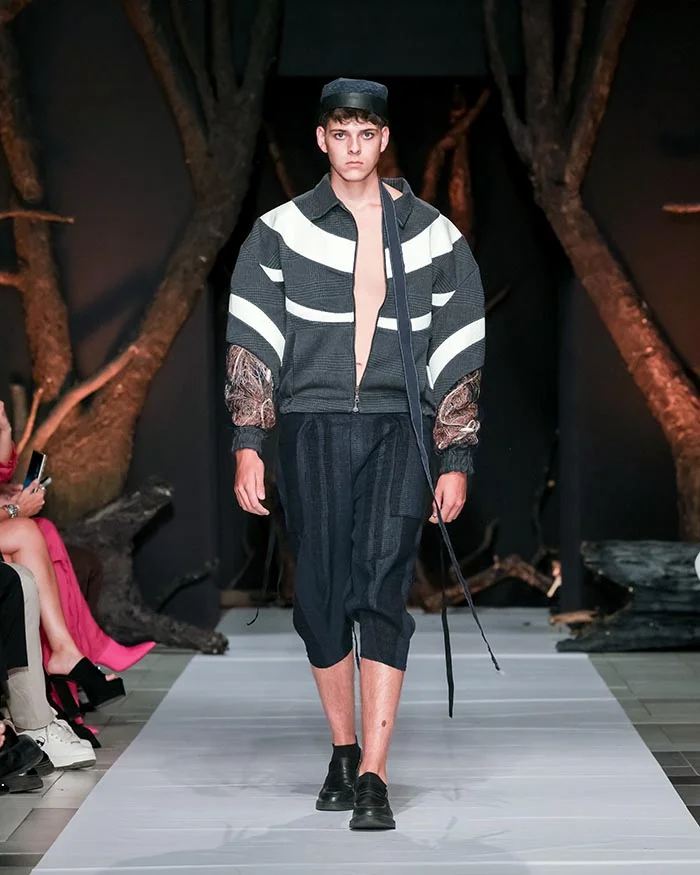
Menswear got the same treatment. A grey bomber cut with white swirl bands had sheer sleeve panels stuffed with copper wire scrap, visible through the mesh. The Hooldra project alone put 19 students from 8 universities across 3 countries to work rebuilding Humana rescues under one theme, Visible Transformation, meaning the garment has to show what it used to be. You could see the rule holding all week.
Concept-heavy weeks usually starve the romantics. Not this one.
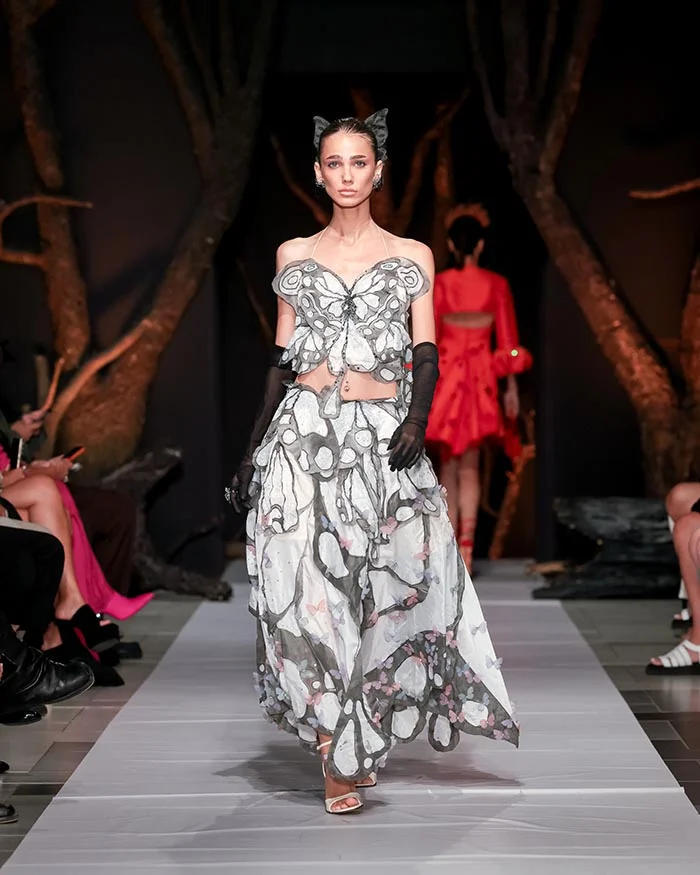
A butterfly two-piece opened my favorite stretch, wing-print halter over a matching skirt with small fabric butterflies scattered down the hem, black opera gloves keeping it from going costume.
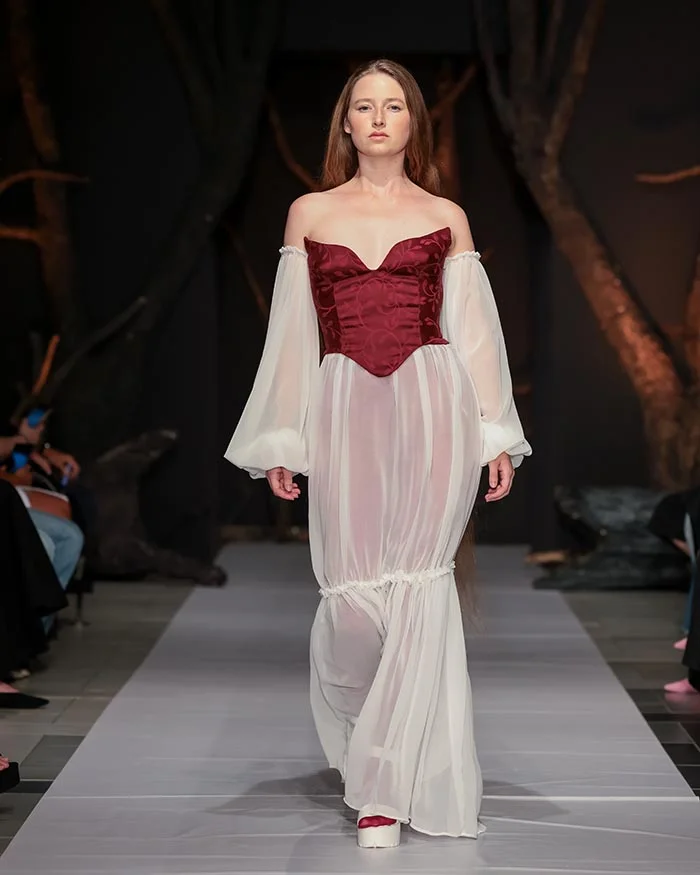
The romantic pair above could have walked a bridal week without edits. The burgundy brocade corset against sheer white chiffon reads centuries old in the best way. The feather-bodice gown next to it was quieter, the feathers packed dense at the chest then thinning into open lace below.
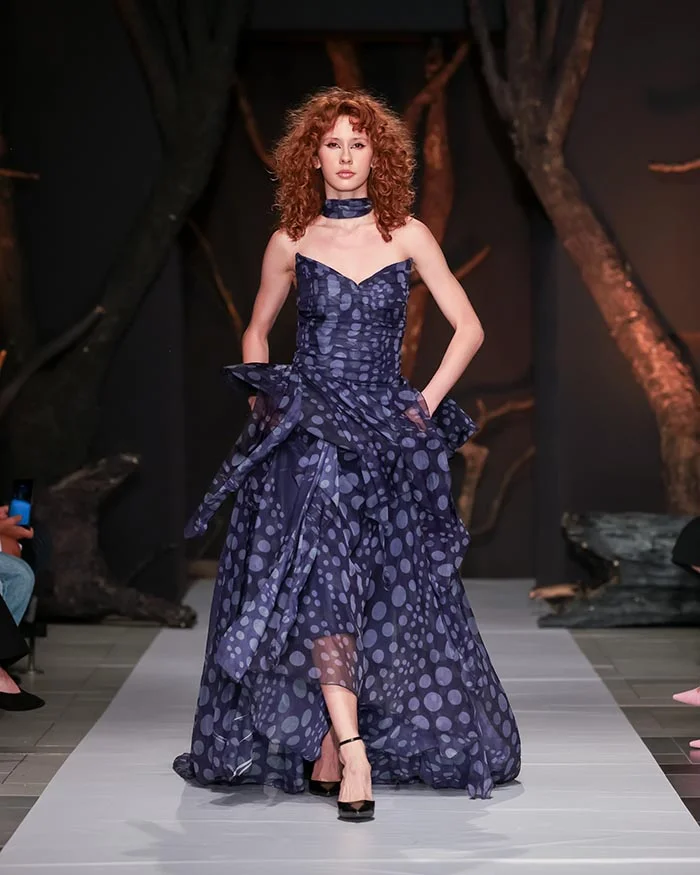
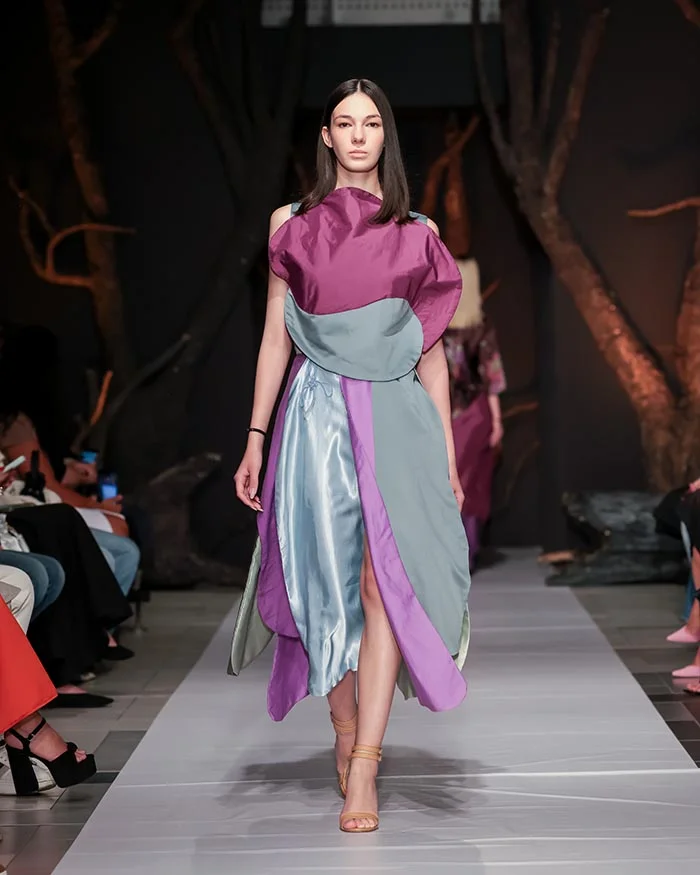
Color ran through a navy polka-dot ballgown with a sculpted peplum, a silk dress cut in overlapping petals of magenta, sage, ice blue, then the piece I would actually buy: a seafoam mini pleated in three directions at once, scarf neck, beaded fringe dropping off one hip. The pleating changes angle across the body without one visible seam break. Somebody lost sleep over that pattern.
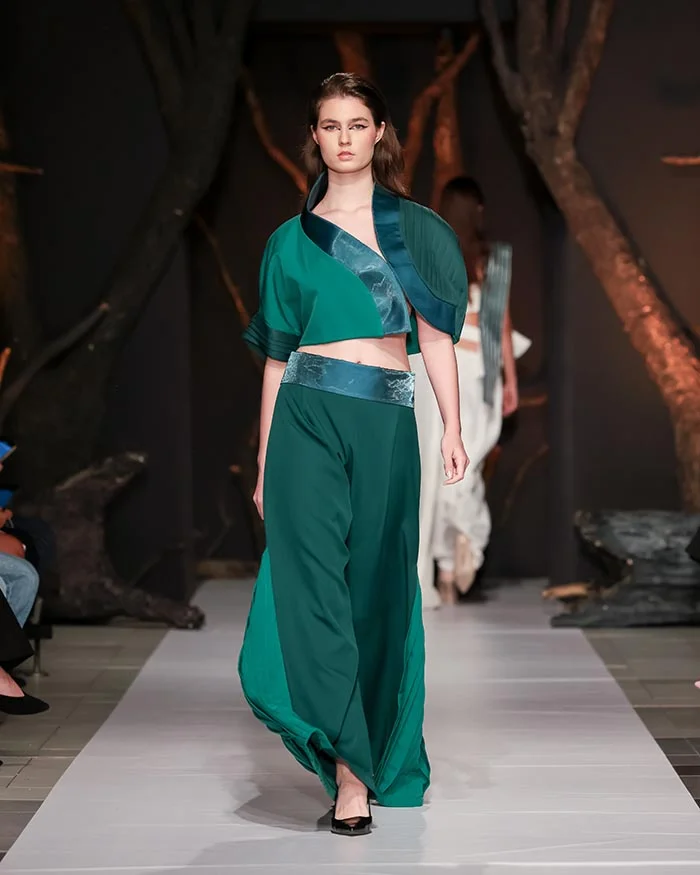
The greens deserve their own line. An emerald co-ord with a rolled sculptural collar, satin bands at collar plus waist, then a pistachio zip jacket thrown over a sheer knotted chiffon skirt with feathered mules. Both looked ready for a store rail tomorrow, which at a student-heavy week is a compliment, not a complaint.
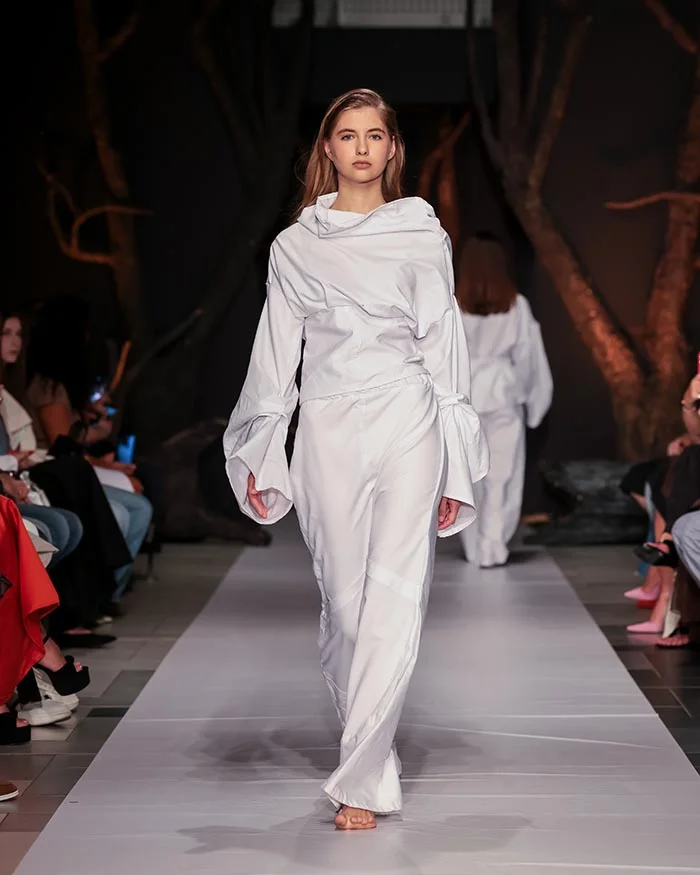
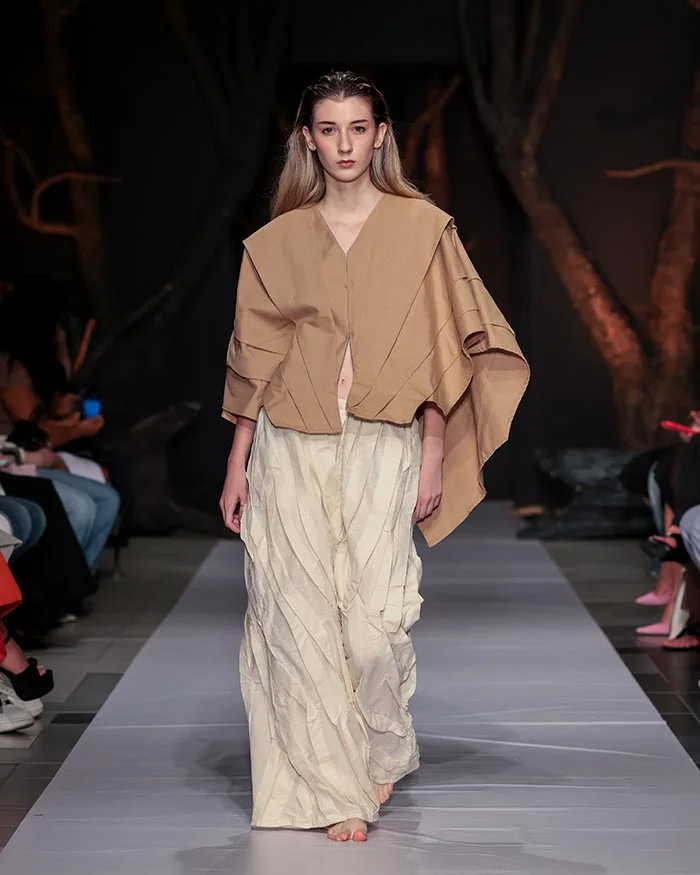
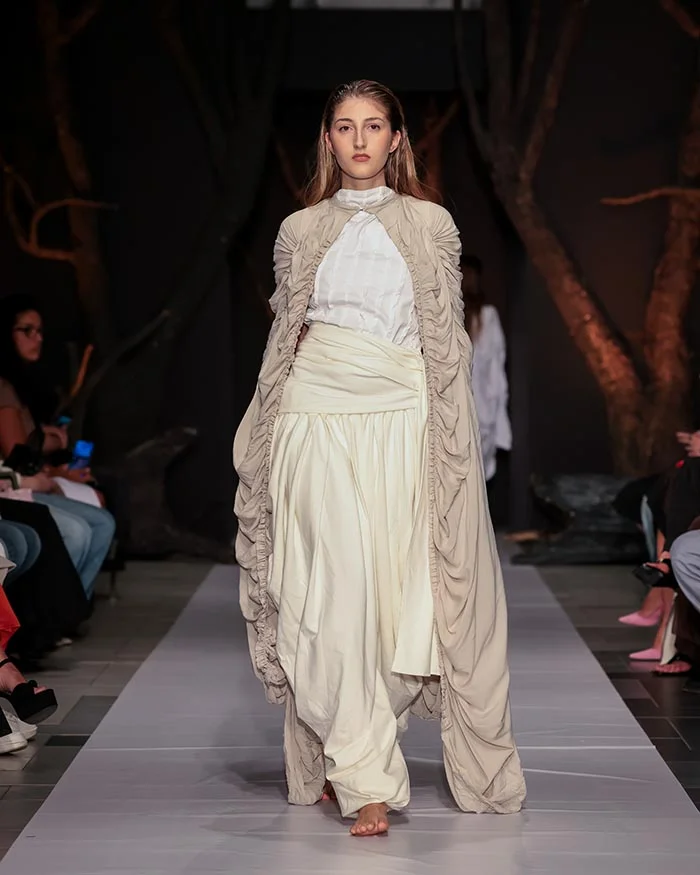
Late in the week came a stretch of looks in undyed cotton, cream, camel, everything crushed or ruched rather than pressed, models barefoot on the runway. No shoes, no jewelry, hair mostly loose. After days of coin veils, mycelium, spray paint, the effect landed harder than it had any right to. The camel jacket with the layered shoulder folds was the standout, cut sharp enough that the crumpled skirt below read intentional rather than unfinished.
Whether barefoot walking is a statement about groundedness or a styling budget decision, I genuinely could not tell you. It worked either way.
The math on this week stays absurd to me. Paris couture seats are unbuyable for civilians, Rolland’s charity show being the rare exception at 25 euros. Feeric charged nothing, filled a tire warehouse with fashion students from three continents, then closed with hand-painted Uzbek suzani in a medieval square. If independent fashion has a future, a fair amount of it walks through Sibiu in July.

Runway 7 is bringing it's New York Fashion Week shows back to Sony Hall from Wednesday, February 10 to Sunday,...
Read moreDetails
Copyright © 2024 NoodleMagazine - All Right Reserved