Your Bathroom Fan Is Why the Vanity Is Swelling
Quick answer: the exhaust fan is the only thing standing between your shower steam and every surface in the bathroom,...
Read moreDetails
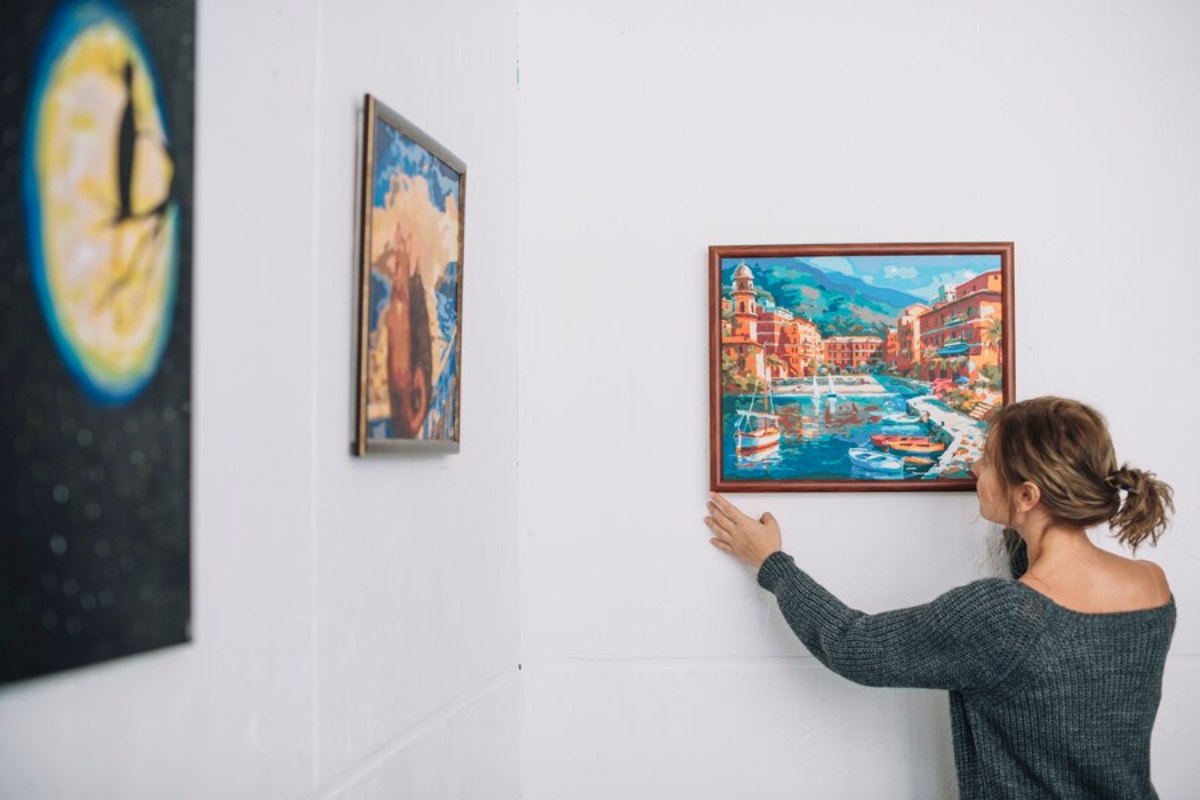
A blank wall is louder than people give it credit for. You stop seeing furniture after a week in a new place, but an empty stretch of white above the sofa keeps announcing itself every time you walk past. The old fix was either expensive original art or the same mass-produced canvas hanging in four million rental flats. Print-on-demand sits in the gap between those two and it’s quietly become the way most people under fifty actually buy art.
The short version, if you read nothing else:
Now the longer version, for the walls that deserve it.
The mechanics fit in a breath. Nothing exists until you order it: you pick a design, a size, a paper or canvas, sometimes a frame and the piece is printed for you, one copy. There’s no warehouse of unsold stock and no guessing what will sell.
Platforms like Gelato run networks of local printers across dozens of countries, so production happens near the buyer rather than across an ocean. If you’re buying print-on-demand in Deutschland, the poster on your wall was likely printed a few hundred kilometres away, not in another hemisphere. You’re paying for one print and it’s materials, not a shop’s inventory risk. That’s the entire reason a large framed piece costs what a modest unframed one used to.
What the model unlocks is choice at a scale no physical shop can touch. Thousands of artists, every style from line-drawn minimalism to dense maximalist colour, in whatever dimensions your wall actually needs. Independent artists sell through these platforms directly, so some of what you’ll find exists nowhere else and buying it pays the person who made it.
The sustainability angle is real, though it deserves proportion. Printing only what’s ordered genuinely cuts waste against speculative mass production and local printing trims shipping distances. It’s a better system, not a carbon-neutral halo and anyone selling it as the latter is overreaching.
Here’s the uncomfortable truth about wall art: the picture matters less than the size. And almost everyone gets the size wrong in the same direction.
Why does most wall art look wrong? Because it’s too small. A lone A3 print floating in the middle of a large wall reads as timid, like the room is wearing a badge instead of a shirt.
The working rule interior designers actually use is worth stealing. Art hung over furniture should span somewhere around two-thirds to three-quarters of the furniture’s width. A two-metre sofa wants something in the region of 130 to 150 centimetres across, which can be one large piece or a grouped set.
The centre of the artwork should sit roughly at eye level, around 145 centimetres from the floor. Not drifting up near the ceiling, which is where hesitant hangers always put it. Get size and height right and a modest print looks deliberate; get them wrong and an expensive one looks lost.
This is where print-on-demand beats buying whatever a shop happens to stock. You measure the wall first, then order the art to fit it, instead of the other way round. It sounds pedestrian. It’s also the single biggest difference between walls that look styled and walls that look decorated at random.
Material is the second decision people skip. A matte paper print behind glass reads calm and slightly formal, right for bedrooms and anywhere light hits directly, since there’s no glare fighting the image. Canvas has more presence and no reflection, but it flattens fine detail, it flatters bold graphic work and does photography no favours.
Framed prints arrive done. That costs more, but it spares you the framing errand where half of all unframed posters go to die, rolled in a tube in a cupboard for two years.
The room-by-room advice in most guides is padding, so here’s the short honest version.
Colour matters more than subject. Pull one or two colours already living in the room, a cushion, a rug, the sofa itself and a print containing them will look like it belongs, almost regardless of what it depicts. Contrast works too, a hot abstract in a neutral room, but that’s a choice made on purpose rather than by accident.
Beyond that, trust the obvious instincts. Busy, energetic work suits rooms where life is loud. Bedrooms take quieter pieces, not because of any rule but because you’ll be looking at it while trying to fall asleep.
One habit worth building, since print prices make it possible: treat the wall as a season, not a commitment. Swapping a piece or two each year keeps a room from calcifying around the taste you had when you moved in. And a small confession from watching people do this, the print you love instantly as a browser thumbnail isn’t always the one you can live with at a metre wide. Sit on the choice for a day; the good ones survive the wait.
None of this requires a design education or a gallery budget. It requires a tape measure, an honest look at what colours your room already contains and the nerve to order bigger than feels safe. The blank wall has been waiting either way.

Quick answer: the exhaust fan is the only thing standing between your shower steam and every surface in the bathroom,...
Read moreDetails
Copyright © 2024 NoodleMagazine - All Right Reserved