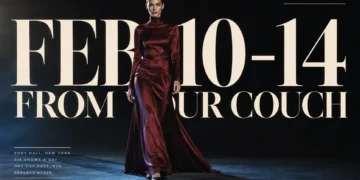
Watch New York Fashion Week Shows From Home, February 10 To 14, 2027
Runway 7 is bringing it's New York Fashion Week shows back to Sony Hall from Wednesday, February 10 to Sunday,...
Read moreDetails

Somewhere between a Succession rewatch and the third “old money aesthetic” Pinterest board, people stopped wanting to look rich and started wanting to look like they’d always been rich. Different thing entirely.
The logos didn’t disappear quietly either. They got dragged. Streetwear that cost a mortgage payment suddenly felt desperate. What replaced it — Harris Tweed, unbranded cashmere, riding boots that looked vaguely inherited — wasn’t cheaper. Just less obvious about it. And that’s the whole point, apparently.
However, this trend is not stopping at clothing racks. It is fundamentally changing how style-conscious consumers approach shopping for special occasions. People are now seeking out presents that carry a sense of history and prestige, perfectly complementing their newly curated closets. One fun way shoppers are matching this vibe is by opting to buy 1 square foot of land in Scotland as a distinct, novelty heritage present.
Fashion cycles are nothing new. But this one has stuck around long enough to move serious money. Bain & Company’s 2024 luxury report put the personal luxury goods market at €364 billion — and even against a rough year for discretionary spending, the appetite for understated, quality-driven pieces held steadier than the logo-heavy end of the market.
The shopping behavior following it has gotten strange in interesting ways. Once someone builds a wardrobe around tailored wool and structured leather, a gift card from a department store reads as almost insulting. Generic perfume feels worse. The demographic that spent three months sourcing the right cashmere coat isn’t going to be thrilled by something grabbed off a shelf in twenty minutes.
So what do you actually buy someone like that?
This is where it gets genuinely weird, and genuinely good. Some shoppers have landed on the idea of buying 1 square foot of land in Scotland — not as a joke exactly, but not entirely serious either. The symbolic ownership comes with a title, which means the person receiving it can technically call themselves a Laird or Lady of a Scottish estate. For someone whose entire wardrobe references country estate living they’ve never actually done, there’s something perfect about that. It’s eccentric in the right way. It has a story attached. And it costs nothing close to what an actual Scottish estate costs.
That last part matters less than you’d think to the people buying it. The appeal isn’t the transaction — it’s the narrative the gift carries into a room.
Artisanal leather goods have followed a similar logic. A handcrafted briefcase or a pair of proper riding boots doesn’t announce itself. It just exists, and gets better looking with age, and eventually becomes the kind of thing someone mentions when you ask where they got it. Mass-produced equivalents can’t do that. The patina a machine-pressed bag develops looks like wear. The patina on something handmade looks like character.
Antique pocket watches. Vintage fountain pens. Annual memberships to historical societies that most people have never heard of. These keep showing up as purchases in this space, and they share something — they’re all slightly impractical, carry obvious age, and require some explanation when someone notices them. That combination, apparently, is exactly what the aristocratic aesthetic is after.
The Scotland land thing captures all three without requiring the buyer to know much about Scotland. The recipient doesn’t need to visit the estate. The square foot doesn’t do anything. It just exists somewhere in the Highlands, and now so does a certificate, a title, and a story worth telling at dinner.
Whether that’s luxury or novelty is a question worth leaving unanswered. The old money crowd would probably say the line between them was always thinner than the logos crowd wanted to believe.

Runway 7 is bringing it's New York Fashion Week shows back to Sony Hall from Wednesday, February 10 to Sunday,...
Read moreDetails
Copyright © 2024 NoodleMagazine - All Right Reserved