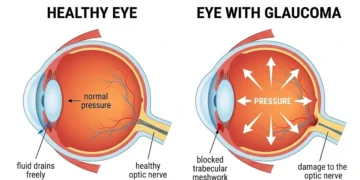
Glaucoma Takes Your Sight Without Telling You, And Your Own Brain Helps It Hide
You trust your eyes to complain when something is wrong. Something gets in, they water. Too bright, you squint. That...
Read moreDetails

Nobody books a psychiatrist the way they book a dentist. There is no six-month recall, no obvious cavity, no clean signal that says now. So most people end up asking a quieter question, usually late at night, usually alone: is what I am feeling bad enough to count? The markers below exist because that question has better answers than most people realize.
Everyone has terrible days. Stretches of them, even. What clinicians pay attention to is persistence: the screening tools used across mental health care ask about the last two weeks, because low mood, anxiety, irritability or emptiness that holds steady across that kind of stretch behaves differently from a bad few days. It stops tracking events. The weekend comes and nothing lifts.
The duration marker matters because it removes the comparison trap. The question is not whether other people have it worse or whether the sadness is justified by circumstances. The question is whether the state has settled in and stayed. Two weeks of most days is a reasonable line for taking it seriously and struggling to get out of bed or quietly dropping social contact for that long qualifies, whatever the cause looks like from outside.
The titles blur together for most people, so the practical distinction in one paragraph. Psychiatry is a branch of medicine focused on mental health, including substance use disorders, meaning a psychiatrist went through medical school, can evaluate the physical side of symptoms, order tests where relevant, prescribe and manage medication. Therapists and psychologists provide talk therapy, which is powerful and often exactly the right care. They do not prescribe in most US states.
That difference draws the map. Talk therapy questions can start at either door. The cases that point specifically toward a psychiatrist: symptoms severe enough that medication belongs in the conversation, treatment that has stalled with therapy alone, anything involving substances or symptom pictures tangled up with physical health, sleep, energy, appetite, the body stuff. Many people end up seeing both, a psychiatrist for the medical side with a therapist for the weekly work, which is a standard arrangement rather than an admission of anything.
Mental health does not always announce itself in feelings. Sometimes it shows up as a headache that will not go away, stomach trouble with no dietary explanation or fatigue that sleep never touches. The usual first stop is the right one, a primary care doctor who rules out the physical causes.
The step people skip comes after the clean test results. Persistent physical symptoms with no medical explanation are a recognized route into psychiatric care, not a dismissal, because the relationship between physical and mental health runs in both directions, each side shaping the other over time. Stress and anxiety produce genuinely physical effects. A psychiatrist is trained at exactly that junction, which makes the referral a continuation of the workup rather than a verdict that it was all in your head.
Big life changes deserve their own mention since they generate so much of the traffic into psychiatric offices: a new baby, a lost job, a divorce, a death, even the good changes that reorganize a life. Struggling through a transition is human. Staying stuck long after, unable to adapt, is the version worth bringing to a professional.
The cleanest test across all of it is function. Work slipping. Sleep broken for weeks. Relationships fraying because the irritability got there first. Concentration gone at the times it matters. When symptoms interfere with the machinery of a normal week, the threshold has been met, whatever the diagnosis turns out to be. Self-care genuinely helps around the edges, better routines and lifestyle habits that support well-being are worth building regardless, but habits are the maintenance layer, not the treatment layer and a functioning problem that has persisted deserves the treatment layer.
A separate word on risky behavior, because it hides well: escalating drinking, substance use, impulsive spending or driving, anything that reads as chasing relief. Those patterns are signals in their own right and they respond to treatment far better than to willpower campaigns.
An initial evaluation with a psychiatrist is closer to a long, structured conversation than to anything dramatic. Expect questions about symptoms, sleep, appetite, energy, medical history, medications, substances, family history. Sometimes lab work gets ordered to rule out physical contributors like thyroid issues. Out of it comes a working picture plus a plan, which might mean therapy, might mean medication, might mean watchful waiting with a follow-up. Nothing gets decided over your head and no one needs their story rehearsed or their diagnosis guessed in advance. Arriving uncertain is the normal condition of arriving.
One boundary matters more than everything above. If thoughts of self-harm or suicide are present or someone is in immediate danger, that is not an appointment-and-waitlist situation. In the US, the 988 Suicide & Crisis Lifeline answers by call or text around the clock and emergency services exist for the acute moments. Crisis support first, scheduling after.
For everything short of crisis, the maintenance work still counts: the basics covered in NIMH’s guide to caring for your mental health hold up because they are boring and real, sleep, movement, connection, routine. And this piece is orientation, not diagnosis. If any part of it read less like information and more like a description of your current month, that is worth a conversation with a professional who can actually see the whole picture and finding the right one is a reasonable thing to ask for help with.

You trust your eyes to complain when something is wrong. Something gets in, they water. Too bright, you squint. That...
Read moreDetails
Copyright © 2024 NoodleMagazine - All Right Reserved