
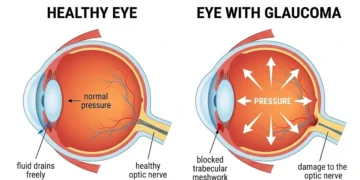
Glaucoma Takes Your Sight Without Telling You, And Your Own Brain Helps It Hide
You trust your eyes to complain when something is wrong. Something gets in, they water. Too bright, you squint. That...
Read moreDetails
You’ve read the claim a hundred times: clutter raises your cortisol, wrecks your focus and a tidy home is a calm mind. It gets repeated with such confidence that it sounds like settled science. The real research is more specific and more interesting than the version that circulates and the honest reading actually changes what you should do about your own mess. So here’s what the studies genuinely found, where the popular version oversells it and what that means for whether you need to declutter at all.
The famous one is from UCLA’s Center on Everyday Lives of Families, which between 2009 and 2010 studied 32 middle-class dual-income families in Los Angeles in genuinely obsessive detail, videotaping their homes, cataloguing their possessions and measuring cortisol through saliva samples across the day.
The headline finding is real: people who described their homes as cluttered or full of unfinished projects tended to have unhealthier daily cortisol patterns, the flatter curve associated with chronic stress rather than the healthy morning peak that tapers off. That’s the science behind the claim.
Two things the influencer version almost always drops, though and they matter.
First, the effect showed up mainly in women. The men in the study were largely unbothered, their cortisol stayed stable more or less regardless of how cluttered the home was. The researchers linked this to the home still being culturally coded as a woman’s responsibility, so women read clutter as an unfinished to-do list they own, while men often didn’t register it as their problem at all. That’s a big caveat to bury under a universal “clutter stresses you out.”
Second, it’s a correlation, not proof of cause. The study found clutter and stress travelling together; it did not establish that the clutter caused the cortisol. It’s entirely possible that stressed, overstretched people are also the ones with less time and energy to tidy, which would produce the exact same result. The honest version is “clutter is associated with stress for some people,” not “mess raises your cortisol,” full stop.
The productivity side holds up a little better. A 2011 study from the Princeton Neuroscience Institute found that visual clutter genuinely competes for your attention, the more unrelated objects in your field of view, the harder your brain works to filter them out, which leaves less capacity for whatever you’re actually trying to do.
This one has a clearer mechanism behind it and it’s why a chaotic desk really can make focused work harder, especially for anything demanding. If there’s a single evidence-based reason to clear a space, it’s this one and it’s specifically about your working sightline, the desk, the screen surround, not the whole house. You don’t need a minimalist home to think clearly. You need a clear patch in front of you while you work.
Here’s the part the tidy-lifestyle content rarely admits. A clutter-free home is not actually the goal and chasing it can backfire.
For one, tidy and calm aren’t the same thing. A show-home that’s stressful to maintain, where you’re constantly policing surfaces and feeling guilty about a stray mug, can generate more of that unfinished-task anxiety than a comfortably lived-in room ever did. The stress in the UCLA data tracked how people felt about their space, not an objective clutter score. A home you feel at ease in beats a home that photographs well.
For another, the whole framing loads guilt onto exactly the people the research suggests are already carrying the mental weight of the home and telling an overstretched person their mess is spiking their stress hormones is more likely to add a layer of shame than to help. The clutter didn’t create the overwhelm on it’s own; the overwhelm and the clutter tend to be symptoms of the same thing, too much to manage and not enough slack.
Strip out the hype and a sensible, evidence-shaped approach falls out and it’s lighter than the influencers suggest.
The real takeaway isn’t that clutter doesn’t matter, it’s that it matters less universally and less dramatically than the confident headlines suggest. Clear the space in front of you when you need to focus, keep your home somewhere you can genuinely relax and drop the guilt about the rest. A calm space helps, but it was never the tidiness itself doing the work. It was whether the room felt like somewhere you could exhale and that’s a much easier and kinder target than spotless.

You trust your eyes to complain when something is wrong. Something gets in, they water. Too bright, you squint. That...
Read moreDetails
Copyright © 2024 NoodleMagazine - All Right Reserved




You truly know this topic well! The loading speed of your website is also remarkable. Great job—I’m very impressed.