
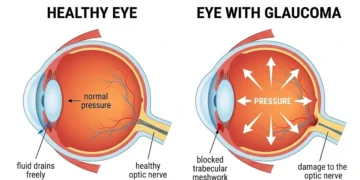
Glaucoma Takes Your Sight Without Telling You, And Your Own Brain Helps It Hide
You trust your eyes to complain when something is wrong. Something gets in, they water. Too bright, you squint. That...
Read moreDetails
The pet gadget market is very good at making you feel guilty for not owning things. Trackers, smart feeders, automated litter boxes, fresh-food subscriptions, all sold as if your pet’s wellbeing depends on them. Some of it genuinely earns its place. Some of it solves a problem your pet doesn’t have and one whole category comes with legal fine print nobody selling it wants to explain. Here’s the honest sort, category by category, on what’s worth the money and what isn’t.
This is one category doing two very different jobs and they’re worth very different amounts.
A real GPS tracker, the kind that shows your pet’s live location, is the one piece of pet tech that’s close to a straightforward yes, especially for a dog that bolts or a cat that roams. Losing an animal is genuinely awful and a tracker that pings its location to your phone can end that in minutes instead of days.
Trackers like the Tractive or Apple AirTag setups for the low-cost version, do this well. If you buy them, look for real GPS rather than just Bluetooth (Bluetooth only finds a pet already nearby), decent battery life, a waterproof build and geofence alerts that ping you when the animal leaves a set zone.
The fitness side, step counts, “calories burned,” sleep scores from something like a FitBark or the same Tractive, is where it gets softer. It’s genuinely useful in two cases: a vet-flagged weight or mobility issue where tracking activity actually informs treatment or a dog whose exercise you honestly can’t eyeball.
For a healthy pet whose activity you already see every day, the sleep-quality graphs are mostly a novelty you’ll stop opening after a month. Fun, not essential and don’t mistake the dashboard for medical insight.
This is the category the glossy roundups get flat wrong and it matters because it’s about your pet’s actual health, not a gadget.
Virtual vet services are real and genuinely helpful for the right things, triage (“is this an emergency or can it wait till morning”), behaviour and diet questions and follow-ups with a vet who already knows your animal. What they often can’t legally do is the thing people assume they can: prescribe medication after a video call with a vet who’s never seen your pet.
Here’s the part nobody explains. Under US federal law, a valid vet-client-patient relationship, the VCPR, cannot be established by telemedicine alone, a vet generally has to have physically examined your animal first. On top of that, it’s a state-by-state patchwork that’s changing fast. As of early 2026, more than a third of Americans live in states that now allow a VCPR to be formed virtually (California, Florida, Arizona, Virginia and others), while many states still require that first in-person exam.
And almost everywhere, controlled drugs, seizure meds, most pain meds, most anxiety meds, need a hands-on exam no matter what. Even the AVMA has warned that part of the push for virtual prescribing is being driven by companies wanting to sell more prescription product, which is worth keeping in mind when a platform is very eager to write you a script.
So the honest framing: telemedicine is excellent for advice, triage and continuing care with your own vet. It is not a universal shortcut to prescriptions and if a service is casually promising to prescribe anything to a pet it’s never met, that’s a flag, not a feature. Pair it with a real vet relationship rather than treating it as a replacement.
Ordering your pet’s regular medication and refilling it on a schedule from an online pharmacy is one of the clear wins here, usually cheaper and far less hassle than a pharmacy run. The one rule: use a legitimate, licensed pharmacy that requires a valid prescription from your vet.
The Vet-VIPPS accreditation from the National Association of Boards of Pharmacy is the marker to look for. Anywhere willing to dispense prescription meds without a script is somewhere to avoid, for your pet’s safety as much as the legality.
Automatic feeders that portion and schedule meals, some with a phone app and a camera like the PetSafe Smart Feed, are worth it for a narrow set of people and a waste for everyone else.
Worth the money if:
Skip it if:
Self-cleaning litter boxes are the sharpest version of this trade. The good ones, the Litter-Robot being the name people land on, genuinely cut a chore many cat owners hate. The catches are real though:
That last one isn’t a dealbreaker, just a reason to still look in occasionally rather than letting the machine do all your noticing for you.
Fresh, human-grade delivery services like Ollie and Nom Nom are real and for a lot of dogs the food quality is genuinely a step up from low-end kibble, plus the portioning takes guesswork out. That’s worth something. Two honest caveats though. It’s expensive, often several times the cost of solid mid-range food. And “customized by veterinary nutritionists based on your pet’s profile” is doing more marketing work than it sounds, the personalization is usually a sensible calorie-and-portion calculation, not a bespoke medical formulation and a good standard complete food covers most healthy pets fine.
Where custom diets earn their keep for real is the medical end, novel-protein and limited-ingredient diets for pets with genuine food allergies, where an unusual protein like venison or rabbit and a short ingredient list actually help pin down and avoid the trigger. That’s a real tool, but it’s a veterinary decision, don’t diagnose a food allergy yourself and switch diets on a hunch, since you can muddy the picture and make the eventual diagnosis harder. Talk to your vet first.
None of this is an argument against pet tech. It’s an argument for buying the two or three things that solve a problem you actually have, a tracker for a runner, an online pharmacy for a pet on regular meds, a feeder if your schedule genuinely needs one and ignoring the guilt-marketing on the rest. Your pet cannot tell the difference between a fifty-dollar bowl and a smart one. It can tell whether you’re paying attention and no gadget replaces that.

You trust your eyes to complain when something is wrong. Something gets in, they water. Too bright, you squint. That...
Read moreDetails
Copyright © 2024 NoodleMagazine - All Right Reserved