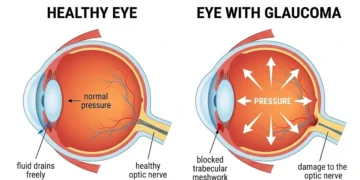
Glaucoma Takes Your Sight Without Telling You, And Your Own Brain Helps It Hide
You trust your eyes to complain when something is wrong. Something gets in, they water. Too bright, you squint. That...
Read moreDetails

Older adulthood brings many changes in one’s physical functioning, cognitive capacity, and social roles. Many of these changes bring safety concerns. When we examine the concept of safety more closely, however, we see that safety is not about constraining behavior. Rather, safety is about establishing an environment that allows older adults to experience their world more freely. A well-structured safety system allows older adults to have more choices, be more autonomous, and be more mobile.
An effective safety system in older adulthood has four components:
Together, each component reduces the probability of an accident or health event occurring or lessens its impact. Examples of environmental designs that reduce the risk of injury or illness include non-slip flooring, grab bars, lighting, and emergency response access. Health service examples include regular health evaluations and coordinated care. Both types of measures work best when they are incorporated into an individual’s day-to-day routine rather than being initiated after a crisis occurs.
Many people assume that safety systems limit personal freedom. However, the truth is that systems designed to meet the unique needs of an individual will actually increase an individual’s level of self-determination. For instance, retirement living that supports independence combines environmental safety with available staff and personalized care for each resident. Therefore, the community provides residents with both the freedom to move about as they choose, while providing them with the assurance of knowing that help is available if needed. Thus, the safety of the community does not remove barriers to choice but rather removes the barriers so that the individual may continue to make their own decisions every day.
Mobility loss is often viewed as a limiting condition. However, when an environment is designed to accommodate limitations in movement, opportunities exist to participate in more activities than normally would. Examples of ways to do this include walkable layouts within a community, transportation services provided by the community, and accessible equipment used by the residents to facilitate their ability to navigate their community. As a result of reducing the risks associated with falling or becoming disoriented, safety systems provide older adults with the opportunity to continue participating in cultural, educational, and social activities.
Another aspect of the safety system that is crucial to maintaining an individual’s independence is cognitive support. Cognitive support includes memory aids, scheduled check-in times with staff, and structured scheduling to support individuals who have mild cognitive impairments and wish to maintain their independence and continued activity in their daily life. Cognitive support tools eliminate the risks of missing medication, becoming disoriented, and experiencing social isolation, and provide older adults with the opportunity to participate in meaningful tasks.
While preventive measures should be taken to avoid emergencies, emergencies can occur even with the best planning and preparation. An effective safety system provides residents with an emergency preparedness plan that can include, for example, wearable alert devices, on-site medical staff, and clear procedures for responding to emergencies. This type of emergency preparedness and rapid response capability minimizes the impact of emergencies and enhances residents’ confidence in their ability to navigate through those emergencies.
In addition to formal safety systems, regular interactions with others also add another layer of safety to older adults’ lives. Interactions with friends, staff, and family members serve as an informal network of monitoring that identifies changes in an individual’s health or behavior early. Social connections also positively affect an individual’s mental health and correlate with better health outcomes and overall stability.
A safety system that is well-designed does not constrain older adults. Rather, it establishes the conditions under which older adults can move, decide, and take action with greater confidence. When safety is considered in the context of older adults’ physical, cognitive, and social experiences, it becomes the foundation for sustaining their engagement and autonomy throughout their golden years.

You trust your eyes to complain when something is wrong. Something gets in, they water. Too bright, you squint. That...
Read moreDetails
Copyright © 2024 NoodleMagazine - All Right Reserved