Your Bathroom Fan Is Why the Vanity Is Swelling
Quick answer: the exhaust fan is the only thing standing between your shower steam and every surface in the bathroom,...
Read moreDetails

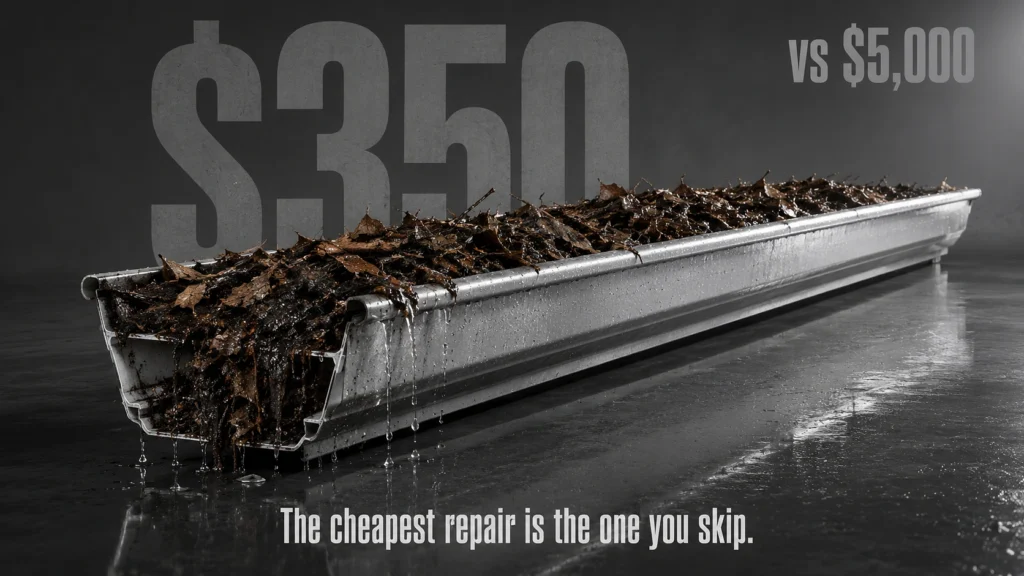
Professional gutter cleaning costs somewhere between a hundred and sixty and three hundred and fifty dollars, depending on the size of the house. The water damage that clogged gutters cause when nobody bothers to clean them averages around $3,300 to fix. Foundation repair from water pooling around the base of the house averages $5,000 to $5,200.
That’s a ratio of one to ten on the cheap end, one to thirty-five on the expensive end.
Prevention versus repair. That number alone should settle it, but most people don’t think about gutters until the basement smells weird or the ceiling has a stain that wasn’t there last month.
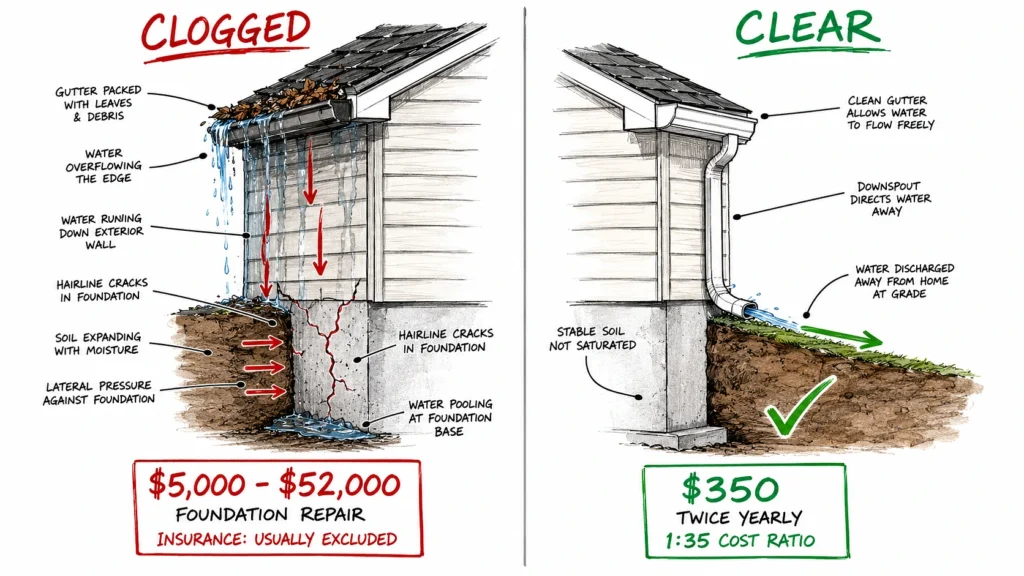
Leaves and debris build up across a season or two, the downspouts get partially blocked, and water starts spilling over the sides during heavy rain instead of flowing away from the house. That overflow soaks the soil right next to the foundation.
Wet soil expands and contracts with temperature changes and puts lateral pressure on foundation walls that weren’t designed for it. None of this is dramatic while it’s happening.
A hairline crack that grows a little wider each year. A damp crawlspace that smells foul. Ceiling stains that come and go. Each one is the same problem at a different stage.
The serious consequences of neglecting your home’s foundation stay hidden because nobody looks at the foundation until something forces them to.
Getting gutters cleaned twice a year by a professional gutter cleaning company costs three to seven hundred dollars total annually. The foundation underpinning costs thirty to fifty times that.
Gutters packed with damp, decomposing leaves are a breeding habitat, full stop. Standing water is exactly what mosquitoes need. The moist rotting material underneath is what carpenter ants and termites chew through on the way toward structural wood.
Cracked siding, gaps around windows, and holes where utility lines enter the building. A mouse needs a gap about the width of a pencil. Insects need less.
Once anything’s in the wall cavity, the problems multiply fast. Rodents chew through wiring, which is a genuine fire risk. Termites eat structural wood from the inside out, and by the time you see surface evidence, the internal damage is usually well advanced.
Pest treatment for a contained problem — two to five hundred dollars. Structural repair for what they did inside the walls — potentially thousands. The gap between catching it early and catching it late is enormous.
Peeling paint, dirty gutters, cracked siding, and overgrown Yard maintenance tell a buyer the house hasn’t been maintained. First thing a smart buyer does with that information is assume there are bigger problems hidden behind what they can see.
That drops the offer or sends them to the next listing entirely.
Every additional month unsold is another month of mortgage, insurance, and utilities on a property you’re trying to leave. The exterior is the first thirty seconds of a buyer’s impression, and thirty seconds usually form the opinion that sticks through the entire showing.
Most homeowners will spend five thousand renovating a bathroom that still works fine, but won’t spend three-fifty preventing five thousand in foundation damage that’s actively developing under the house. The people who figure out that ratio early save themselves a genuinely significant amount over the life of the property.

Quick answer: the exhaust fan is the only thing standing between your shower steam and every surface in the bathroom,...
Read moreDetails
Copyright © 2024 NoodleMagazine - All Right Reserved