
Budgeting an Interstate Move: The Numbers to Sort Before the Boxes
Moving states costs most Australian households somewhere between $2,000 and $6,000 for the transport alone, before stamp duty, storage or any of...
Read moreDetails

Running a successful HVAC business takes more than just being good at the work. Most homeowners and property managers search online first when they need heating or cooling help, and if your company does not show up in those results then it does not matter how experienced your technicians are or how many years you have been in business. The phone will not ring from people who cannot find you.
This is not just about having a website either. It is about showing up in the right places at the right time, with enough trust signals around your name that someone picks you over the three other companies listed next to you.
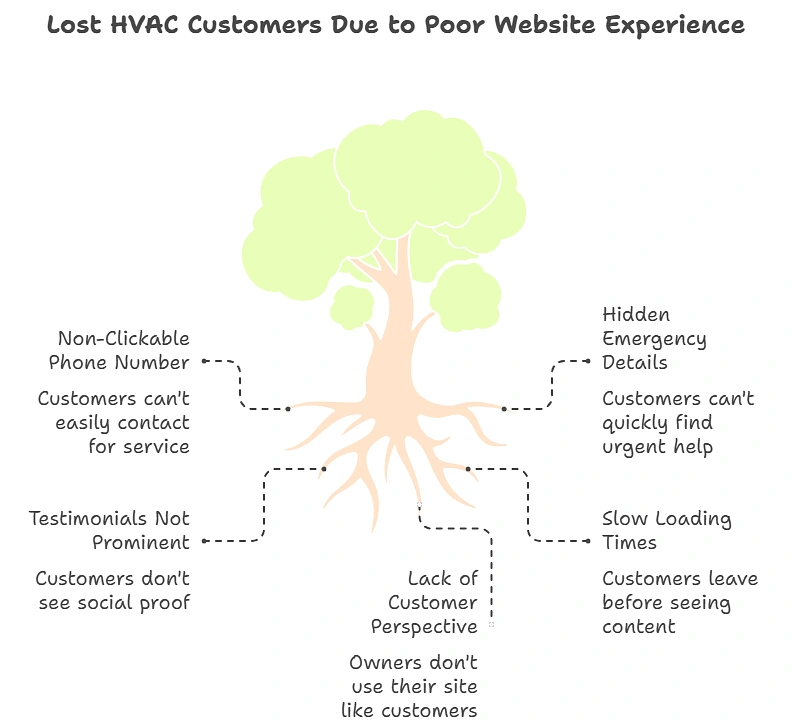
Your website is the first thing most potential customers will see and they will judge your business by it within a few seconds. That sounds harsh but it is true, especially in an industry where people are often making decisions quickly because their heating just broke or their AC stopped working in the middle of summer.
A few things that matter more than most HVAC companies realise:
One thing I would recommend checking right now — open your own website on your phone and try to book a service or find your number. If it takes more than two taps to get to either of those, you are losing calls. Most HVAC site owners have never actually used their own website the way a customer would and it shows.
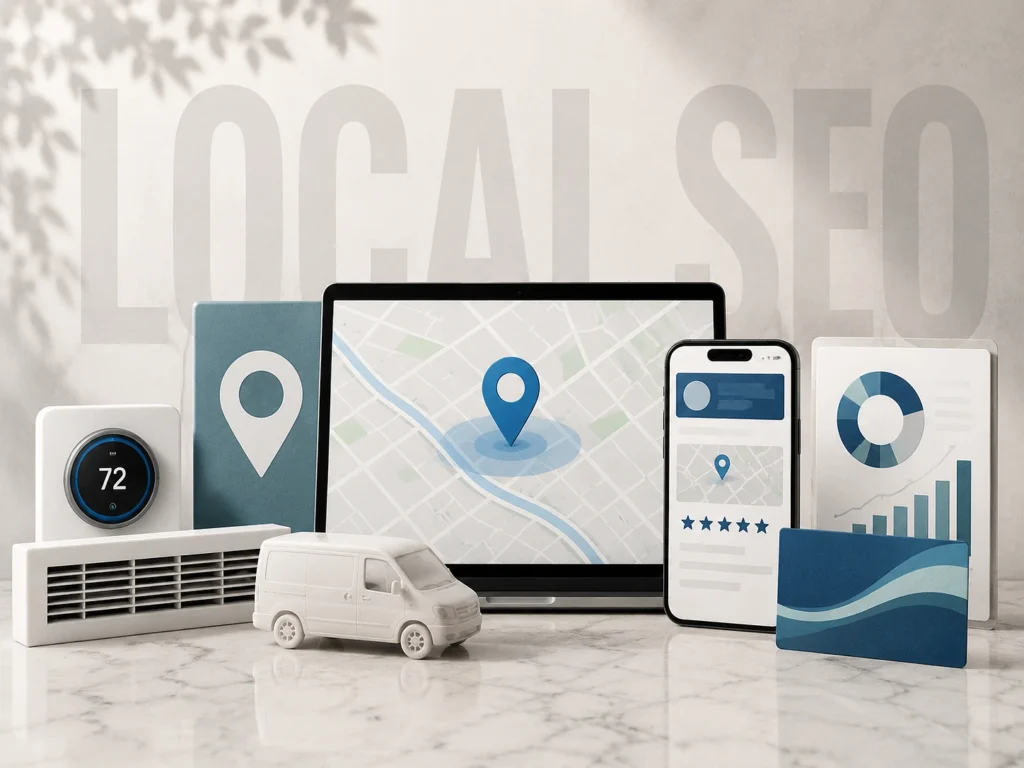
For HVAC businesses local visibility is basically everything. Nobody is hiring an HVAC company from three cities over. They want someone nearby who can come quickly and ideally someone who has good reviews from people in the same area.
Your Google Business Profile is the single most important asset for local visibility. More important than your website in most cases because it is what shows up in the map pack when someone searches “AC repair near me” and that map pack gets clicked before the regular search results almost every time.
A lot of guides tell you to “optimise your GBP” without explaining what that actually means in practice, so here is what specifically makes a difference:
This is one of the biggest missed opportunities in HVAC marketing. Most companies have one generic “Services” page that lists everything they do. That page is competing against every other HVAC company’s generic services page and nobody wins.
Instead, create individual pages for each service in each area you cover. “AC Repair in Bristol” as its own page with location-specific content will outrank a single “Our Services” page for that search almost every time. It takes effort to set up but once those pages exist they work for you permanently.
A lot of HVAC companies reach a point where they know they need to be more visible online but do not have the time or knowledge to handle it themselves. That is where working with specialists who understand home service businesses can make a real difference.
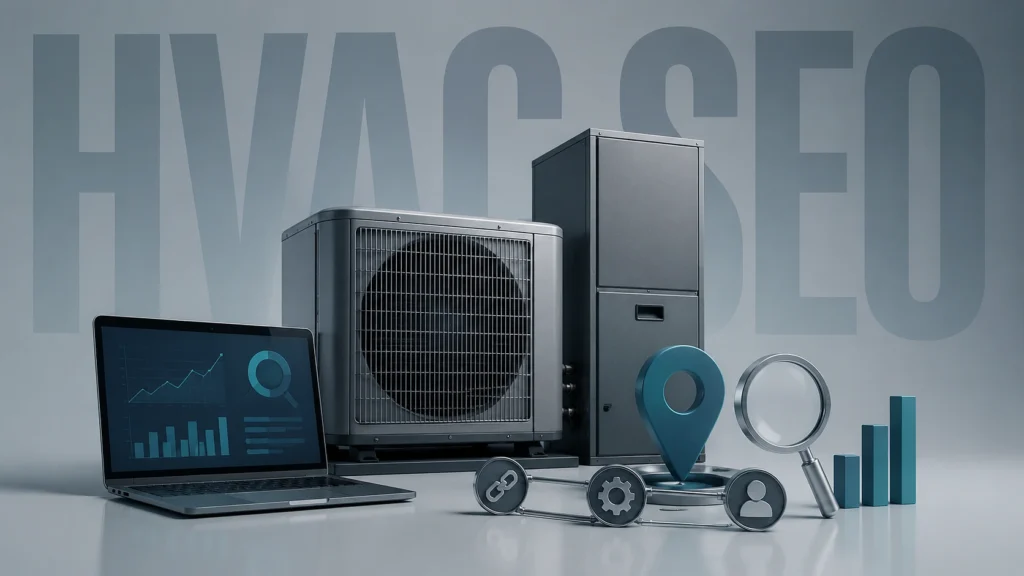
HVAC SEO services usually include local SEO setup, link building to increase your domain authority, content that addresses what your clients are actually seeking for, technical repairs for your website, and keyword research related to HVAC queries. Working with a specialist in this field has a benefit over working with a generic marketing firm because they already know which content themes generate real inquiries, which keywords convert for HVAC businesses, and how the competitive landscape functions in this sector.
I have seen HVAC companies spend thousands on generic digital marketing agencies that treat them the same as an ecommerce store or a SaaS company. The strategy for a local service business is fundamentally different and if the agency does not understand that, the money is mostly wasted.
One realistic expectation to set — local SEO wins like Google Business Profiles optimisation can show results within weeks. However, it usually takes six to twelve months of constant labor to get sustainable rankings that generate steady leads. Anyone who promises page one for competitive HVAC terms in thirty days is either selling something that won’t last or focusing on keywords that no one searches for.
Publishing blog entries only for the sake of having a blog is not content marketing for HVAC companies. It involves responding to the precise queries that prospective clients are entering into Google before they answer the phone.
The distinction is important. The topic “The Importance of Regular HVAC Maintenance” was created with search engines in mind. A real person is asking “Why Is My AC Blowing Warm Air” right now because it’s hot in their house and they want to know if they should call someone or if there’s something they can check.
Topics that actually drive enquiries for HVAC businesses:
This content also builds what SEO professionals call topical authority. When Google sees your site consistently answering HVAC-related questions with genuine depth, it starts trusting your site more for all HVAC-related searches. One strong blog post does not do much. Twenty or thirty posts covering real customer questions starts compounding.
98% of consumers read online reviews before choosing a local business. That number comes from BrightLocal’s consumer survey, and it is consistent year over year. For a trade like HVAC, where you are letting someone into your home and trusting them with expensive equipment, reviews carry even more weight than usual.
The companies sitting at two or three hundred reviews on Google did not get there because they are that much better at heating and cooling. They got there because they have a system for asking.
Most HVAC businesses ask for reviews randomly. A technician remembers to mention it sometimes, or the office sends an email a week later. By that point the customer has moved on and the emotional high of having their problem fixed is long gone.
The timing window matters — the best time to trigger a review request is within a few minutes of the customer confirming they are happy with the work. For emergency calls like a broken AC in summer, ask immediately because that is when the gratitude is strongest. For installations, wait about twenty four hours so the customer has had time to confirm everything is working properly.
Here is the practical setup that works:
One thing worth setting up — route the automated satisfaction check so that unhappy customers get directed to your service manager instead of the public review page. This way you catch problems before they become one-star reviews. The companies with consistently high ratings are not avoiding bad experiences entirely. They are just catching them privately before they go public.
Reply to every review. Positive and negative. Use the customer’s name when you can. Keep it short and genuine.
Do not become defensive in response to unfavorable reviews. Take the discussion offline after acknowledging the problem and offering to make things right. Your response will be more carefully studied by other prospective clients than the review itself. People can learn more about your company from how you respond to complaints than from how you respond to compliments.
Paid ads can generate visibility quickly but there is a massive difference between the options available and most HVAC companies do not realise they are overpaying for the wrong type.
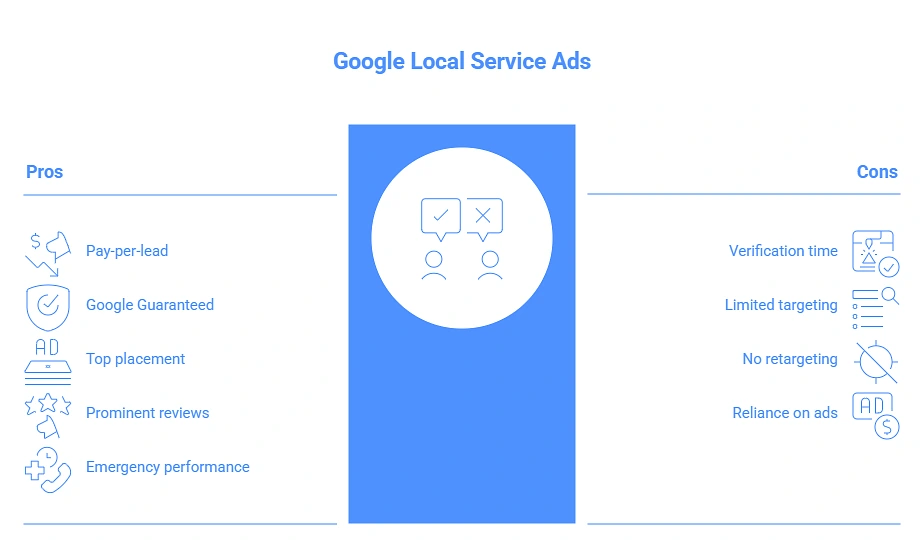
Google Local Service Ads operate on a pay-per-lead model, not pay-per-click. This is a critical distinction. With regular Google Ads you pay every time someone clicks your ad whether they call you or not. With LSA you only pay when someone actually contacts you through the ad. For HVAC businesses where competitive keywords can cost eight to fifteen pounds per click, that difference adds up fast.
LSAs also show a “Google Guaranteed” badge which builds immediate trust. They appear above regular paid ads in search results and they show your review rating prominently. For emergency HVAC searches they perform exceptionally well because the searcher sees your rating, your badge, and can call directly from the listing.
The catch is that LSA verification takes time. Before approving you, Google must confirm your company, your licenses, and your insurance. Even if you don’t want to run advertising right away, start the procedure today because the verification process can take several weeks.
Regular Google Ads are still useful, particularly when it comes to retargeting website visitors who did not make a call. But for new customer acquisition on a limited budget, LSAs generally deliver more leads per pound spent than standard search campaigns.
One more thing on paid advertising — do not rely on it alone. If you turn off the ads the leads stop. Combining paid with organic SEO work means that over time your organic rankings pick up more of the load and your cost per lead goes down rather than staying flat forever.
If you are starting from scratch or just realising your online presence needs work, do not try to do everything at once. The order that typically delivers the fastest results for HVAC businesses:
Businesses that constantly expand do not always have the highest marketing budgets. Instead of pursuing quick cuts that cease to function the moment you stop paying for them, they are the ones who set up the fundamentals correctly, gather reviews methodically, and then gradually grow upon that base.

Moving states costs most Australian households somewhere between $2,000 and $6,000 for the transport alone, before stamp duty, storage or any of...
Read moreDetails
Copyright © 2024 NoodleMagazine - All Right Reserved