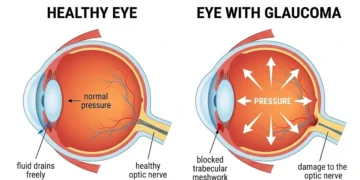
Glaucoma Takes Your Sight Without Telling You, And Your Own Brain Helps It Hide
You trust your eyes to complain when something is wrong. Something gets in, they water. Too bright, you squint. That...
Read moreDetails

About a third of kids in the US, roughly 35% of everyone from four months to seventeen years, regularly get less sleep than they need. That’s a CDC finding, not a scare stat and once you know what short sleep actually does to a child, the number stops looking abstract. The irritability at dinner, the meltdown over homework, the kid who can’t seem to focus, a lot of that traces back to a bedtime that’s an hour too late, night after night.
The good news buried in the same research: kids with a consistent bedtime were far more likely to hit the hours they need. So this is fixable and mostly with the least glamorous tool there is, a routine.
Sleep isn’t downtime for a growing body, it’s when most of the important work happens. During deep sleep a child’s body releases growth hormone, repairs tissue and consolidates everything they learned that day into memory. Skip it and you’re not just dealing with a tired kid, you’re interrupting the machinery of how they grow and learn.
The physical side is concrete. Well-slept children fight off illness better, because sleep is when the immune system does a lot of its maintenance. They hold a healthier weight, and this one surprises parents, short sleep is genuinely linked to obesity in kids, partly through the hormones that govern hunger going haywire when they’re tired. Over the long run, chronically under-slept children carry a raised risk of things like type 2 diabetes down the line. That’s not fear-mongering, it’s just what the tiredness compounds into when it’s the pattern for years rather than a rough week.
The mental and emotional side is where you’ll notice it day to day, though. A rested child is a more patient one, better at handling the small frustrations that otherwise tip into a tantrum. They cope with school stress and playground politics more easily, solve problems better, and behave better, less of the disruptive stuff that makes a hard day harder for everyone. There’s a mental-health angle too: getting enough sleep is tied to lower rates of anxiety and depression and for teenagers specifically, short sleep is linked to increased risk of self-harm, which is reason enough to take a teen’s late nights seriously rather than writing them off as normal.
The numbers below come from the American Academy of Sleep Medicine, endorsed by the American Academy of Pediatrics. They’re per 24 hours, so for younger kids that includes naps, not just the night.
| Age | Sleep per 24 hours |
|---|---|
| 4 to 12 months | 12 to 16 hours (with naps) |
| 1 to 2 years | 11 to 14 hours (with naps) |
| 3 to 5 years | 10 to 13 hours (with naps) |
| 6 to 12 years | 9 to 12 hours |
| 13 to 18 years | 8 to 10 hours |
One thing worth knowing about teenagers before you nag them: their body clock genuinely shifts later during adolescence, so a teen who can’t fall asleep at ten isn’t necessarily being difficult, their biology is pushing bedtime back. Which makes the eight-to-ten-hour target harder to hit against an early school start and worth planning around rather than fighting head-on.
A single bad night is nothing, every kid has them. The problem is the pattern. When short sleep becomes the norm, a child runs anxious and tired, struggles to keep up with schoolwork and the ordinary demands of their day, and the small stuff starts feeling insurmountable to them. Layer that over months and it stops being a mood issue and becomes a health one, the raised risks to metabolism, mood and immunity that the research keeps pointing back to. Tiredness isn’t just unpleasant for a kid. Sustained, it’s a genuine drag on how their body and mind develop.
None of the fixes are complicated, they’re just hard to be consistent about, which is the whole game.
The single most effective thing is a steady bedtime, the same time every night, weekends included as much as you can manage. That regularity is what lets a child’s internal clock settle, so falling asleep stops being a nightly battle and starts happening on its own. It’s also the exact thing the CDC data flagged as separating the kids who got enough sleep from the ones who didn’t.
Beyond that, a few things genuinely move the needle:
You won’t get it perfect, and you don’t need to. Distractions and off nights are part of raising a kid. The aim is just to make enough sleep the default most of the time, because the habits a child builds young tend to be the ones they carry, and a kid who learns to sleep well has been handed something that keeps paying off long after they’ve left your house.

You trust your eyes to complain when something is wrong. Something gets in, they water. Too bright, you squint. That...
Read moreDetails
Copyright © 2024 NoodleMagazine - All Right Reserved