
Your Bathroom Fan Is Why the Vanity Is Swelling
Quick answer: the exhaust fan is the only thing standing between your shower steam and every surface in the bathroom,...
Read moreDetails

There was a time when the living room sofa was basically furniture for guests. You sat on it properly when people came over. The rest of the time it just sat there looking tidy.
Nobody actually wants that anymore.
The living room is pulling more weight than ever — work calls in the morning, takeout on the coffee table at night, kids piled on at the weekend. A sofa that demands you sit up straight doesn’t fit into that picture. Neither does a layout you committed to three years ago and can’t change because nothing connects to anything else.
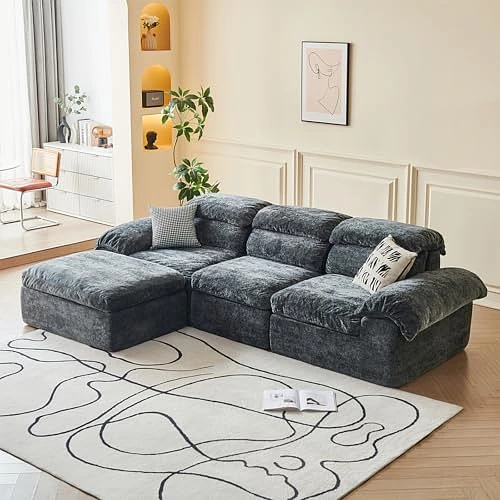
Most furniture is a permanent decision disguised as a purchase. You buy a corner sofa, and that corner is done. Forever. Move to a different flat, different room shape — now you’re either cramming it in or starting over.
Modular seating sidesteps that. Pull pieces apart, push them together differently, add a section if the room grows, strip one back if it shrinks. For anyone who’s moved more than once in the last decade, that isn’t a nice-to-have. It’s the whole point.
A quick look at how it stacks up against a standard sofa:
| Standard sofa | Modular seating | |
|---|---|---|
| Layout flexibility | Fixed | Rearrange anytime |
| Works after moving home | Hit or miss | Usually yes |
| Hosting setup | One configuration | Adapt per occasion |
| Adding pieces later | Rarely possible | Built for it |
Sharp, angular furniture photographs well. It’s also slightly exhausting to actually live with.
Softer forms — rounded armrests, deeper seats, plush upholstery — do something to a room’s atmosphere that cleaner pieces can’t manage. The space feels inhabited rather than staged. Less like a showroom, more like somewhere a real person eats cereal and occasionally naps on a Tuesday.
Low-profile shapes add to this. When seating sits closer to the ground the room opens up visually — feels less cluttered even when nothing has been removed.
Within this shift, boneless modular seating has been getting attention for a specific reason. It takes the modular idea and strips away the internal frame that keeps traditional sofas firm. What you get is a much deeper sink-in feel — the sort that makes you want to stay put.
A few reasons people are choosing it:
It handles the day-to-night shift naturally. Calm and uncluttered in the afternoon. Easy to pile onto in the evening. Same room, same furniture.
You don’t need to tear the room apart. One well-chosen piece usually does more than a full redesign.
The useful question isn’t what looks good in photos. It’s how you actually use the room. If you spend most evenings horizontal, get something built for that. If the layout needs to shift around, prioritise modularity over everything else.
Scale catches people out more than anything else. Slightly too large and the room closes in. Slightly too small and it just floats. Sit with the measurements before deciding.
And once it’s in — don’t over-arrange it. The whole appeal of this style is that it looks natural, a bit lived-in. Fighting against that defeats the point entirely.

Quick answer: the exhaust fan is the only thing standing between your shower steam and every surface in the bathroom,...
Read moreDetails
Copyright © 2024 NoodleMagazine - All Right Reserved