Budgeting an Interstate Move: The Numbers to Sort Before the Boxes
Moving states costs most Australian households somewhere between $2,000 and $6,000 for the transport alone, before stamp duty, storage or any of...
Read moreDetails

Every article on delivery operations tells you to adopt technology and invest in your people, which is true and useless, because it doesn’t tell you what breaks and what fixes it. Delivery businesses don’t fail from a general lack of efficiency. They fail from specific, recurring problems, orders that fall through cracks, trucks nobody can locate, routes that waste fuel, staff who churn, customers who feel ignored. So the useful way to think about the tech stack isn’t as a shopping list, it’s as a set of answers to problems you already have. Here’s each problem and the thing that actually solves it.
The most common early failure in a delivery operation is losing track of what’s been ordered, what’s in stock and where each order sits, usually because it’s all being tracked manually across spreadsheets and someone’s memory. That’s where things get missed and customers get let down.
An Order Management System (OMS) that ties into your inventory and customer data is the fix, giving you real-time visibility of orders and stock in one place and automating the handoffs that humans forget. Around it, workforce-management software handles the other half, scheduling delivery staff, tracking hours and allocating people where they’re actually needed rather than by guesswork. Together they take the two biggest sources of manual error, orders and staffing, off people’s plates.
When your digital systems go down, you often learn about it when orders stop coming in or a customer complains, which means the damage is already done. A network monitor watches the digital backbone of the operation continuously and flags issues before they turn into outages, so you catch the problem while it’s still small.
The customer-facing side matters just as much here. Your website or app is where trust is won or lost, so it needs to give real-time order updates, live delivery tracking and easy support, because a positive customer experience is built on people never having to wonder where their order is. And the payment side has to be fast, secure and flexible on payment methods, since a checkout that fails is a sale that vanishes with no warning.
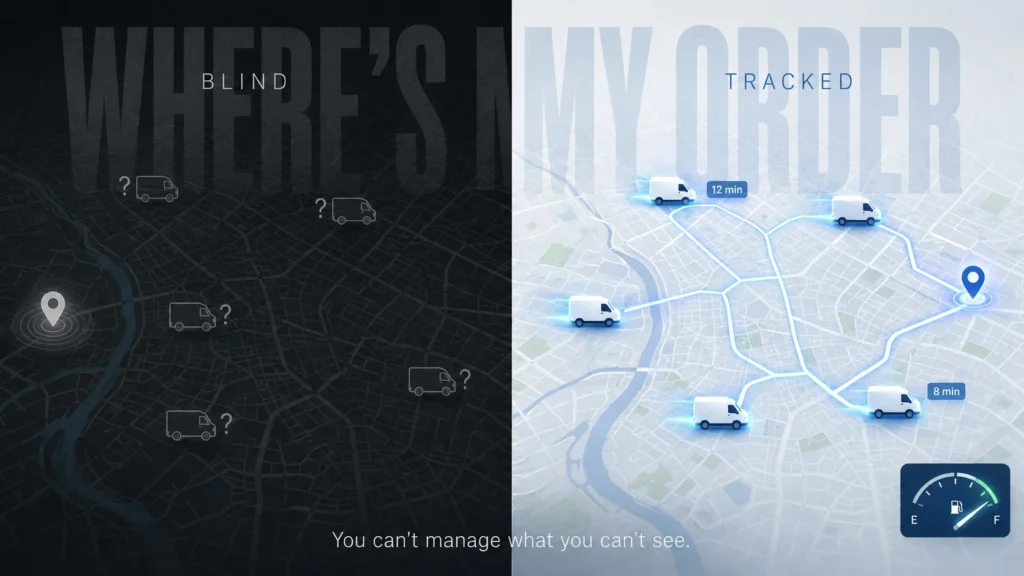
You can’t manage what you can’t see and a delivery operation running blind on vehicle location is one that can’t answer the single question every customer asks: where’s my order. GPS tracking solves the visibility problem directly, precise vehicle locations, better fleet management and the real-time status updates customers now simply expect.
But the location data does more than reassure customers. It feeds route optimization that cuts fuel and delivery times, which is real money and lower emissions and it lets you monitor driving behavior for safety and efficiency. On the fleet itself, scaling capacity doesn’t have to mean buying trucks. Platforms like FluidTruck offer on-demand, 24/7 access to commercial vehicles, so you can flex up for a busy period without the long-term cost of ownership, which is genuinely useful for a growing operation that can’t predict it’s volume yet.
Plenty of operations still plan routes on experience and intuition, which leaves real efficiency on the table. Data analytics is what turns route planning from a guess into a decision.
Historical data surfaces the patterns, which routes reliably run slow, where deliveries cluster, when demand spikes, so you can plan more deliveries into less road time. And dynamic optimization now adjusts routes on the fly for live traffic, weather and customer availability, which is what actually cuts the late deliveries that damage your reputation. Route analytics also pinpoints the chronic congestion spots and habitual delays, so an operations manager can fix the recurring problem rather than firefighting it every day.
Delivery work has high turnover and every driver who quits takes training and reliability with them. Investing in staff isn’t a soft nicety here, it’s a retention play, because a well-trained team handles the job’s real challenges better and tends to stay and increased retention quietly saves a fortune in constant rehiring.
What that looks like in practice:
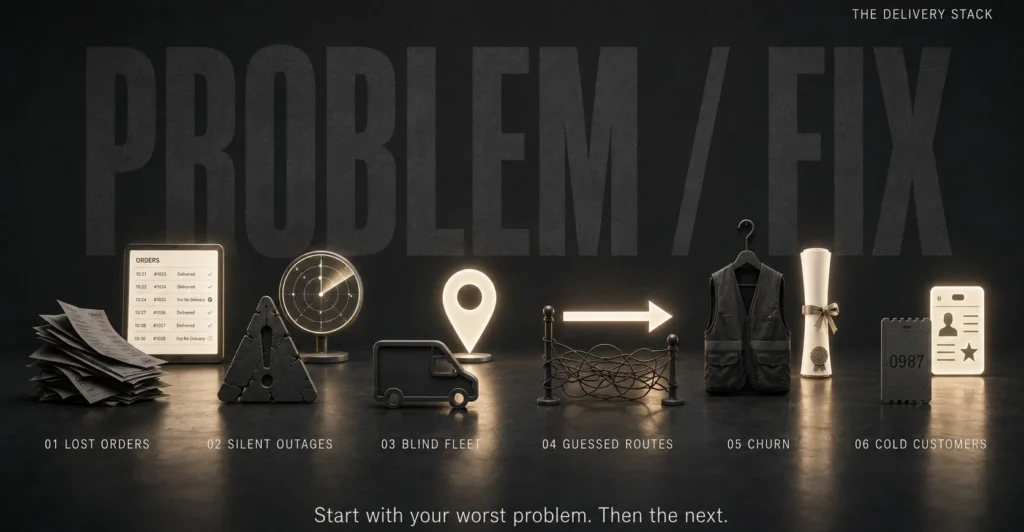
Once you’re past the operational basics, the thing that separates a delivery business people stick with from one they abandon is whether customers feel remembered. A CRM system centralizes customer information so support staff can give personalized help instead of treating every call as a cold start and that tailored interaction is what builds loyalty.
It earns it’s keep beyond support, too. The CRM reveals patterns in customer behavior and preferences, so marketing and promotions can target the right segments instead of blasting everyone. And feedback loops built into it, surveys, reviews, complaint tracking, tell you what’s working and let you resolve problems fast, before an unhappy customer becomes a one-star review in public.
None of this is a one-time install. The operations that pull ahead treat the stack as something they keep refining, matching each tool to the specific problem it solves rather than buying technology because it sounds modern. That applies well beyond couriers, too, hospitality businesses running their own delivery face the exact same problems and there are dedicated hospitality consultants who help work out which fixes are worth the investment for a given operation. Start with your worst recurring problem, put the right tool against it and move to the next one. That’s the whole method.

Moving states costs most Australian households somewhere between $2,000 and $6,000 for the transport alone, before stamp duty, storage or any of...
Read moreDetails
Copyright © 2024 NoodleMagazine - All Right Reserved