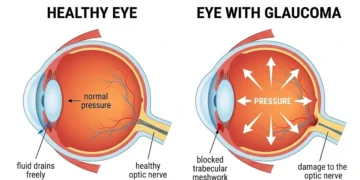
Glaucoma Takes Your Sight Without Telling You, And Your Own Brain Helps It Hide
You trust your eyes to complain when something is wrong. Something gets in, they water. Too bright, you squint. That...
Read moreDetails

Three in ten Australian adults have moderate to severe periodontitis. Not self-reported, not estimated, clinically examined across more than 5,000 people in the National Study of Adult Oral Health 2017-18. Among Australians aged 75 and over, it’s closer to 70% . And the trajectory is going the wrong direction: prevalence jumped from 20.5% in 2004-06 to 30.1% a decade later.
Half the country isn’t seeing a dentist annually. The AIHW’s Patient Experience Survey 2023-24 put the number at 53% who visited a dental professional in the previous twelve months, which means 47% didn’t. Cost is the reason 18% of people gave for skipping or delaying care. Australians collectively spent $12.5 billion on dental services in 2022-23, and 61% of that came straight from patients’ wallets.
Those are dental stats. What makes them a wellness problem is everything researchers have uncovered about what happens when the bacteria in your mouth get out of control and start showing up in places they were never supposed to be.
That’s not far off from the number reported by The Human Oral Microbiome Database: about 700 species of microorganisms living throughout your teeth, gums, tongue, cheeks, and palate. Each surface has its own unique microbial community. In a mouth in good working order, helpful bacteria keep the harmful ones suppressed, saliva manages cleanup, washing away debris, neutralizing acids, delivering antimicrobial proteins — and gum tissue seals tightly enough that bacteria do not enter the bloodstream.
That balance falters when oral hygiene becomes lax, when diet tilts too far toward sugar and processed food, when medications leave someone’s mouth dry, and when a person breathes through their mouth overnight instead of through their nose. Pathogenic bacteria — specifically one called Porphyromonas gingivalis — flourish. Gums become inflamed, bleed, recede from teeth. That’s periodontitis, and the damage it does is not confined to your mouth.
You’re never so lucky as to swallow just a few times, either: You gulp down somewhere between 600 and 1,000 times a day. Each swallow transports oral bacteria into the digestive tract. When your oral microbiome is in balance, this is not a problem — your gut does the work. When P. gingivalis and other pathogens are thriving in diseased gums, you’re inundating your gut with organisms that disrupt intestinal microbial communities.
Nagao et al. came out in Cell Reports (2022) and showed that oral pathogens induce Th17 inflammatory cells in the gut, providing a direct link between periodontitis driven oral dysbiosis and intestinal immune dysfunction. A Nature Communications study (2024) showed that oral administration of P. gingivalis in mice changed the complete composition of gut communities and aggravated intestinal inflammation by disrupting Th17/ Treg cells balance. Dong et al. (2022), demonstrated that P. gingivalis recognized metabolic consequences analogous to a high-fat meal — raised body fat, decreased glucose tolerance, and compromised gut barrier functionality.
Researchers describe the oral cavity as an “endogenous reservoir” for gut microbial strains. The mouth seeds the gut, for better or worse. Overnight, bacterial populations in the mouth multiply substantially because saliva flow drops during sleep. This is why scraping or brushing your tongue before you drink water in the morning — not after — keeps you from washing that concentrated bacterial load straight into your stomach.
Periodontitis doesn’t just affect digestion. P. gingivalis has been identified in the atherosclerotic plaques of cardiovascular disease patients. A two-year longitudinal study found that diabetic patients with severe periodontitis faced a six-fold increased risk of worsening glycaemic control compared to diabetic patients without gum disease.
The Alzheimer’s connection got serious attention in 2019 when Dominy et al. published in Science Advances that they’d found P. gingivalis in the brain tissue of Alzheimer’s patients. They identified the bacterium’s toxic protease enzymes, gingipains, in affected neurons. That paper didn’t prove causation on its own, but it moved the conversation from “possible association” to “here is the pathogen, here are its enzymes, here is the tissue damage.”
The mechanism running through all of this is chronic low-grade inflammation. Infected gum tissue keeps the immune system activated continuously. Inflammatory molecules circulate. Over the years, that sustained immune response wears on cardiovascular tissue, affects metabolic function, and creates conditions where neurodegenerative processes accelerate.
The AIHW flagged something about Queensland that makes this worse locally. In 2012, the Queensland Government transferred the decision on water fluoridation from state level to individual local councils. Multiple councils subsequently stopped fluoridating. This happened despite evidence, confirmed by the NHMRC, that fluoridated drinking water reduces tooth decay.
In towns like Townsville, in regional Queensland, this policy shift will directly impact baseline oral health throughout the community. The reduction in fluoridation, and the access barriers that result from living outside of major metro regions, fewer dentists per capita, wait lists for public dental health services, set up conditions where preventable oral disease progresses farther before intervention occurs.
Easier said than done, of course. Preventive check-up at the dental clinic in Townsville is one of those routine visits that takes care of gum inflammation when it remains reversible. The AIHW data makes a clear distinction here: adults who see the dentist for regular check-ups experience significantly lower rates of both untreated decay and periodontitis compared to those who only present when they already have a problem.
Professional care is one side of it. Daily habits shape oral microbial balance for the other twenty-three hours.
Scrape your tongue before that first glass of water. Not after breakfast. Not after coffee. Before anything goes down your throat. A stainless steel scraper takes about ten seconds and removes the bacterial film that accumulated overnight. Drinking water first sends that film directly into your digestive system.
Breathe through your nose at night. Mouth breathing during sleep dries out the oral cavity. Without adequate saliva — which contains lysozyme, lactoferrin, and immunoglobulin A — harmful bacteria grow faster than they would in a moist, pH-balanced environment. Mouth taping has become a popular approach for this, though talking to a practitioner first makes sense if you have breathing difficulties.
Eat foods that make your mouth work. Raw carrots, celery, apples — anything that requires actual chewing stimulates saliva production mechanically. More saliva means more natural rinsing, more acid neutralisation, and more of the antimicrobial proteins your mouth produces on its own.
Ditch alcohol-based mouthwash. Antiseptic mouthwashes containing chlorhexidine or high alcohol concentrations kill bacteria broadly, beneficial species along with harmful ones. Research has connected chlorhexidine use to disruption of oral bacteria involved in nitric oxide production, which plays a role in blood pressure regulation. Wiping out the entire oral ecosystem creates a vacuum that pathogenic strains recolonise faster.
Close to 88,600 Australians were hospitalised for dental conditions in 2023-24, which the AIHW classified as potentially preventable. The highest rate was among children aged 5 to 9. These are hospital admissions that earlier dental intervention would have avoided entirely.
People who track their gut microbiome, supplement with probiotics, monitor sleep architecture, and optimise their circadian rhythm are often doing nothing for the microbial ecosystem that sits upstream of all those systems. Your mouth is the entry point. Bacteria that thrive in diseased gums don’t stay in the gums — they travel to the gut, the arteries, the brain. The published research at this point isn’t ambiguous about that.
Dental care isn’t a cosmetic concern sitting outside the health conversation. For Australians, where gum disease rates are rising, nearly half the population skips annual visits, and Queensland’s fluoridation coverage has been reduced by policy choice, the gap between what the science shows and what people actually do about their oral health is getting wider. Closing it starts with treating the mouth as part of the body, because the bacteria living in it already do.

You trust your eyes to complain when something is wrong. Something gets in, they water. Too bright, you squint. That...
Read moreDetails
Copyright © 2024 NoodleMagazine - All Right Reserved